
An EU buyer sends a short request to a steel mill, aluminium extruder or component factory in China: “Please provide your CBAM certificate and carbon cost.” It looks decisive. It is also the wrong first request.
The phrase merges at least four different jobs: deciding whether an import is in scope, obtaining the appropriate importer-side status, calculating and declaring embedded emissions, and purchasing or surrendering certificates. A supplier may hold essential production evidence for some of those jobs. It does not become the EU importer’s authorised CBAM declarant merely by sending a carbon spreadsheet. Nor does an EU buyer solve the problem by putting a fixed “CBAM fee” on a purchase order.
The legal starting point is import-facing. The EU's definitive Carbon Border Adjustment Mechanism regime applies from 1 January 2026. The European Commission says EU importers, or their indirect customs representatives, above the single mass-based threshold of 50 tonnes of CBAM goods must apply for authorised-CBAM-declarant status. The Commission's definitive-regime page identifies iron and steel and aluminium among the covered sectors. The underlying CBAM Regulation sets the authorisation, declaration, embedded-emissions and verification structure.
For a China-linked supply chain, the productive question is therefore narrower:
> Can the supplier hand the named EU importer a controlled record that connects the exact imported goods to the producing installation, the calculation inputs, the verification route and later changes?
That is an evidence question. It is not a request for the factory to guarantee an EU customs result. It is also not merely an ESG disclosure exercise. An annual CBAM declaration brings together imported quantities, embedded emissions, certificates and verification reports. If an importer cannot connect its import entries to the records behind the emissions figure, a polished corporate sustainability slide is of little operational value.
This article is a desk-research sourcing file for buyers, importers, brands, traders and China-based steel or aluminium suppliers. It does not classify a named customs code, calculate any embedded emissions, verify a production site, determine a certificate cost or provide legal, customs, tax or verifier advice. It offers a practical eight-file handoff that helps the parties discover whether their evidence can survive a real transaction.
Quick answer: the importer owns the account; the supplier owns part of the proof
The cleanest way to divide the work is to separate five questions that are often compressed into “CBAM compliance.”
| Question | Party that must lead it | Useful supplier contribution | Unsafe shortcut |
|---|---|---|---|
| Is this exact import in scope? | Importer and its customs process | Stable product description, material, invoice and route data | “We make aluminium, so every order is covered.” |
| Who is the authorised declarant? | Eligible EU importer or indirect customs representative | Named contact and evidence-release process | “The factory has a CBAM account.” |
| What are the embedded emissions? | Declarant using the applicable method and records | Installation-linked activity, process, input and calculation evidence | “Our company footprint is the product number.” |
| What needs verification? | Declarant and applicable verifier route | Verifier handoff, underlying records and correction history | “A supplier letter is a verification report.” |
| What is the commercial consequence? | Importer, buyer and contract owners | Transparent evidence changes and assumptions | “Add a permanent CBAM surcharge to every quote.” |
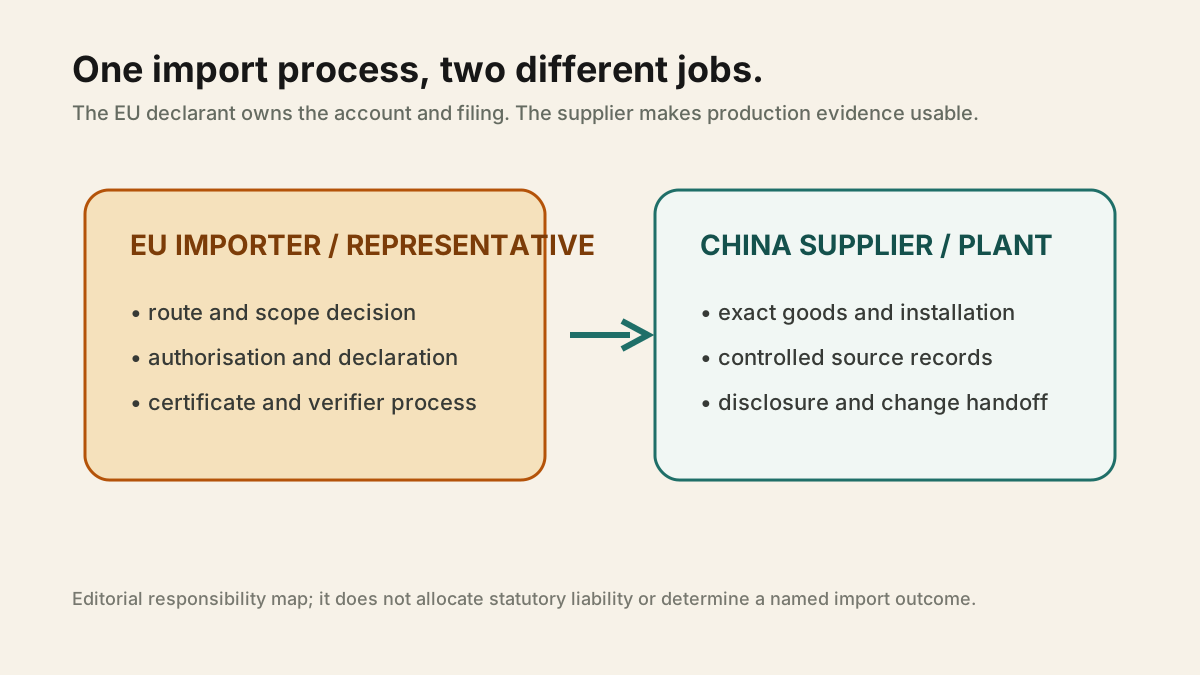
The CBAM Regulation requires an authorised declarant to use the CBAM Registry for the annual declaration. Article 6 sets out items including total imported quantity, total embedded emissions, the certificates to be surrendered after applicable adjustments, and copies of verification reports. The first annual declaration for calendar year 2026 is due by 31 May 2027. That timetable is not a reason to ask factories for a last-minute “CBAM certificate.” It is a reason to work backward from the import data and identify which evidence will be difficult to reconstruct after a production run, alloy change or supplier substitution.
For a procurement team, this creates a useful policy: do not call a supplier “CBAM-ready.” Instead, say what has been demonstrated. For example:
- “The supplier can identify the producing installation and product revision for this order.”
- “The supplier has mapped the data owner and a handoff route for calculation and verification evidence.”
- “The importer has not yet determined final scope, calculation or declarant outcome.”
Those are more modest statements. They are also much more valuable, because they travel with evidence instead of optimism.
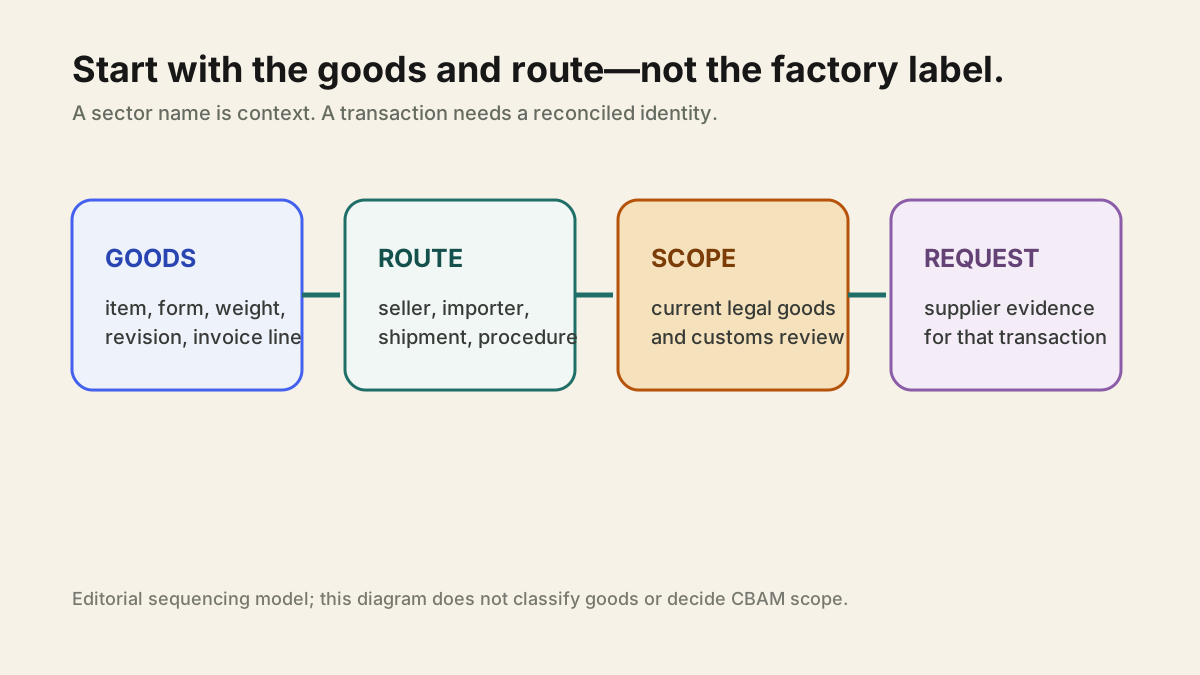
Start with the customs line, not the factory category
Iron and steel and aluminium are listed CBAM sectors. That fact is important, but it is not the first answer to “does this order need CBAM treatment?” The goods within scope are specified in the Regulation's Annex I. The importer needs to reconcile the actual customs classification, product description, quantity, origin, customs procedure and importing entity. A product that contains aluminium is not automatically the same thing as a covered aluminium good. A buyer should not substitute a factory's marketing category, a bill-of-materials headline or a broad commodity name for the import declaration's product analysis.
This is a practical discipline, not a lawyerly delay. Consider the information that can drift between a supplier quotation and a customs declaration:
- A component is described commercially as an “aluminium housing,” while the entry uses a specific code and weight.
- The purchase order identifies a finished kit, while the factory invoice separates frames, brackets and fasteners.
- One product line moves through direct import; another is sold through an EU distributor or processed under a different customs route.
- The supplier changes a plant, foundry, billet source or extrusion line after the quotation is issued.
- The buyer’s legal importer changes because a marketplace, trading company or group company takes title.
Every change can matter to a later evidence request. It does not necessarily change liability or the outcome, but it makes an unsupported generic record less useful. The first controlled file should therefore be an identity and route file. It matches the supplier’s item number, customer SKU, commercial description, material form, agreed unit of measure, weight convention, purchase order, invoice, Incoterm where relevant, intended importer, shipping route and any customs information the buyer is willing to share. It also records what is still unknown.
The important word is match. A factory could create an accurate emissions workbook for a production batch and still leave a buyer unable to show that the workbook relates to the goods finally imported. Likewise, an importer might know an exact customs line but have no evidence of which installation actually produced the goods. The handoff file is the bridge; it should not be assembled from memory several months after delivery.
Treat the 50-tonne threshold as an importer checkpoint, not a supplier sales threshold
The Commission describes a single mass-based threshold of 50 tonnes for EU importers or indirect customs representatives importing CBAM goods. It is tempting to turn that number into a supplier-side message: “We are under 50 tonnes, so no work is needed,” or “we sold more than 50 tonnes, so the factory must be CBAM compliant.” Neither statement is careful enough.
The unit belongs to the eligible importer's own CBAM-goods position and the applicable regime. A Chinese supplier may ship to several EU customers, through several entities, or through a trader that consolidates shipments. The factory's annual volume is not automatically the same denominator as a particular importer's covered imports. The buyer must confirm the relevant route, current threshold conditions and any applicable exclusion before it uses the number as a stop or go decision.
This is why a supplier should preserve evidence even where a buyer says the current order is below a checkpoint. Document control is cheaper while a product and production record are current. The commercial team can decide later whether a particular importer needs the information. Reconstructing the material, process and plant linkage after equipment maintenance, an alloy substitution or staff turnover is much harder.
The annual declaration explains why a carbon total is not enough
The definitive regime can look like a price mechanism from a distance. The operational record is more demanding. Article 6 of the CBAM Regulation links the importer's annual declaration to quantities of goods, total embedded emissions, the number of certificates to surrender after permitted adjustments, and verification reports. Article 7 addresses calculation of embedded emissions. Article 8 addresses verification. The Commission's operations page summarises the same sequence: importers declare embedded emissions and surrender the corresponding certificates each year.
A corporate carbon total usually does not answer the questions those layers create. It may cover a global business instead of a particular installation. It may be a reporting-period number rather than the relevant production period. It may aggregate electricity, transport, offices and unrelated product lines. It may not say whether it was calculated under a method compatible with the applicable CBAM process. It may not identify a precursor or a changed production line. None of that makes a corporate disclosure deceptive; it simply means it performs a different job.
For the supplier file, work from the item that must eventually be reconciled rather than from a report that is easy to export. A buyer needs the chain to be inspectable:
Imported goods → supplier product identity → producing installation → production period and process → relevant inputs and calculation record → verification handoff → importer declaration.
Each arrow is a question, not an assertion. Which installation made the goods? Is the product a simple or complex good under the applicable framework? Were relevant precursors supplied from another installation? What activity data and emission factors were used? Was a calculation adjusted after a correction? Who can release documents to the importer or its verifier? A well-designed packet does not have to answer every legal or technical question itself. It must make it possible to find the owner and current evidence for each answer.
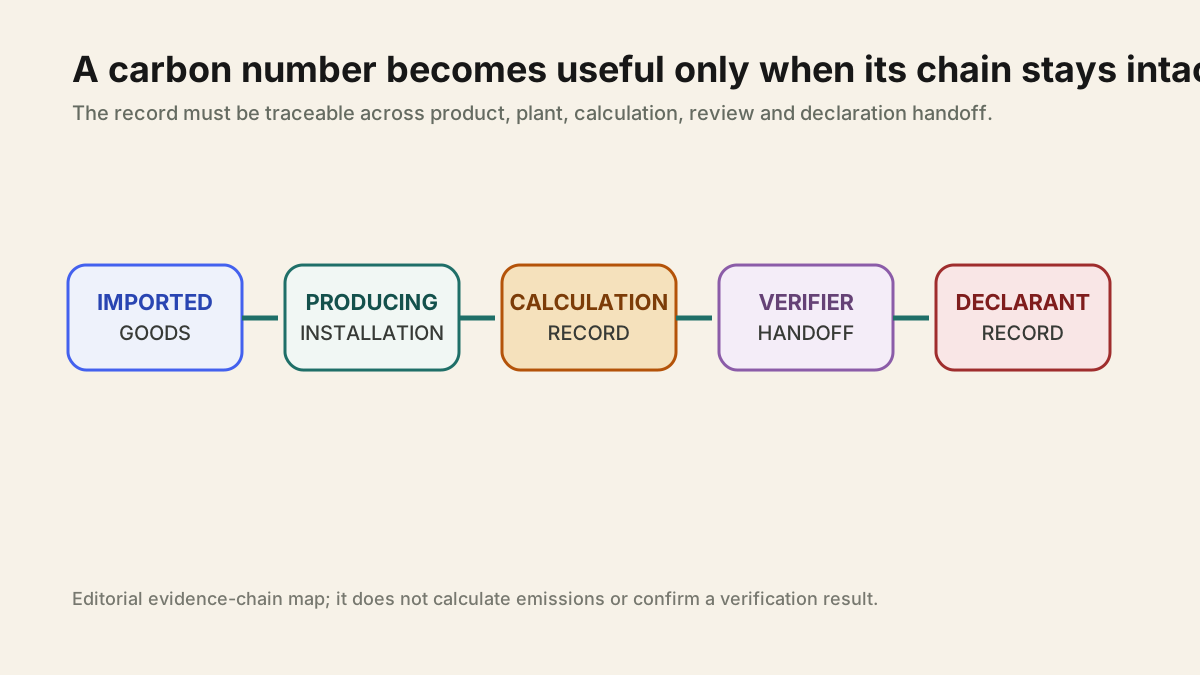
The Regulation also requires records sufficiently detailed for verification and review, and specifies record retention in the stated framework. That is an important procurement signal. A buyer should not ask a factory to make an untraceable number look official. It should ask the factory to keep a source trail that an authorised declarant and verifier can evaluate under the applicable rules.
Actual emissions need a chain of custody
There is a legitimate reason suppliers feel that CBAM requests are unusually intrusive. They can reach into plant identity, production processes, energy use, upstream inputs, allocation choices and confidential commercial relationships. A workable buyer request therefore needs both discipline and restraint. It should ask for the evidence necessary to evaluate the transaction, identify access limits and use controlled disclosure when the evidence is sensitive. It should not demand an unbounded copy of every factory record just because the word “carbon” appears in the contract.
EU law distinguishes actual emissions and default-value pathways in its calculation structure. That is not an invitation for a procurement team to select whichever number makes a quote look better. It is a reason to preserve the conditions, source data and calculation owner behind the number that is eventually supplied. The Commission's CBAM sector page lists definitive-period calculation guidance and sector-specific material for installation operators outside the EU, including iron and steel and aluminium. Guidance can help a producer understand the questions; it does not turn a self-prepared worksheet into a final transaction result.
In practice, a useful production evidence request has four characteristics.
It names the installation. “Our China plant” is not a sufficient identifier where a group operates more than one relevant site. The file needs the legal operator, site address or formal identifier used in the calculation process, contact owner and the relationship between the site and the ordered goods. If an intermediate product arrives from another facility, keep that boundary visible instead of silently rolling it into a corporate total.
It names the product and period. A calculation is only useful if the product form, alloy or grade, batch or production window and volume basis are knowable. The buyer does not need to invent a data rule. It needs to avoid an answer where a later user cannot tell whether the value describes the right item, an earlier version or a different production line.
It names the method and evidence owner. The file should record the calculation method or reference in use, the person or function responsible for it, the supporting activity and energy records, and the date of the version. It should also say where the party has relied on a supplier declaration, a default approach, an estimate or a missing record. Making uncertainty visible is safer than leaving a clean-looking blank.
It has a verifier handoff path. The declarant's verification responsibility does not disappear because production evidence began in another country. The supplier should be able to state who can answer a clarification, what may be shared with a verifier, whether a controlled data room is required, and how a correction will reach the importer. That is a process capability, not a claim that verification is already complete.
The point is not to turn every purchase manager into a carbon accountant. The point is to stop a factory's material evidence from being divorced from the commercial order before the specialist work begins.
Build an eight-file handoff before choosing a calculator or portal
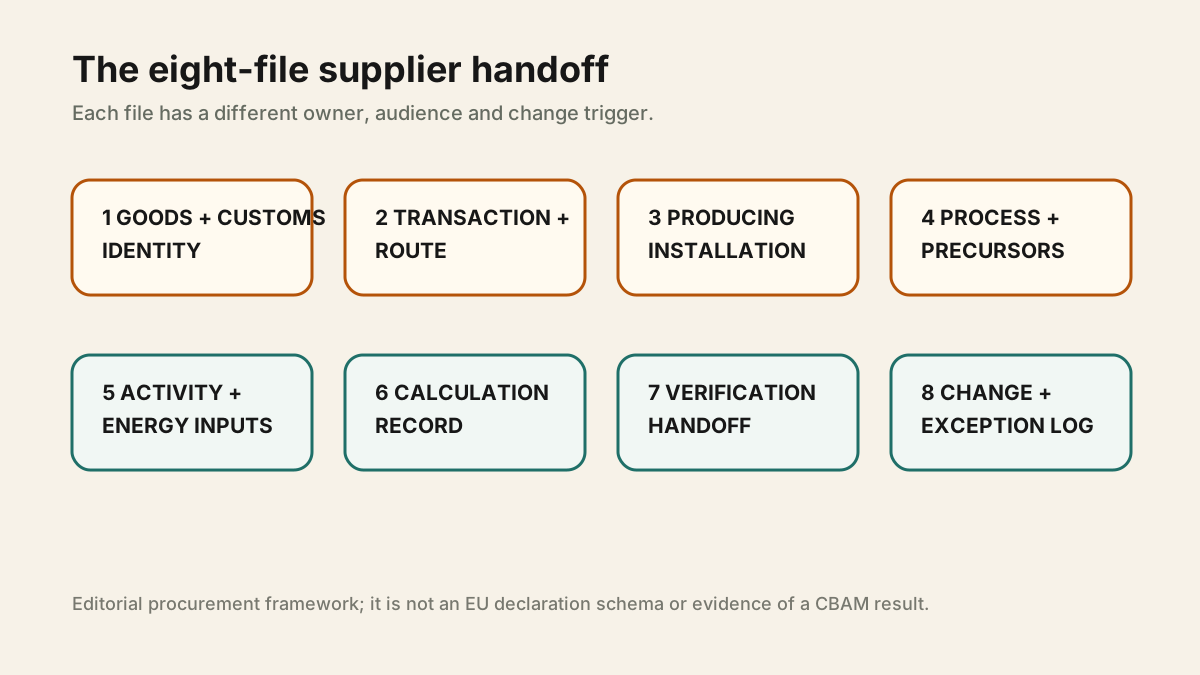
The following model is an editorial procurement framework. It is not an EU filing template and it does not establish that a particular good, quantity or calculation is compliant. Its value is simpler: it gives a buyer and supplier eight separate objects to control, so that one impressive spreadsheet does not hide seven missing links.
1. Goods and customs identity file
Begin with what the parties are actually buying and importing. The file should cross-reference the supplier item number, customer SKU, purchase order, invoice description, material or alloy form, unit of measure, net-weight convention, packing configuration and product revision. Where the buyer has a proposed customs classification or route record, preserve it as a buyer-provided reference and date it. Do not ask the supplier to certify a classification it has not been authorised to decide.
The useful test is a reverse lookup. Give the supplier an invoice line from a completed order. Can it identify the exact product, physical form and production reference behind the description? Give the buyer a factory batch reference. Can the buyer match it to a product and import path without guessing? If the two sides cannot make that link, any later emissions record is vulnerable to being attached to the wrong goods.
This file also records exclusions and uncertainty. Some purchase orders contain a mix of goods, spare parts, packaging, tools or processing elements. The team should mark what it has not yet mapped instead of assuming that everything on the invoice is one CBAM object. The discipline protects both sides: a supplier is not forced to make a legal representation, and an importer is not tempted to turn a material description into a customs conclusion.
2. Transaction and route file
The second file makes the commercial path visible. It identifies seller, buyer, any trading company, consignee, intended importer of record, indirect customs representative if known, delivery terms, shipment date, destination and change contacts. It should include a statement of what the supplier knows versus what the buyer controls.
This is often the least glamorous file and the one that prevents the most confusion. A group may buy billet from one China entity, have another entity extrude it, invoice through a Hong Kong trading company, deliver through a European warehouse and use a separate EU affiliate for import. None of that is automatically a problem. But a later declaration cannot be built from an email thread in which every party calls itself “the customer.”
A good route file never pretends that the supplier has access to every customs decision. It simply preserves the points where a buyer may later need to reconcile the evidence. It also sets a change-notice rule: if the planned importer, material origin, manufacturing site or product revision changes, the named contacts must decide whether the evidence request needs to be reopened.
3. Producing-installation identity file
This is the foundation of factory-side evidence. It records the installation or installations that produced the goods, the legal operator, location, internal or formal installation identifier where available, responsible operations and environmental-data contacts, relevant production lines, and the relationship between each site and the ordered product.
Do not solve a multiple-site reality by selecting the most favourable plant in a sales deck. If production is split across sites, the packet must say so. If a supplier is a trader and does not operate the plant, it must identify the evidence provider rather than speaking as if it controlled the records. If a production line is changed, the event belongs in the change log even if the product name on the purchase order stays the same.
This file should also explain the level of access. A buyer may reasonably need to know who can answer an evidence request; it does not automatically need unrestricted physical or digital access to every installation record. The parties can agree a controlled process, named contacts, response times, confidentiality terms and permitted recipient list. A handoff that protects confidential process information while allowing verification is more durable than a one-time unstructured data dump.
4. Process and precursor map
The process map explains, in terms meaningful to the product and calculation work, how the goods moved from relevant inputs to the exported form. For steel this may involve upstream material, production route, casting, rolling, coating, fabrication or further processing. For aluminium it may involve primary or secondary inputs, billet, extrusion, sheet, machining, finishing or assembly. The exact detail depends on the good and applicable method; the article does not prescribe one map for every situation.
What matters is that the map flags the evidence boundary. Which process happened at the named installation? Which input came from another installation? Which precursor or semi-finished material was purchased? Which substitution occurred in the period relevant to the goods? Who owns source documentation? A supplier may decide that a document is confidential. It should not respond by erasing the existence of the input or its relationship to the item.
The process map is a practical aid for procurement as well as carbon work. It reveals where a buyer is overdependent on one upstream source, where a change request could affect more than a surface finish, and where a price conversation rests on a production assumption that is no longer current. For a wider China-linked sourcing risk map, see China Supply Chain: A Buyer’s Dependency Map. CBAM does not replace ordinary supplier verification; it gives some document and process links a new operational use.
5. Activity and energy-input file
This file preserves the source records that an approved calculation process may need: production quantities, energy or process inputs, relevant factors, allocation basis, period, data owner, version date and known gaps. It is not a demand that a procurement manager decide a calculation. It is the distinction between an emissions value that can later be explained and one that cannot.
The most useful questions are operational:
- What period does this information describe?
- Does it cover this installation and production route?
- What unit is being used and how does it match the delivered quantity?
- Who can explain an anomaly, correction or missing field?
- Which input is measured, estimated, supplier-declared or unavailable?
- Does a later batch use the same evidence basis, or did an operational change occur?
These questions are not accusations. A mature supplier may answer, “We have not completed a site-specific record for this line; here is the data owner, the available source record and the expected update.” That is much safer than a number that has been copied through several teams without context. The buyer can then decide whether the order needs a controlled remediation plan, a different route, specialist review or a pause.
6. Calculation record file
The calculation record does not have to disclose sensitive working papers to every commercial user. It does need to say which calculation version is being supplied, for what goods and installation, using which method or guidance reference, by which owner, on what date, and with what limitations. If an external provider helped prepare it, the file should identify that relationship without implying that a verifier has issued a report unless one exists.
Keep calculation and quote discipline separate. A procurement spreadsheet might use a planning assumption for a commercial forecast. It must not quietly become the evidence version sent to an importer. Conversely, a factory calculation record may be fit for controlled technical review but not ready to be treated as a supplier warranty. The file should identify the audience and status of each version: internal draft, supplier-provided input, evidence submitted for review, corrected record, or independently verified report where such a status can actually be demonstrated.
The Regulation's structure is helpful here. It distinguishes calculation of embedded emissions, the conditions for actual emissions and default values, and verification of declared totals. The buyer does not improve the outcome by asking a factory to choose a legal pathway in a sales meeting. It improves the outcome by preserving the records that a qualified process can later test.
7. Verification and disclosure handoff file
The annual declaration includes verification reports in the stated framework. That does not mean every supplier should send a document labelled “verified” before the responsible declarant and relevant verifier process have been established. It means the supplier needs a handoff plan.
The plan should specify who can receive the evidence, what can be disclosed to the importer, what can be disclosed to a verifier, which documents require an NDA or secure room, which contact responds to questions, how translation will be handled, and how a clarification or correction is logged. If the supplier’s plant and the legal seller are different entities, name both. If a trading company holds the commercial relationship, do not let it become a silent substitute for the operations-data owner.
The buyer should test the plan on one bounded request. Ask for a list of evidence objects behind one recent shipment, not the evidence itself at first. Can the supplier name the item, installation, source owner, availability, confidentiality condition and estimated response path? If it cannot, a large data request will likely create more confusion rather than more confidence.
8. Change, exception and correction log
The last file is often what turns a one-time response into an operating capability. It records any change that could affect the transaction-linked evidence: item revision, alloy or material substitution, plant change, precursor change, production-line change, data correction, calculation version, recipient list or delivery route. Each entry should name the date, previous state, new state, reason, evidence owner, approver and notification recipient.
The log is not a punishment register. It is an honest way to keep an old result from travelling further than it should. Imagine that an aluminium supplier changes billet source after a buyer has received a preliminary product record. Without a change log, the buyer may continue to treat the old record as current simply because the part number has not changed. With a change log, the parties can ask the precise question: does the new input affect this order, a future order, a calculation, a disclosure or a commercial assumption?
Turn the file into a real-transaction drill
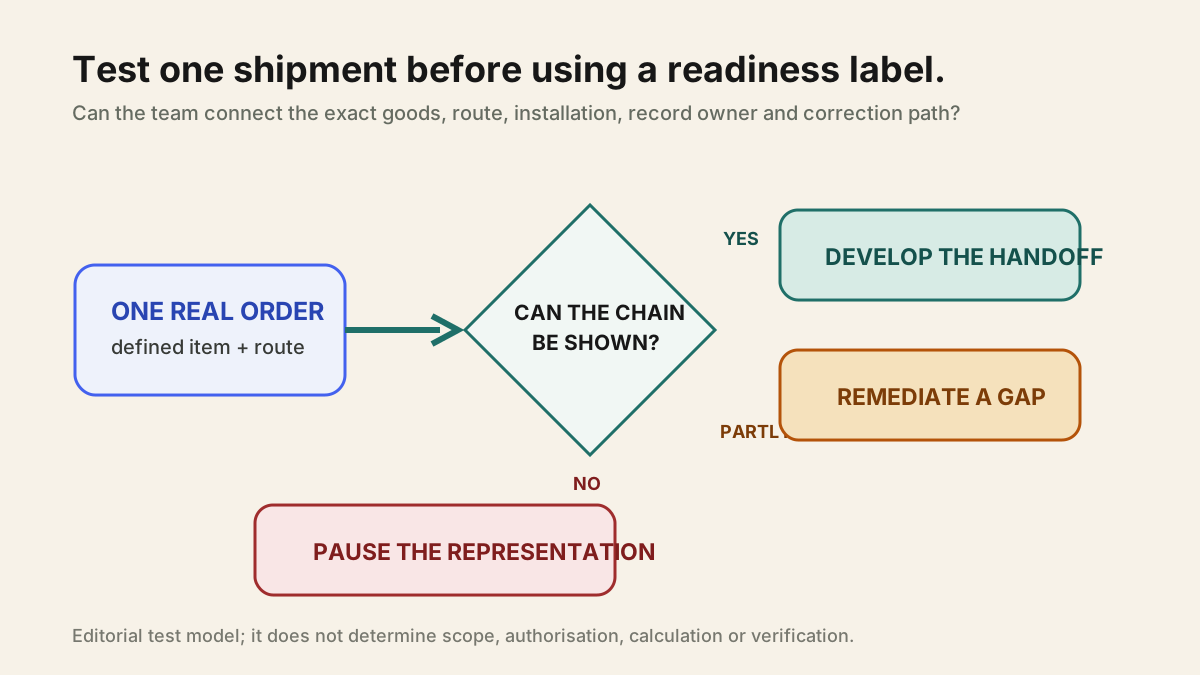
The eight files are useful only if a team can use them under normal commercial pressure. The simplest test is a ninety-minute drill on one real purchase order or completed shipment. The objective is not to score a factory, announce an import outcome or ask non-specialists to recalculate emissions. It is to discover whether the chain can be traced.
Start with one line item, a defined quantity and a stated buyer route. Ask the supplier and buyer contacts to work through these questions:
- What exact goods does the line describe, and which internal and customer identities match it?
- Who is expected to be the importer or to appoint the indirect representative for this route?
- Which installation produced the goods, and what is the period or batch reference?
- What is the known process and precursor boundary for the item?
- Which owner holds the underlying activity and energy-input record?
- What calculation record exists, what is its date and what is explicitly not yet known?
- Who can respond to a declarant or verifier question, under which disclosure controls?
- What change since the production run could invalidate or qualify the packet?
There are three honest outcomes.
Developable: the team can connect goods, route, installation and evidence owners; it can state gaps without hiding them; and it has a practical way to provide a controlled calculation and verification handoff. This is not a declaration outcome. It is a sound basis for further work.
Remediable: the supplier has relevant records, but product matching, installation identity, versions, ownership or confidentiality protocol is weak. The buyer can continue only if it names the gap, assigns an owner and avoids commercial assurances that depend on the missing record.
Pause the representation: the parties cannot identify the goods or installation, cannot tell whether a carbon number relates to the right period or product, cannot name the calculation owner, or cannot find a correction path. In that case the correct message is not “the factory failed CBAM.” It is “we do not yet have a transaction-linked evidence packet for this statement.”
Keep certificate prices and carbon-price credits out of a generic quote
CBAM has a visible price element. The Commission says authorised declarants buy CBAM certificates from the national competent authority in their EU country of establishment, with certificate price linked to EU ETS auction prices—quarterly in 2026 and weekly from 2027 under its current operations description. It also says a carbon price already paid during production of imported goods may be deducted when the importer can prove it. The Commission's definitive-regime guidance is the place to monitor those operational facts; it is not a fixed price list for a supplier quotation.
That distinction deserves to be contractual. A buyer should separate at least three fields:
| Commercial field | What it can responsibly say | What it should not say |
|---|---|---|
| Supplier base price | Price for the goods and stated commercial terms | A permanent CBAM certificate amount for every buyer and route |
| Planning assumption | A clearly dated scenario used internally, with owner and change trigger | A verified import cost or legal liability |
| Evidence allowance | The scope and cost of document preparation, controlled disclosure or specialist support | A guarantee that an origin-country carbon price will be credited |
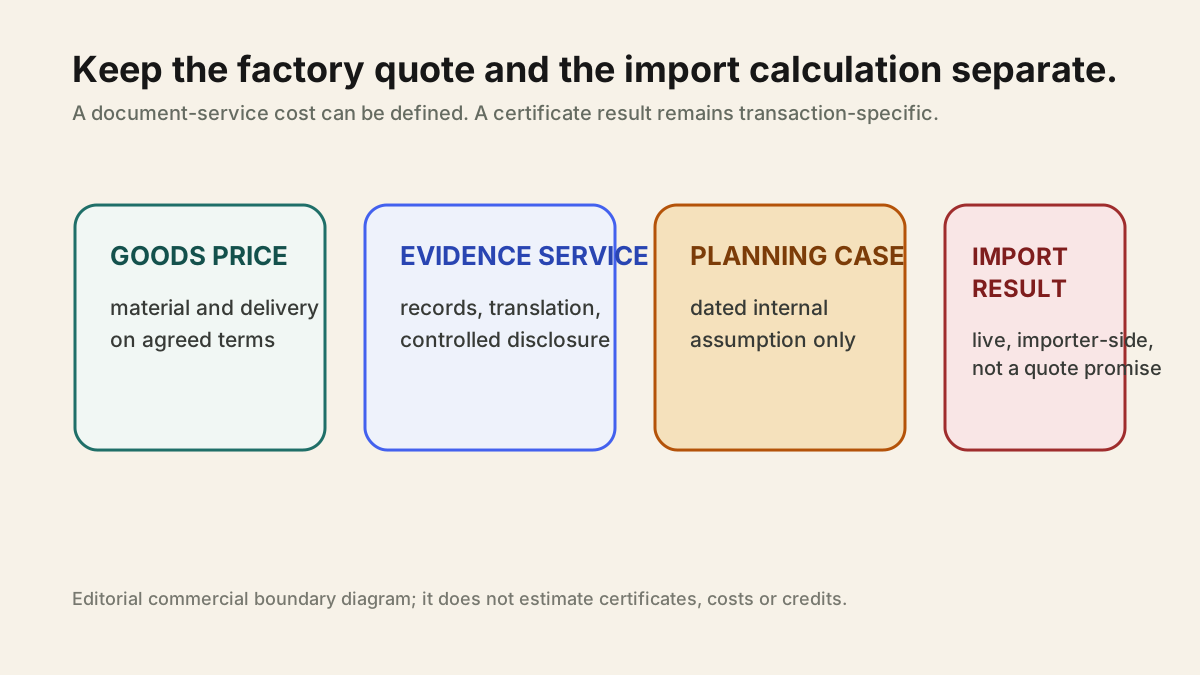
Independent OECD analysis describes CBAM as an importer-side adjustment on embedded carbon emissions and discusses its supply-chain effects. Its 2025 policy brief is useful context, but the transaction rules remain in EU law and current Commission materials. The sourcing implication is clear: keep the factory's evidence work visible, and keep the eventual importer calculation conditional until the route and proof are settled.
Contract questions to settle before an order becomes urgent
The parties do not need a 100-page CBAM agreement to solve the first-order problems. They do need explicit answers before a disputed document request appears two days before shipment.
| Contract question | Why it matters | A usable first answer |
|---|---|---|
| Which entity is expected to lead the EU import and declarant process? | The legal account cannot be inferred from the factory relationship. | Named buyer entity or a stated pending decision, plus escalation contact. |
| Which goods and route does the evidence request cover? | A record must connect to a defined transaction. | Purchase-order line list, version, quantity basis and route reference. |
| Which installation and data owner are in scope? | Corporate statements can hide site changes. | Site identity, operations contact and named evidence owner. |
| What is the current calculation-record status? | Draft, input, report and verified result are different things. | Version, date, method reference, limitations and permitted audience. |
| Who may receive confidential process information? | Evidence access and trade secrecy must coexist. | Recipient list, NDA/data-room path and response protocol. |
| What happens when a product or process changes? | An old record can otherwise be reused without notice. | Change log, materiality review owner and notification deadline. |
| How are costs handled? | Evidence effort and certificate cost are not the same cost. | Separate line items and an explicit no-outcome-guarantee clause. |
For a broader manufacturing diligence sequence—entity verification, samples, production controls and documentation—see How China Manufactures: Inside the World's Factory (2026). CBAM evidence has a specialised destination, but it benefits from the same habit: match a claim to the current product, owner, document, date and route.
A pause rule for CBAM-ready claims
The most useful sentence a buyer can place in its internal process is this:
> Do not represent an order or supplier as CBAM-ready until the team can identify the exact goods and route, the named importer or representative, the producing installation, the current calculation-record owner, the verification handoff path and the change-notice process.
This rule does not demand that every supplier complete every possible technical task before a quote. It demands that the team stop calling uncertainty a completed result. A supplier may credibly say, “We can provide installation-linked production evidence subject to the agreed disclosure process.” A buyer may credibly say, “We are assessing the CBAM route for this import.” Both are more useful than “CBAM compliant” when the product scope, calculation and declaration facts have not been settled.
The same discipline makes supplier conversations fairer. Rather than accusing a China factory of being unprepared, the buyer can explain the actual request: “We need to be able to reconcile the goods we import to a controlled production-evidence file. Please show us which records exist, who owns them, what their scope is and how you would notify us of a material change.” That is a concrete request. It respects the factory's limits while preserving the buyer's need to make an import-side decision.
Method and limitations
This is desk research completed on 28 August 2026. It relies on the CBAM Regulation, the European Commission's definitive-regime, Registry and sector-guidance materials, plus clearly limited OECD context. The editorial team did not file a declaration, classify goods, calculate a plant's emissions, verify an installation, buy certificates or review a real customs entry.
CBAM obligations and operations can change. The scope of a particular import depends on the applicable law, goods classification, customs procedure, importer, quantity, producing installation, calculation and available evidence. This article is not legal, customs, tax, accounting, engineering or verifier advice. The eight-file model is an editorial framework for organising a supplier handoff; it is not an EU schema, verification report or declaration outcome.
Frequently asked questions
Does a China steel or aluminium factory need to become an authorised CBAM declarant?
The EU legal framework and Commission guidance describe the authorised-declarant application around the eligible EU importer or, in specified cases, its indirect customs representative. A China factory can supply production evidence, but its role should not be described as the buyer's authorisation. Confirm the actual import route and current requirements for the transaction.
Is a factory's corporate carbon footprint enough for CBAM?
Usually it is not enough on its own for the article's purpose. A corporate footprint can be useful background, but an importer needs evidence it can connect to the exact goods, producing installation, period, calculation record and applicable verification path. The correct additional records depend on the goods and route.
Are all steel-containing or aluminium-containing products covered?
No sector label is a substitute for checking the legally covered goods and the actual customs classification. Iron and steel and aluminium are listed CBAM sectors, but the importer should not use a component's material name as a final scope conclusion.
Can a supplier add a CBAM surcharge to every quotation?
A supplier may price clearly defined evidence-collection or disclosure work. A fixed import-side certificate cost or presumed carbon-price credit should remain conditional until the importer, scope, calculation, evidence and current system inputs are established. Make any planning assumption visible, dated and separate from a verified result.
What is the fastest useful first step?
Run the eight-file drill on one real order. Ask whether the parties can match the goods and route to a named producing installation, current record owner, calculation status, disclosure path and change log. The gaps will show whether the next investment is data cleanup, plant ownership mapping, specialist calculation support, contract work or a pause.
By China Made & Tech Team. Independent English field guide to China's niche hardware brands, hidden champions, founders, factory towns, and supplier clusters.
Related entries
- China Supply Chain: A Buyer’s Dependency Map — a broader China-linked supplier-risk and evidence map.
- How China Manufactures: Inside the World's Factory (2026) — foundational supplier, factory and document diligence.