

China’s port infrastructure is large enough to make a China-linked sea corridor worth investigating. It is not large enough to tell you what happened to one shipment.
That distinction sounds obvious until a project is under pressure. A team sees a headline about Shanghai, Ningbo-Zhoushan, Shenzhen, Qingdao, or another Chinese gateway; a supplier says the port is well connected; a forwarder shares a sailing screen; a portal shows a declaration reference. The discussion quickly becomes: “The route is fine.” But none of those facts, alone or together, proves that the defined cargo has a confirmed commercial scope, the right physical handoff, a coherent document trail, a visible movement history, or a resolved exception. They may be useful signals. They are not a shipment result.
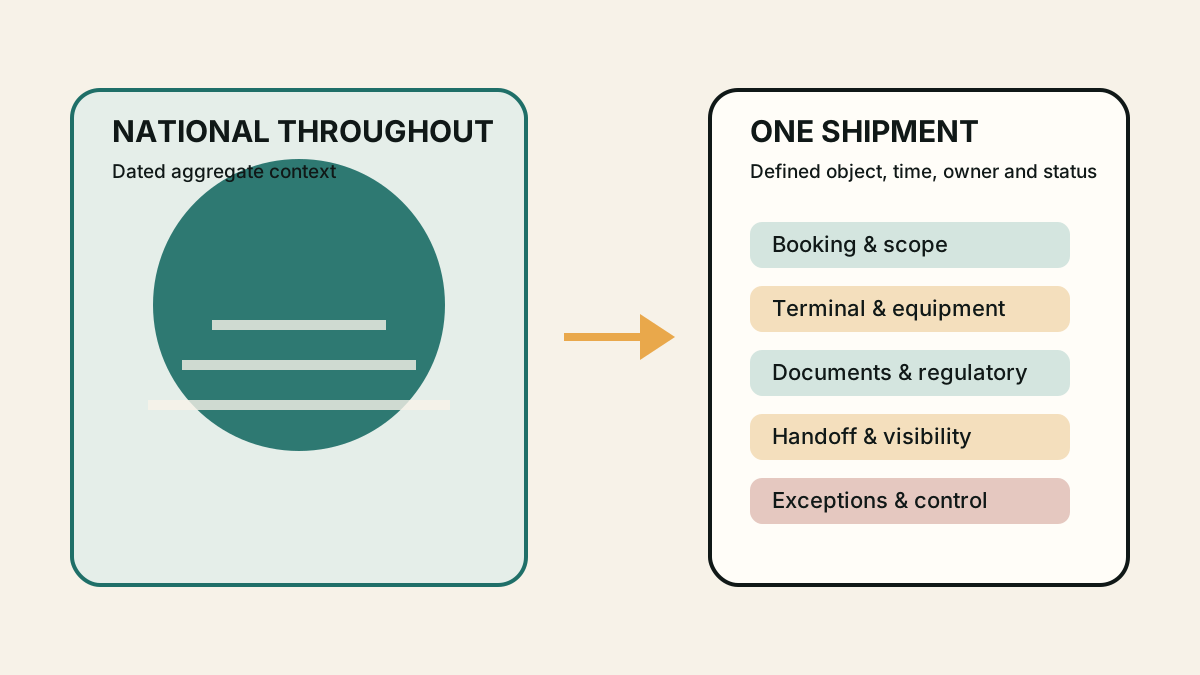
The useful way to read Chinese shipping infrastructure is therefore not “Which harbor is the biggest?” It is “Which record answers which dependency for this cargo?” China’s Ministry of Transport reports 18.338 billion tonnes of port cargo throughput and 354 million TEU of container throughput for 2025. Those are substantial national aggregates, and they help explain why China is a major place to investigate a manufacturing-to-ocean corridor. Yet an annual national total contains no container number, booking reference, declared commercial scope, terminal acceptance event, vessel handoff, destination event, or delivery confirmation. It cannot tell a buyer that a particular piece of cargo is ready to move. The Ministry’s 2025 statistical communiqué is a scale record, not a shipment record.
This article gives the two records different jobs. Public infrastructure data can help a reader discover and frame a corridor. A defined shipment needs a separate evidence file. The five files in this guide are: booking and scope; terminal and equipment; documents and regulatory status; handoff and visibility; and exceptions and control. They are deliberately not a checklist for customs filing or logistics execution. They are a way of preventing a familiar failure: treating a broad China port fact as if it had answered a narrow cargo question.
Source File
This desk-research article was reviewed on 2026-08-28 against the Ministry of Transport’s 2025 transport statistical communiqué and 2025 port cargo and container-throughput record; UN Trade and Development’s 2025 port-performance chapter and Review of Maritime Transport 2025; the International Maritime Organization’s Maritime Single Window material and FAL Convention record; and China Customs’ public guides to goods declarations and inspection of import and export goods.
Those sources establish different public layers: national traffic, network integration, ship-port information exchange, declaration materials, and inspection-record handling. They do not establish a live booking, cargo clearance, carrier performance, terminal event, destination arrival, or delivery for any reader. The article translates their boundaries into an editorial decision model. It is not a port ranking, a rate guide, a schedule service, or customs, logistics, or legal advice. For the broader dependency question around a China-linked supply chain, start with China Supply Chain: A Buyer’s Dependency Map.
Quick answer: scale can open a question, not close one
| Reader question | Evidence-bound answer |
|---|---|
| Does China’s port scale matter? | Yes. It is meaningful corridor and industrial context. It is not proof of a specific movement. |
| Does a well-connected country guarantee a sailing? | No. A network measure is not a booking, equipment allocation, terminal acceptance, or cargo handoff. |
| Does a digital port or customs platform prove the cargo moved? | No. It may record information exchange or a defined filing step, which is different from a physical and commercial outcome. |
| What makes a shipment reviewable? | Five connected records: booking/scope, terminal/equipment, documents/regulatory, handoff/visibility, and exceptions/control. |
| When should a team pause? | When a material record cannot identify the same cargo, party, time, status, or change history as the other records. |
The reason to be disciplined here is not to be skeptical for its own sake. It is to make work faster. A team that can name the missing file does not need to debate whether a port is modern, famous, automated, or important. It can ask a focused question: Which document joins the commercial booking to this equipment? Which event joins terminal custody to the carrier handoff? Which version of the packing description matches the declaration? Which exception changed the original plan, and who accepted that change? The answer may be easy to obtain. But it should not be guessed.
Scale is a lead, not a shipment
The Ministry of Transport’s 2025 series gives a useful opening denominator. It reports total port cargo throughput of 18.338 billion tonnes, with 354 million TEU of container throughput. It also separates domestic and foreign-trade traffic in the underlying annual picture. That is valuable context for any reader trying to understand why Chinese manufacturing clusters can connect to maritime corridors at scale. It says that an enormous amount of traffic passed through a national port system in a completed year.
It does not say which traffic was available to a particular buyer. Throughput counts flows over a period; it is not a statement that a named carrier accepted a named booking, that an empty container was positioned, that a terminal accepted a gate-in, that a declaration was accepted, that a cargo was loaded, or that a consignee received it. Those are events. The annual total does not contain them.
This is the first useful mental split:
- Traffic context answers whether a system handles volume over time.
- Shipment evidence answers what happened to one defined object under one defined commercial and operational scope.
The first can help a sourcing team decide whether a region deserves operational attention. The second is needed before that team treats a departure, arrival, or delivery statement as dependable. Confusing them creates an avoidable handoff problem. A buyer may hear that a supplier is close to a prominent port and conclude that transport risk is naturally low. But proximity, traffic, and the existence of an export corridor do not expose the last-mile drayage handoff, cutoff alignment, packing state, equipment condition, document consistency, or exception history for the cargo in front of them.
Read the denominator before repeating the headline
“Port throughput” has a precise enough use to be informative and a broad enough scope to be misleading. Cargo throughput may cover multiple cargo types and movement contexts. Container throughput is expressed in TEU, a standardized unit of container capacity, not a buyer’s count of finished goods, purchase orders, packages, or commercial shipments. Neither measure tells a reader whether a particular unit is an import or export; whether it was a direct or transshipped movement; whether it was on time; whether it reached the intended party; or whether its contents matched a purchase specification.
The same caution applies to city names. “Shanghai port” may be shorthand in commercial conversation for a regional gateway, a terminal system, a carrier call pattern, a documentation address, or simply a preferred export origin. These are not interchangeable meanings. Before using a city label as evidence, write the thing it is meant to identify: a port area, a terminal, a collection point, a carrier contract reference, a document field, or a physical handoff. If the label cannot be expanded, it is too broad to bear a shipment conclusion.
This is especially important when manufacturing teams discuss port access as a property of a factory. A factory can be connected to a national logistics system and still have a shipment-specific gap. The gap might be commercial, physical, documentary, or informational. The article does not claim that any one of those gaps is present in a China movement. It says that the national statistic cannot remove the possibility. That is a more useful and more honest conclusion.
For background on the factory systems that create the need for those corridors, see How China Manufactures: Inside the World's Factory (2026). Manufacturing scale explains why routes matter. It does not itself validate a route.
Connectivity is a network property, not a booking
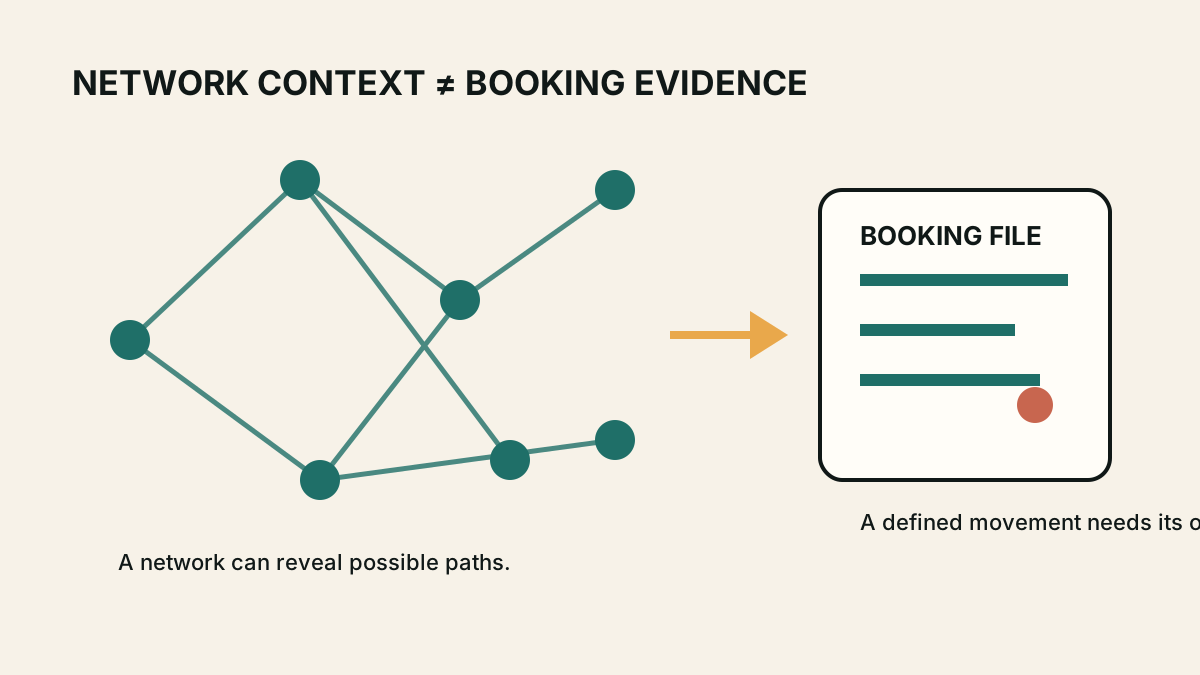
UNCTAD’s Liner Shipping Connectivity Index is another important source that must be read at its own level. UNCTAD describes the LSCI as an indicator of how well countries, or individual ports in related measures, are integrated into the global network of containerized maritime transport. Its 2025 maritime review reports China first in the country ordering it discusses for June 2025. That is useful evidence of country-level network integration. It is not evidence that a reader’s cargo has a confirmed departure.
The distinction matters because the word “connected” is doing too much work in commercial conversations. A country can have extensive liner connectivity while a particular booking has no confirmed scope. A carrier can serve a corridor while a particular container is not accepted by a terminal. A port can have a wide web of calls while the desired equipment, cutoff, cargo readiness, declared particulars, or commercial authorization remains unresolved. Network integration makes more possibilities visible. It does not select one of them for a particular shipment.
What a network index can legitimately change
An index can help a reader ask better discovery questions. If a national system is well integrated into containerized shipping networks, a team may reasonably investigate which carrier services, terminal interfaces, inland legs, and forwarding arrangements are relevant to its product. It can also shape resilience thinking: a network with multiple connections may offer more possible paths than an isolated node. But that statement remains about options and structure. It does not prove usable capacity, commercial terms, punctuality, cargo acceptance, or the performance of an individual service.
So use connectivity for three tasks:
- Corridor discovery. Identify which regions, gateway systems, or service families deserve investigation.
- Question design. Ask what interfaces connect factory readiness, collection, terminal acceptance, carrier handoff, and destination responsibility.
- Concentration awareness. Notice when a planned movement depends on one terminal, one operating handoff, one carrier relationship, or one document owner.
Do not use it for four other tasks:
- Booking confirmation. Only a booking-and-scope record can identify the agreed movement in a way a team can examine.
- Equipment confirmation. Network presence says nothing about the physical unit needed for this cargo.
- Terminal event confirmation. A network index is not a gate-in, interchange, loading, or custody event.
- Delivery confirmation. Country connectivity cannot identify what happened after arrival or release.
This distinction is more than vocabulary. It changes ownership. A strategy or sourcing person may be the right owner for corridor discovery. A logistics owner, commercial owner, document owner, or consignee-side owner may be needed for the records that turn a possible corridor into a defined movement. When those roles are blurred, a macro source tends to fill the gap. It should not.
Avoid the ranking trap
Port rankings can be interesting editorial context, but they are a poor control system. A ranking may use a specific time window, unit, methodology, port definition, or measure of size. A score may track administrative efficiency, berth activity, vessel calls, or throughput. None of those measures answers every shipment question. Ranking language also encourages an invalid comparison: assuming that the highest-ranked port is automatically the least risky option for a particular cargo. The relevant question is rarely “Which port is best?” It is “Which path has an evidence chain adequate for the commitment we are making?”
The route might begin in a city associated with a famous harbor, pass through a different physical terminal, use an inland consolidation point, and depend on a carrier handoff outside the buyer’s normal control. In that case, the city headline has little decision value. The named sequence of events has much more.
A digital window is not cargo proof
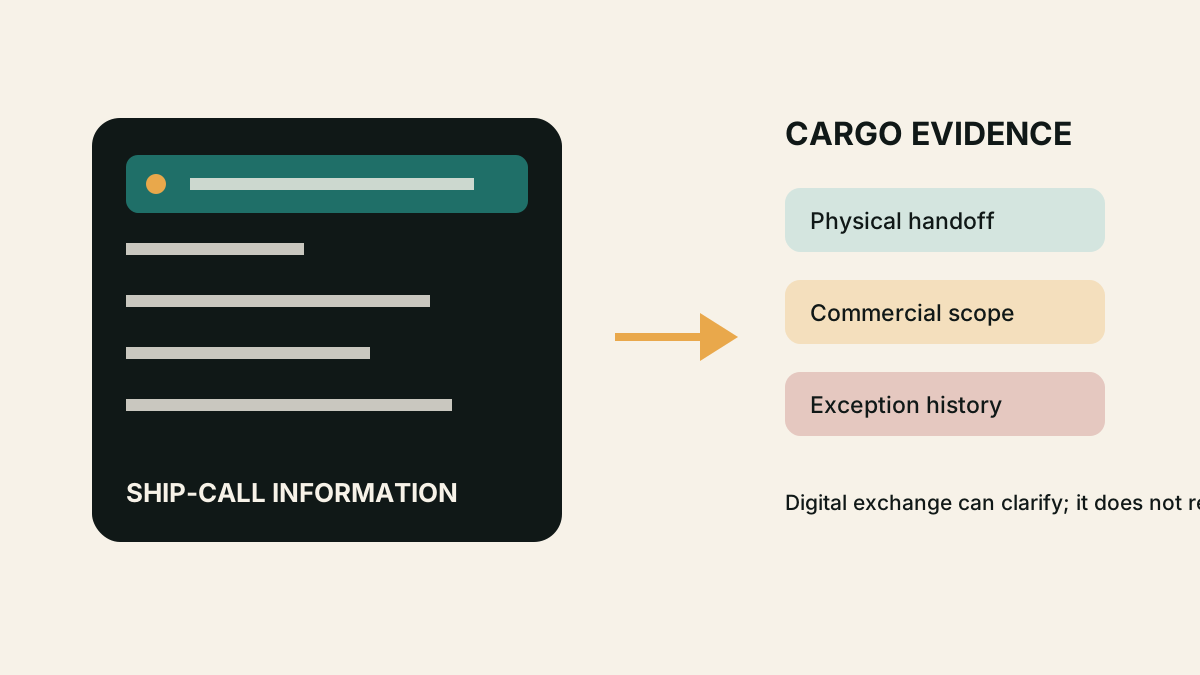
Shipping and port infrastructure increasingly includes digital information exchange. That development matters. The International Maritime Organization describes a Maritime Single Window as a centralized digital platform used to collect and exchange information between ships and public authorities when ships call at ports. The IMO says use of Maritime Single Windows for the relevant electronic information exchange became mandatory from 1 January 2024 under the Facilitation of International Maritime Traffic framework. That is an important institutional shift: public authorities and ship callers are expected to be able to exchange defined information through a more coordinated electronic environment.
It still does not prove a cargo movement.
The scope is the clue. The IMO material is about information required for a ship’s arrival, stay, and departure, along with the data exchange and governance around that process. It is not a universal record of each cargo’s commercial status. It does not transform a digital submission into a physical handoff, a loaded-container confirmation, a vessel departure event, a destination receipt, or a contract-performance result. It may make some of those processes easier to coordinate or audit, depending on the system and the parties. But the source itself should not be inflated into an outcome guarantee.
The digital record needs a question and a boundary
When someone presents a portal image, system reference, data exchange message, or dashboard status, ask four questions before treating it as material evidence.
What object does it identify? A ship, a voyage, a declaration, a container, a booking, a party, and a purchase order are different objects. A screen may identify only one of them. The reader should not mentally fill in the rest.
Which event does it represent? Creation, submission, acknowledgment, update, acceptance, inspection, release, gate-in, loading, departure, arrival, and delivery are different events. A record that shows an electronic submission should be described as an electronic submission. Calling it “shipped” adds a fact that the record may not contain.
Who owns the status? A platform status may be authored by a carrier, terminal, broker, public authority, forwarding party, supplier, or an automated interface. Ownership matters because it tells the reviewer where to ask the next question and which party can explain a correction.
What version or timestamp governs? A shipment is a moving set of facts. A status without a meaningful time boundary is easy to misread. An old confirmation may remain technically true while a later exception changes the operating picture. The value of a record is not just that it exists; it is that it can be joined to the right object and time.
The point is not that portals are untrustworthy. The point is that a portal is a surface, not a complete decision. A good digital system can reduce duplication and clarify ownership. It cannot make separate operational and commercial dependencies disappear. A reader should therefore save or reference the material record, identify the object and event, and compare it with the other files. That produces a reviewable trail without pretending to run a live logistics system from a browser screenshot.
Digitalization can reveal a missing handoff
One useful role of information exchange is negative: it can show that a required link is absent. A booking reference might exist without a matching equipment identifier. A declaration-related reference might exist without a versioned commercial document set. A carrier update might exist without a terminal event. A terminal event might exist without a clear chain to the buyer’s consignee-side process. These are not accusations and they are not automatic failure findings. They are questions that must remain open until the appropriate owner supplies a record.
This is why the article treats digital information as one file among five. The reader should be able to say, “This record proves that this party submitted or received this information at this time,” and then ask, “Which record proves the next dependency?” That sentence is more useful than a vague statement that the movement is “in the system.”
Documents and inspection are separate files
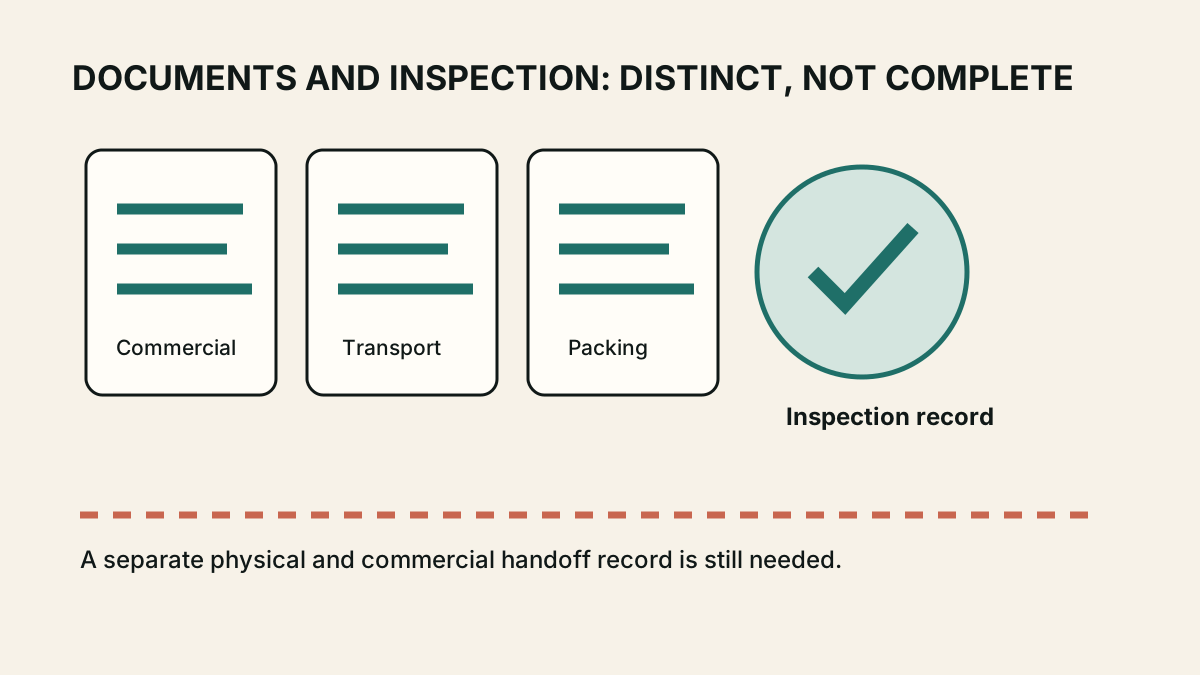
China Customs’ public guidance on import and export goods declarations describes electronic declaration data and identifies accompanying materials such as contracts, invoices, transport documents, and packing lists. This is useful because it makes the document layer visible. A defined movement needs commercial and transport particulars that can be compared. But a guide to declaration materials is not evidence that any reader’s shipment has been accepted, inspected, loaded, departed, or delivered.
The document file has a specific job: make the object legible. It should allow a reviewer to compare the commercial transaction, the packed goods, the transport description, and the relevant declared information without silently changing the meaning of the cargo between handoffs. This is not an instruction on how to file a declaration. Requirements vary by item, parties, destination, and current rules; a live filing needs appropriate professional handling. The evidence point is narrower: if different records describe different cargo, a team should not claim that the route is controlled merely because each record exists in isolation.
China Customs also describes inspection as an official process of checking whether the declared content corresponds to the actual goods, and its guidance says an inspection record is retained as accompanying declaration material. That is a distinct layer. An inspection record can be relevant to a particular official verification context. It is not a substitute for a booking confirmation, carrier handoff, sailing event, destination receipt, or commercial delivery result. The safest reading is literal: an inspection record speaks to the inspection event and the related declaration context. It should not be made to answer a question it was not created to answer.
The document chain should describe one thing
In a clean evidence file, the important records can be read as different views of the same cargo. They need not use identical language or contain every identical field. A commercial invoice has a different purpose from a transport record; a packing description has a different purpose from an inspection record. But the reviewer should be able to locate the stable join points: the parties, defined goods, quantity or units where relevant, packaging or marks where relevant, reference numbers, dates, and versions.
The problem is often not that a document is false. It is that a document is stale, generalized, attached to a different lot, written before a revision, or interpreted beyond its scope. A supplier may update a packing arrangement after a commercial document was issued. A consignee may change an instruction. A carrier may make a commercial or operational change. A document set that was coherent at one point can become incoherent later. The exception file exists precisely because change is normal.
Do not solve that problem by demanding every possible document at the start. Solve it by writing the decision you need to make and identifying which document must answer which element. If the decision is whether a specific cargo description remains aligned through a handoff, ask for the versions that carry that description. If the decision is whether an inspection event concerns the same goods, identify the links between the inspection record and the document chain. If the decision is whether an exception was accepted, request the record that names the change, owner, timing, and decision. The article’s framework is about this discipline of joining, not about imposing a universal bundle of paperwork.
Submitted is not the same as accepted; accepted is not the same as moved
Many operational errors come from verbs that collapse too much process into one word. “Submitted” means information was sent. “Received” can mean a system or party acknowledged receipt. “Accepted” can mean different things in different contexts. “Inspected” refers to an inspection event, not necessarily all later steps. “Loaded,” “departed,” “arrived,” “released,” and “delivered” each identify different physical or commercial states. If a status does not say which event occurred, the reader should not supply it.
This is also a protection against false reassurance from a familiar name. The fact that an event happened in a major Chinese port system does not change the meaning of the verb. A submitted declaration remains a submitted declaration. A terminal event remains a terminal event. A country-level throughput figure remains an aggregate. Precision is not bureaucracy; it is how a buyer avoids signing off on an assumption that cannot be traced later.
The five-file shipment evidence architecture
The following architecture is editorial, not a shipping procedure. Its purpose is to keep different kinds of evidence from replacing one another. Use it to organize a conversation, a diligence folder, or a handoff review for a defined movement. Adapt the detail to the materiality of the cargo and seek appropriate professional advice for live commercial, regulatory, or legal decisions.
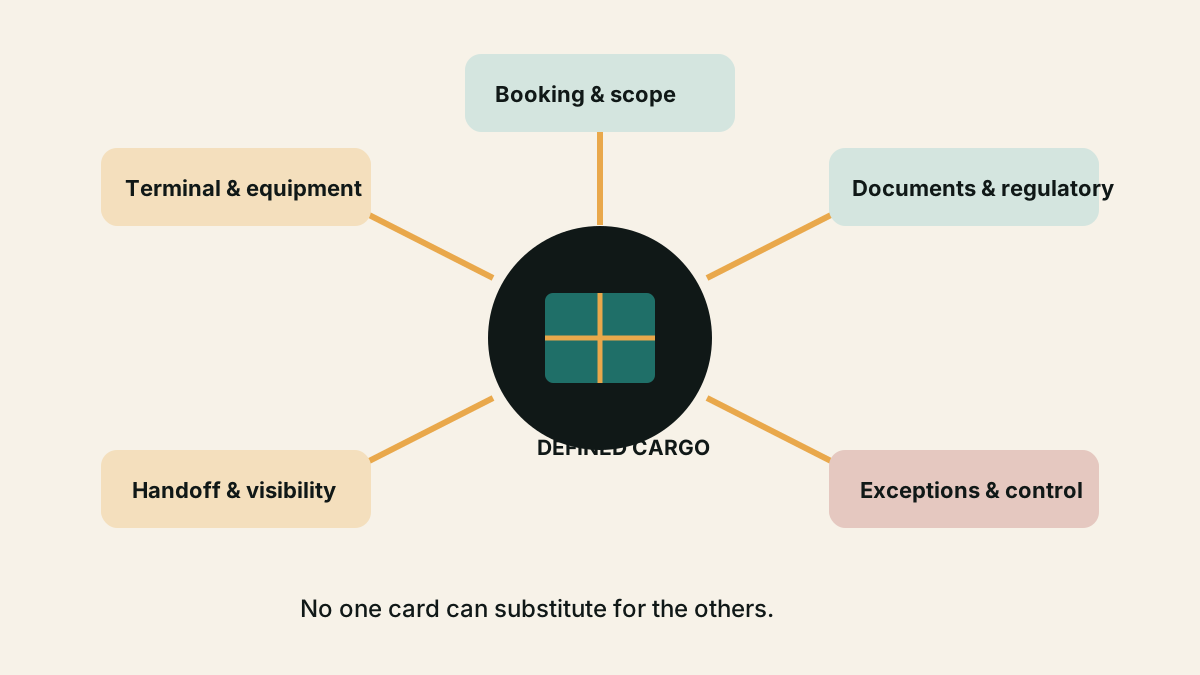
File 1: booking and scope
The booking-and-scope file answers the question: What movement did the parties actually intend to create? It is the place to identify the commercial object of review without inventing an operating outcome. Its useful fields are the ones that let a later record be compared against a defined plan: the responsible parties, the cargo description at the required level of specificity, origin and destination responsibilities, the requested service or movement scope, the relevant references, and the version or date that governs.
This file is not a promise that every dependency will be met. It is the baseline against which later changes become visible. Without it, a reviewer cannot know whether a terminal, document, or tracking event belongs to the movement that was discussed. A generic email saying “booking arranged” may be a lead, but it is not necessarily an adequate scope record. It might refer to a broader purchase order, an earlier plan, a different lot, or a commercial intent that later changed.
The most useful question here is not “Do we have a booking?” It is “Can the record identify the same movement that the buyer is relying on?” If the answer is no, pause. A later terminal or carrier event cannot repair an ambiguous commercial object after the fact. The team needs an owner to clarify the scope before attaching other records to it.
Watch for four common scope gaps:
- A reference number is present but no record states which cargo or revision it governs.
- A quantity or packing reference changes, but the commercial file was not versioned or reconciled.
- One party describes a collection or delivery responsibility differently from another.
- A status message gives a date but not the event, object, or owner behind it.
None of these conditions proves a failed shipment. They simply prevent a reliable conclusion. That is enough reason to keep the file open.
File 2: terminal and equipment
The terminal-and-equipment file answers: What physical interface was intended or achieved, and for which unit? The word “terminal” should not become a generic proxy for the entire route. A terminal is one operating interface in a chain that may include factory readiness, inland collection, consolidation, equipment positioning, gate acceptance, carrier handoff, and later destination handling. The evidence should identify the actual interface relevant to the claim being made.
For a physical unit, the material question is often whether a record connects the described cargo to the relevant equipment or terminal event. The appropriate record will depend on the actual movement. The important principle is that it should not be inferred from a country name, a carrier brand, or a high-level route description. If someone says that a container was at a terminal, ask what identifies the container or unit, what event occurred, who produced the event, and whether that event is connected to the booking-and-scope record.
Equipment is similarly not a background detail. The physical unit, configuration, condition, seal process, handling instruction, or special requirement may matter depending on the cargo. This article does not prescribe which facts are required. It only says that a claim about physical readiness must be supported by a record about the relevant physical object. A booking record cannot, by itself, confirm physical handoff. A national port statistic cannot, by itself, confirm the existence or suitability of equipment for one cargo.
The terminal file should also preserve uncertainty honestly. If a terminal event is pending, record it as pending. If an event was reported by a party but not yet reconciled to the movement scope, record it as reported. Avoid upgrading the phrase because the port is well known. A small, precise uncertainty note is more valuable than a broad assurance that the route is “normal.”
File 3: documents and regulatory status
The documents-and-regulatory file answers: Do the available records describe the cargo and the relevant official process coherently enough for the decision at hand? China Customs’ public declaration guide is helpful here because it names commercial documents and electronic declaration data as part of the process. But the file must remain a document and regulatory file. It does not prove physical movement.
For a defined review, identify the records that control the description, parties, and version of the cargo. Compare rather than merely collect. A document folder is not evidence if nobody can tell which file supersedes which other file. The file needs an owner who can state what changed, when it changed, and which subsequent record was updated.
This layer may contain sensitive commercial or regulated information. The purpose of the article is not to tell a reader what must be submitted to authorities in a particular case. It is to show why a team should not make a cargo statement that outruns its document trail. Where a live regulatory issue matters, use current official information and qualified advice. The evidence architecture remains useful even then: document status should be treated as one dependency, not as a substitute for terminal or delivery evidence.
Inspection belongs near this file because it is a different kind of official event. An inspection record, where applicable, may help establish what was examined in that inspection context. It does not answer whether the carrier subsequently loaded the cargo, whether the ship departed, or whether the consignee received the goods. Keep the inspection result in its own semantic lane. That makes later review clearer and avoids attaching a much larger commercial claim to one official artifact.
File 4: handoff and visibility
The handoff-and-visibility file answers: Which party had, accepted, or reported responsibility at each material point, and what evidence links those points? This is where a movement becomes legible as a sequence rather than a collection of documents. The file may include carrier, terminal, forwarder, supplier, consignee, or other party records, depending on the actual service model. Its job is not to create a perfect global trace. Its job is to identify material handoffs and the evidence that connects them.
The distinction between handoff and visibility is useful. A handoff is an event or responsibility transition. Visibility is the ability to see and interpret that event. A dashboard may offer visibility but not control the event. A signed or acknowledged handoff record may show a transition but leave later stages unknown. A carrier notice may be meaningful but still require comparison with the commercial scope. Keeping these separate stops a reader from equating a screen update with a complete responsibility chain.
The strongest version of this file lets a reviewer follow a defined object through the material interfaces without guessing which object a later status refers to. The file does not need to be theatrical. It needs stable joins: object identifier, event, date or time where material, status, source, and responsible party. If one of those joins is missing, the reviewer can identify the exact question instead of declaring the whole movement good or bad.
This is also where teams should distinguish visibility from assurance. A late event feed can be useful. It does not erase a missing physical or commercial handoff. A broad location label can be useful. It does not prove the cargo is under the party’s responsibility in the way the contract assumes. The practical response is to identify the gap, assign an owner, and avoid using the visible record for a broader conclusion.
File 5: exceptions and control
The exceptions-and-control file answers: What changed, who knew, who decided, and which other records were updated? This is often the most important file because real movements change. Cargo readiness shifts. Documentation is corrected. Equipment or collection arrangements evolve. A terminal or carrier interface changes. A party requests a different instruction. None of those facts is inherently alarming. The problem is an unrecorded change that leaves the other files describing a plan that no longer exists.
An exception record should be plain enough to audit: the original state, the new state, the affected object, the timing, the reason if known, the decision owner, and the records that were reconciled. It should also separate fact from assumption. “The handoff was delayed” is a conclusion unless the event and planned baseline are visible. “A planned handoff event has not been matched to a later record as of this review” is a narrower, more defensible statement.
The control part is the pause rule. A team should not rely on a movement claim when a material exception cannot be joined to the booking, physical interface, document, or visibility file. The right response may be to request clarification, update a document, seek a current professional view, or revise a commercial decision. The article does not dictate which. It insists that an unresolved change should not be hidden behind aggregate port scale.
How to use the five files without creating paperwork theater
The purpose is not to create a giant folder that nobody reads. A large document collection can actually worsen risk if it creates the illusion that every dependency has been checked. The useful file is small enough to answer a specific decision and explicit enough to show what it cannot answer.
Start with a one-sentence reliance claim. Examples of the structure, not claims to make blindly, include: “We can treat this cargo as ready for the next commercial decision because the scope, physical handoff, document state, visibility, and open changes identify the same object.” Or: “We cannot yet rely on a departure statement because the handoff event is not joined to the booking scope.” The point is that the claim names the evidence required to support it.
Then identify the object. It may be a consignment, a purchase-order segment, a containerized unit, a lot, or another defined cargo object. Do not begin with “China shipment” or “Shanghai route.” Those labels are too broad. They make it hard to detect whether two records refer to the same thing.
Next, create a simple cross-file map:
| File | The question it answers | What it cannot replace |
|---|---|---|
| Booking and scope | What movement was intended? | Physical acceptance or delivery |
| Terminal and equipment | What physical interface or unit is involved? | Commercial scope or official-document status |
| Documents and regulatory | Do the relevant records describe the object coherently? | Carrier, terminal, or delivery performance |
| Handoff and visibility | What material transition is visible and who owns it? | A complete exception history |
| Exceptions and control | What changed and was it reconciled? | Evidence that was never created for an earlier event |
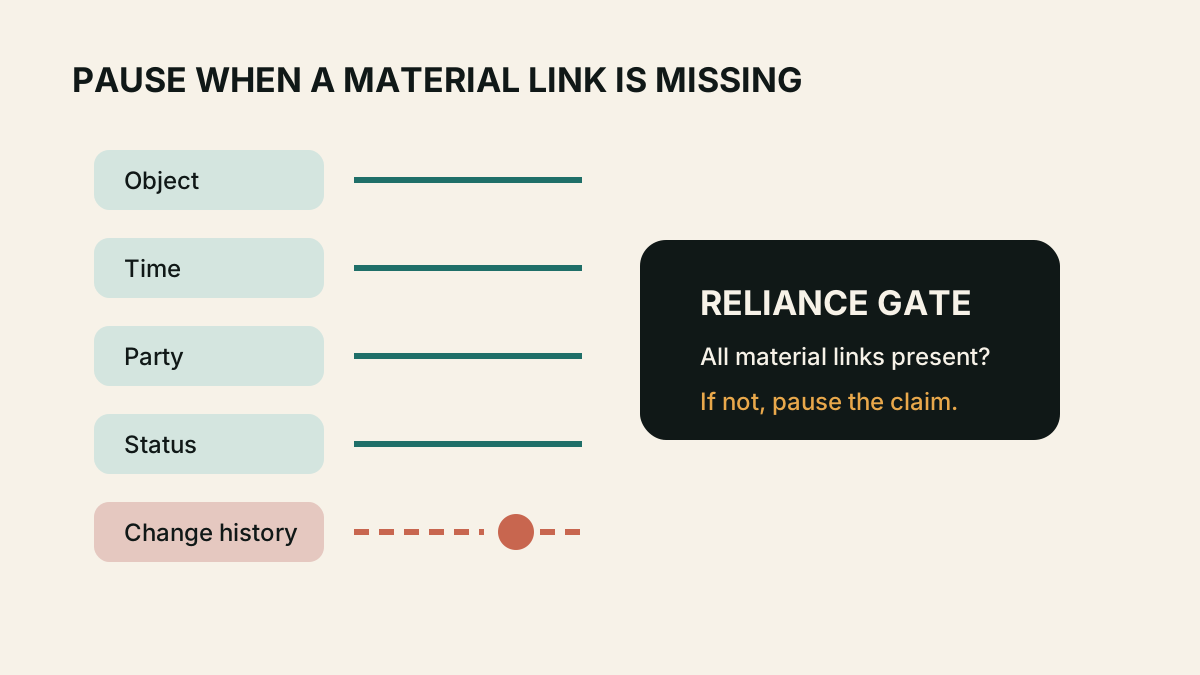
A practical pause rule
Pause a reliance claim when any material file lacks one of these links:
- Object: the record cannot be connected to the same defined cargo.
- Time: the record has no meaningful date, sequence, or applicable version.
- Party: it is unclear who issued, accepted, or controls the event.
- Status: the verb does not identify what actually occurred.
- Change: a later correction or exception may have superseded the record.
This rule is intentionally portable. It works whether the reader is evaluating an internal readiness statement, a supplier update, a forwarder summary, or a delivery discussion. It does not decide that the cargo should move or that a party has complied with a rule. It only stops the reader from using incomplete evidence to claim more than the evidence supports.
China’s port infrastructure is a reason to design this file carefully, not a reason to skip it. Large systems can generate more information and more handoffs. That can be an advantage when ownership and joins are clear. It can also create more places for a broad label to hide a narrow gap. The five-file structure makes the gap nameable.
What this changes for a buyer, supplier, and operator conversation
For a buyer, the key change is to stop asking for a generic reassurance that “shipping is fine.” Ask which file supports the exact point of reliance. If the concern is a physical handoff, a country-level statistic is irrelevant. If the concern is document consistency, a carrier network narrative is irrelevant. If the concern is a changed instruction, a declaration reference from before the change may be irrelevant. This makes requests shorter and more respectful because the owner knows what question they are being asked to answer.
For a supplier, the key change is to avoid turning infrastructure claims into performance claims. It is reasonable to describe a location’s access to a broader logistics system. It is more credible to separate that context from the shipment-specific records that the supplier, forwarder, carrier, terminal, or buyer-side party will need to provide. Doing so reduces the temptation to offer an ETA, capacity assurance, or clearance assurance that the supplier does not control.
For a logistics or operations owner, the key change is ownership clarity. One party may own the commercial scope; another may own physical collection; another may own the document process; another may expose visibility; another may approve exceptions. The five files make these interfaces visible without assigning blame. If the organization is relying on a status, it should know which party can correct the underlying record.
For a senior decision-maker, the value is escalation quality. Instead of receiving “port disruption risk” or “China logistics risk” as a broad label, the decision-maker can see whether the current issue is a scope ambiguity, a physical handoff gap, a document inconsistency, a visibility gap, or an unresolved exception. That makes it easier to decide whether to pause a commercial commitment, request a specific update, or accept a bounded uncertainty.
Method and limitations
This is a desk-research article based on the dated public sources listed in the Source File. It does not reflect a terminal visit, a shipment observation, a carrier system review, a booking audit, a bill-of-lading review, a customs filing, an inspection case, or delivery confirmation. It makes no claim about a named Chinese port, terminal, carrier, forwarder, supplier, cargo, route, sailing, rate, clearance, or destination event.
The Ministry of Transport figures are completed-year national aggregates. UNCTAD connectivity material is a network-integration measure. IMO material describes ship-port information exchange. China Customs public guides describe declared-information and inspection boundaries. Each source can answer its own question; none answers every shipment question. Rules, interfaces, and operational facts can change, so a live movement requires current, cargo- and contract-specific records and appropriate professional review.
The five-file structure is an editorial framework for thinking clearly about evidence. It is not a universal logistics process, customs instruction, technical standard, legal opinion, or acceptance method. Readers should scale their evidence to the materiality of the decision and avoid inferring a movement outcome when the relevant object, time, party, status, or change link is missing.
By China Made & Tech Team. Independent English field guide to China's niche hardware brands, hidden champions, founders, factory towns, and supplier clusters.