
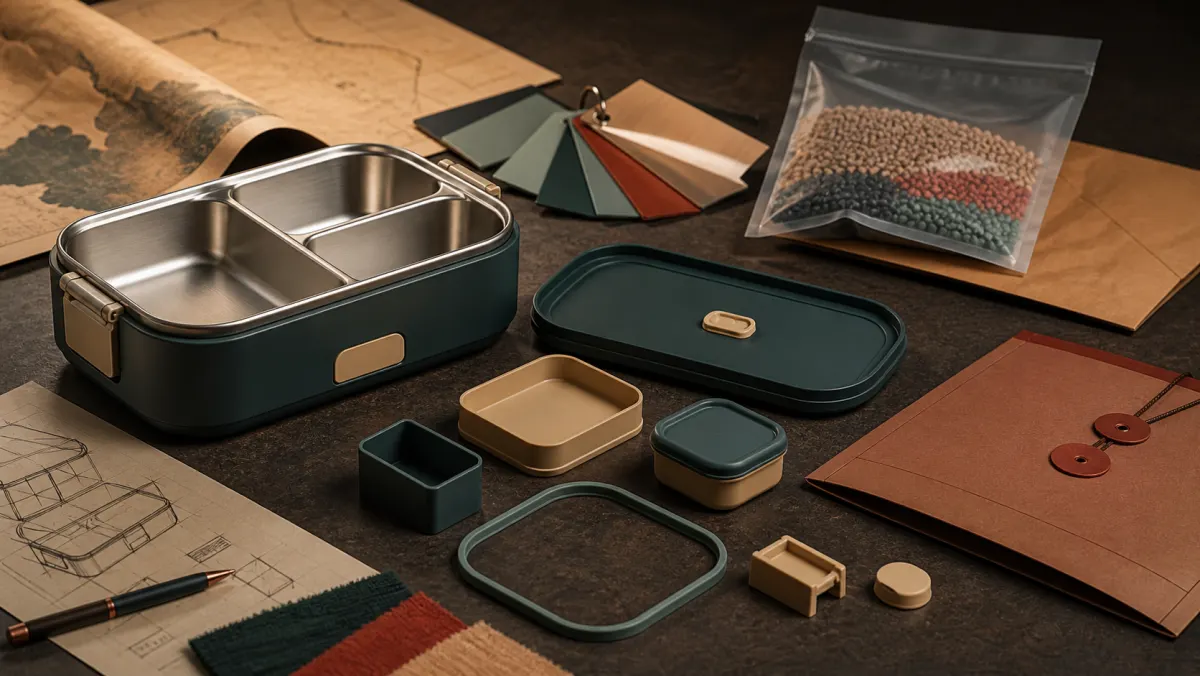
By China Made & Tech Team. This is desk-researched buyer guidance, not a factory audit, product test, laboratory accreditation check, legal opinion, customs ruling, or product-safety certification.
The hard part of sourcing a lunch box from China is usually not finding a factory that can make one. It is making sure the thing you quote, test, approve, produce, ship, and sell is still the same thing at every handoff. The FDA's component-status framework makes the underlying principle explicit: the regulatory status of a food-contact material depends on the individual substances that make up the article and are reasonably expected to migrate.
That is why “food-grade,” “BPA-free,” “FDA,” “LFGB,” and “ISO” are weak starting points. They may be useful clues, but none of them is a complete product identity. A lunch box can contain a body, lid, gasket, valve, divider, coating, printed decoration, adhesive, metal treatment, insulation layer, and packaging. Each may have a different material, supplier, use condition, and evidence boundary.
The safer 2026 sequence is a chain of controlled commitments:
- Define the destination market and intended use.
- Freeze the product architecture and every plausible food-contact component.
- Qualify the legal counterparty and the actual production scope.
- Build an evidence file that matches the product, use, factory, and market.
- Connect the approved sample to a controlled production lot.
- Assign importer, labeling, customs, traceability, and release responsibility.
If any link is unresolved, do not treat the next payment as routine. A supplier can be commercially real and still be the wrong counterparty for your product. A laboratory can be competent and still have tested the wrong sample. A shipment can clear customs and still lack the product file needed for the destination market.
The buyer's first decision is the release path, not the supplier
Most sourcing workflows begin with a supplier search. That feels efficient because marketplaces and trade directories provide immediate options. But a list of factories is not yet a decision framework. Before you compare quotes, decide what must be true before each commitment becomes irreversible.
| Commitment | Question to answer first | Hold the next step when |
|---|---|---|
| RFQ | What market, food, temperature, duration, and product promise are being quoted? | The supplier is pricing a vague “food-grade lunch box” |
| Sample | Which model revision and component set will be evaluated? | The sample has no controlled identity or bill of materials |
| Tooling or deposit | Which legal entity and factory will own the product file? | Seller, manufacturer, exporter, or bank-account names do not align |
| Production | What evidence covers every relevant part and use condition? | A generic certificate replaces component, method, and scope details |
| Shipment | How will the approved sample be tied to the production lot and importer file? | Change control, lot definition, labeling, or release authority is unclear |
That distinction also determines how to use the site's broader How to Find a Factory in China: Evidence Gates Before Each Payment and Quality Control in Chinese Factories: Build a Defect-to-Release Evidence Chain. Discovery helps build a shortlist. Quality control helps define inspection and corrective action. Food-contact sourcing adds a prior question: can the evidence identity travel with the physical product?
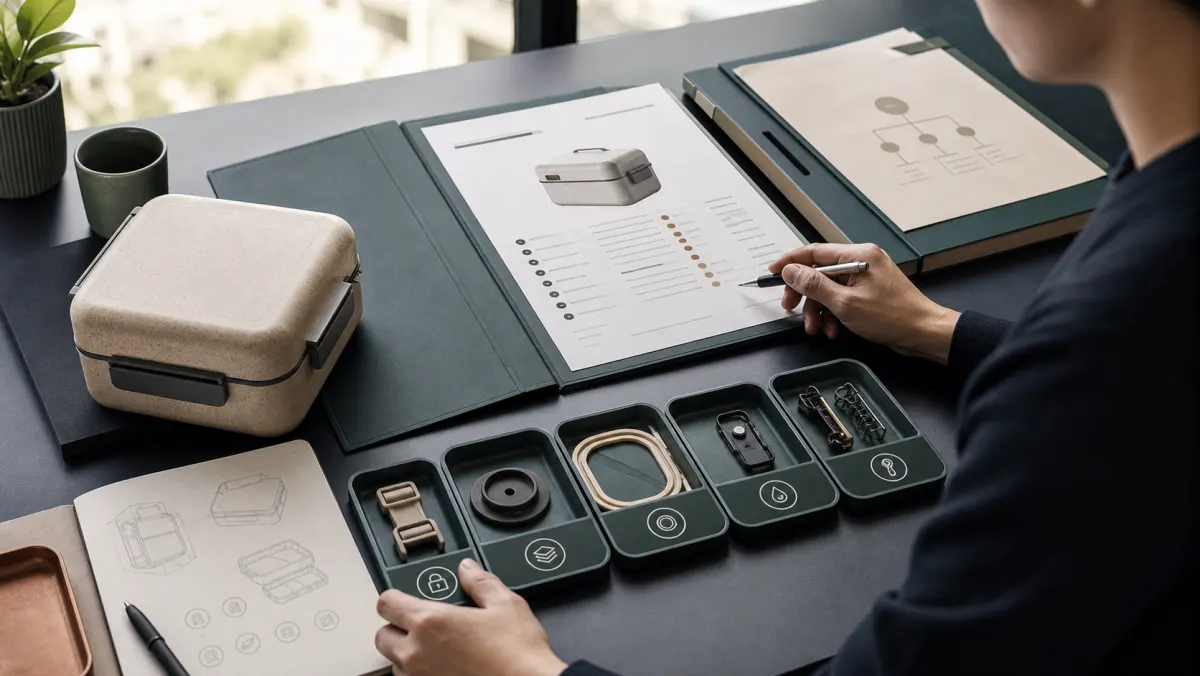 AI-generated editorial illustration. It shows no real supplier, factory, certificate, or company document.
Gate 1: Write the destination brief before asking for a quote
“Food-contact” is not a universal property that crosses borders unchanged. It is a question about a particular article, substance, food type, temperature, contact duration, and use pattern in a particular market.
 AI-generated editorial illustration. The symbols represent use-condition questions, not regulatory approval or a real market classification.
For a U.S.-bound product, the FDA's component guidance says the overall regulatory status of a food-contact material is dictated by the status of each individual substance reasonably expected to migrate. The available pathways include regulations in Title 21, GRAS status, prior sanctions, threshold-of-regulation exemptions, and effective Food Contact Substance Notifications. The FDA also states that an FCN is effective for the manufacturer, substance, and conditions of use identified in the notification; it is not automatically transferable to a similar substance made by another manufacturer. See the FDA component-status guidance.
The FDA's food types and conditions-of-use tables make the practical point visible. The categories distinguish, among other things, dry solids, fatty foods, acidic or non-acidic aqueous foods, refrigerated storage, frozen storage, hot filling, boiling-water sterilization, reheating, and high-temperature cooking. A factory that says “the plastic is safe” has not yet identified which of those use conditions its evidence covers.
Write a one-page destination brief containing:
- Destination country, sales channel, and intended customer.
- Importer of record or responsible economic operator.
- Food categories: dry, aqueous, acidic, fatty, alcoholic, frozen, or mixed use.
- Maximum and minimum contact temperature.
- Contact duration and repeated-use pattern.
- Hot filling, reheating, microwave, oven, boiling-water, freezer, dishwasher, and sterilization claims.
- Direct-contact and indirect-contact boundaries for the lid, gasket, valve, divider, coating, ink, adhesive, sleeve, and packaging.
- Required language, markings, instructions, traceability, and record-retention expectations.
- Commercial stage: discovery sample, pilot, first production, replenishment, or private-label redesign.
The brief is not bureaucratic overhead. It is the thing that makes two supplier quotes comparable. If one factory prices a cold-food container and another prices a microwave-reheat system with a silicone valve and printed lid, the unit prices are not competing offers.
Use U.S. and EU examples as decision aids, not global shortcuts
For the EU, Regulation (EC) No 1935/2004 establishes general requirements for materials and articles intended to contact food, including safety, supporting documentation where specific measures apply, and traceability. The consolidated regulation should be read with the relevant material-specific rules rather than treated as a universal product certificate.
For plastic articles, Regulation (EU) No 10/2011 links authorized substances, migration limits, and conditions of use. Repeated-use articles require the buyer to ask how the test conditions relate to the intended repeated-use scenario. Regulation (EC) No 2023/2006 addresses good manufacturing practice, quality assurance, quality control, and records. GMP is part of the manufacturing-control file; it is not a product approval or a guarantee for every future lot.
Some materials also create special import questions. The European Commission maintains guidance and a declaration template for defined polyamide and melamine plastic kitchenware from China and Hong Kong. Those controls are material- and article-specific, not a rule that every lunch box from China is subject to the same entry procedure. Use the Commission's food-contact materials guidance page to test whether the exact material-and-article combination is in scope.
The destination brief should therefore end with a sentence such as: “This product is intended for refrigerated and room-temperature direct contact with dry and aqueous foods, with no microwave, oven, or hot-fill claim.” Or: “This product is intended for repeated microwave reheating of aqueous and fatty foods, and every component that can migrate must be mapped to the requested evidence.” The second sentence will create a more demanding RFQ, but it is an honest one.
Gate 2: Treat the lunch box as a product system
A lunch box is rarely one material. It is an assembly whose user promises can change the evidence needed.
| Product element | What to identify | Why it can change the file |
|---|---|---|
| Body and lid | Material family, grade, colorant, masterbatch, thickness, revision | Material identity and surface area affect the relevant evidence |
| Gasket and valve | Elastomer or silicone identity, supplier, formulation boundary, replacement path | A seal or valve can be a separate migrating component |
| Divider and utensil | Material, coating, contact boundary, accessory configuration | Accessories are often added after the first report |
| Metal insert or body | Alloy, coating, weld, solder, surface treatment | The metal body may not describe the coating or joint |
| Printed decoration | Ink location, cure process, food-contact boundary | A decorative layer can become relevant when it touches food |
| Adhesive and insulation | Location, material, process control, migration plausibility | “Internal” does not explain whether it is outside the evidence boundary |
| Packaging and sleeve | Direct contact, migration possibility, label and instruction control | The shipped article may include more than the factory sample |
| User promise | Microwave, boiling, dishwasher, freezer, leakproof, odor-resistant | A claim changes the conditions the buyer must validate |
Translate the product map into a controlled RFQ. Include:
- Product identity: internal model number, supplier model number, drawings or controlled photos, dimensions, tolerances, color, finish, closure, gasket, valve, divider, accessory, packaging, and revision.
- Use conditions: food categories, maximum temperature, duration, repeated use, cleaning, hot filling, reheating, freezing, and sterilization.
- Claims: leakproof, microwave-safe, oven-safe, dishwasher-safe, odor-resistant, stain-resistant, insulated, stackable, or any other promise that will appear in marketing.
- Evidence request: authorization or declaration basis, formulation identity, test methods, laboratory name, accreditation status and scope, report number, sample identity, test date, conditions, labels, instructions, GMP controls, traceability, and change-notification rules.
For microwave claims, ask for the actual method and load rather than copying a symbol. China's GB/T 45171-2024 standard record is a current reference for measuring plastic food-contact interface temperature during microwave heating. It does not prove that a specific lunch box passes, and it does not establish suitability for every microwave, food, time, or load.
The RFQ should also state what counts as a change requiring buyer approval: resin, colorant, gasket supplier, ink, adhesive, coating, mold, production site, subcontractor, sterilization method, packaging, instruction, or user-facing claim. A change-control sentence is more valuable than a generic promise that “quality will be stable.”
Gate 3: Qualify the counterparty behind the listing
The seller on a marketplace page may not be the entity that molds the body, owns the formulation, controls the gasket, signs the declaration, or exports the goods. Put three roles into the file:
- Contracting seller: the entity on the quotation, purchase order, invoice, and bank account.
- Legal manufacturer: the entity and site controlling production, formulation, assembly, and release.
- Exporter or logistics party: the entity shown on customs and shipping documents.
They may be the same company. If they are not, write the relationship down. A trading company can be a legitimate seller, but then the buyer must know which factory it controls, which documents it can warrant, and who owns the test reports and change decisions.
The National Enterprise Credit Information Publicity System supports searches by enterprise name, unified social credit code, or registration number and can expose public enterprise information, annual reports, abnormal-operation information, and serious-violation information. Use it to check identity and status. Do not use it as proof that the company can make the exact lunch box or that the product conforms to a destination market.
For direct food-contact plastic products, check the supplier's exact production-license scope and production address using the relevant Chinese market-supervision guidance. The point is not to collect another logo. It is to see whether the public business identity, licensed product scope, production address, quotation, bank account, factory photos, and product file describe one coherent counterparty.
Ask each candidate to answer these questions against the quoted model:
- What is the legal manufacturer's full name, unified social credit code, and production address?
- Which entity owns the mold, formulation, test report, and change-control decision?
- Which site performs molding, sealing, printing, coating, assembly, and final inspection?
- Which parts are outsourced, and how are their materials and lots traced?
- Which food types, temperatures, durations, and repeated-use conditions were used for the existing report?
- Does the report sample match the quoted model, color, gasket, valve, coating, and revision?
- Which changes require buyer approval before production?
- Can the factory retain golden samples and finished-goods samples by lot?
- Which entity signs the declaration or conformity statement, and on what evidence basis?
- Which entity appears on the invoice and export documents?
The strongest answer is not necessarily the longest. It is internally consistent. Names, addresses, model numbers, report identity, sample photos, quote, invoice, and shipping party should form one chain.
Gate 4: Build an evidence file, not a certificate folder
Ask for documents in layers and label each document by the question it answers.
| Evidence layer | What it can answer | What it cannot answer alone |
|---|---|---|
| Regulatory or authorization basis | Whether a component may have a pathway for the intended market and use | Whether the quoted factory used the same formulation |
| Declaration or conformity statement | What the responsible party declares about the article and conditions | Whether the declaration is current, supported, and tied to the exact revision |
| Migration or laboratory report | What was tested, by which method, on which sample, under which conditions | Whether untested components, later revisions, or production lots match |
| GMP and quality records | How manufacturing, quality assurance, quality control, and records are managed | Whether every unit or supplier is approved |
| Label and instructions | What conditions are communicated to the user | Whether the product meets an unsupported marketing claim |
| Traceability record | How input, component, production, and finished-goods lots are connected | Whether a missing or altered record can be reconstructed later |
China's official food-safety national standards index through September 2025 is useful for identifying standard families, including GB 9685 and material-specific food-contact standards. It is a reference index, not a conformity certificate for a named lunch box.
Review every report's identity block:
- Laboratory name, address, accreditation and relevant scope.
- Report number, issue date, revision, and sample receipt date.
- Applicant, manufacturer, production site, and sample description.
- Model, color, formulation, component, thickness, and intended use.
- Food simulants, temperatures, durations, repeated-use assumptions, and methods.
- Results, limits, deviations, opinions, and any exclusions.
- Whether the tested article matches the current drawing, BOM, instructions, and label.
ISO/IEC 17025 describes competence, impartiality, and consistent operation for testing and calibration laboratories. It does not turn a report into a universal product approval. The buyer still has to check whether the laboratory's scope covers the method, whether the report describes the right sample, and whether the conditions answer the destination-market question. Use the ISO/IEC 17025 reference as a laboratory-scope check, not as a supplier badge.
The same discipline applies to “BPA-free.” Ask what material, component, formulation, model revision, and test scope the statement covers. A one-page declaration may be a useful supplier statement. It is not automatically a complete file for the body, gasket, coating, ink, adhesive, or accessory.
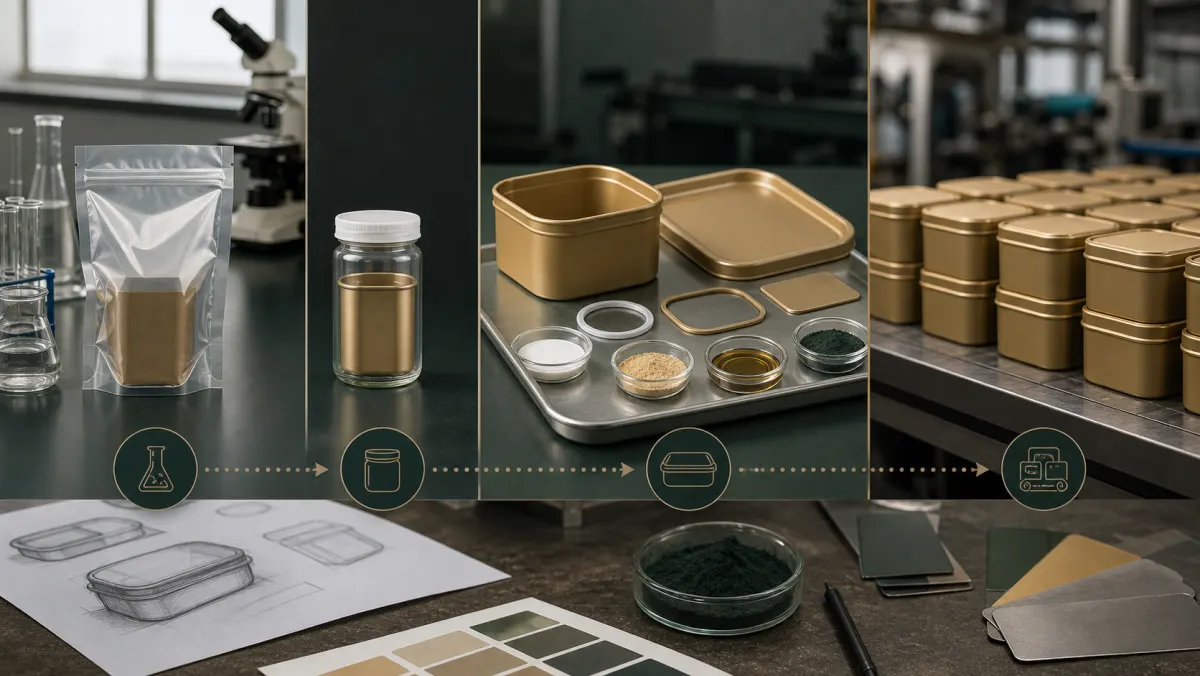 AI-generated editorial illustration. It shows a visual sequence, not a laboratory result or product certification.
Gate 5: Make the approved sample survive production
A sample is a decision object, not a souvenir. Before approving production, freeze what the sample actually is:
- Controlled model number and revision.
- Drawing, BOM, material declarations, color, finish, coating, ink, adhesive, and accessory configuration.
- Controlled photos and measurements for critical dimensions.
- Closure, seal, valve, leak, fit, and user-instruction conditions.
- Food-contact and use-condition evidence linked to the same revision.
- Retained golden sample held by both buyer and factory.
Then define what a production lot means. It might be one shift, one material batch, one mold, one production date, one finished-goods lot, or a combination. The definition must be usable by the factory, inspector, warehouse, and importer. “The shipment” is usually too broad to be a meaningful lot if it combines different material batches or production dates.
Separate three questions that are often collapsed into one inspection visit:
- Does the product match the approved identity? Check model, components, color, dimensions, instructions, packaging, and revision.
- Does the lot meet the commercial defect rules? Check appearance, function, leakage, fit, finish, quantity, packaging, and the buyer's written acceptance criteria.
- Does the food-contact evidence cover the product and use? Check formulation, test method, laboratory scope, sample identity, conditions, and destination-market basis.
Sampling addresses the second question. It does not answer the third. ISO 2859-1:2026 provides lot-by-lot attribute sampling schemes indexed by acceptance quality limit and includes sample-size and acceptance/rejection logic. It does not choose your defect classes, set your food-contact limits, approve your supplier, or guarantee every unobserved unit.
Write the release plan before inspection. It should define:
- Lot size and how the factory identifies it.
- Critical, major, and minor defects.
- Functional tests and environmental conditions.
- Sample size, inspection level, AQL or other acceptance rule.
- Destructive-test policy and retained samples.
- Food-contact or migration testing trigger when formulation, supplier, process, or claim changes.
- Corrective-action response, reinspection, and disposition authority.
- The exact evidence required before balance payment and shipment release.
The production sequence should look like this:
Approve the file → approve the golden sample → run a controlled pilot → inspect the pilot → close deviations → freeze the revision → produce the defined lot → inspect and retain samples → release or hold.
Do not let the word “AQL” create false confidence. An AQL plan can help you decide whether a defined lot is acceptable for visible and functional defects. It cannot prove that a changed gasket, pigment, coating, or adhesive remains covered by the previous food-contact file.
Gate 6: Finish the importer and shipment file
The factory is not the destination-market operator. Before shipment, assign the responsibilities that remain after the goods leave China:
- Importer of record or responsible economic operator.
- Customs classification and entry documentation.
- Product name, model, material, lot, and country-of-origin records.
- Destination-market label and user instructions.
- Declaration, supporting documents, test reports, and traceability file.
- Packaging and carton marks that match the approved product.
- Record retention, complaint handling, recall contact, and replacement path.
- Change notification after launch.
For EU shipments, an EORI number identifies an economic operator for customs operations. It does not replace food-contact documentation or traceability. For U.S. shipments, a customs broker can help with entries, but the importer-of-record remains responsible for correct entry documentation and duties, taxes, and fees; confirm the current responsibility directly with U.S. Customs and Border Protection's importer guidance.
The shipment file should make it possible to answer five questions without calling the salesperson:
- What exact product and revision is in the carton?
- Which factory and component suppliers made it?
- Which lot and retained samples correspond to the shipment?
- Which destination-market evidence and instructions apply?
- Who can stop release, investigate a complaint, or initiate a correction?
If the answer to the fifth question is “the factory will handle it,” the buyer still needs a written counterparty and importer plan. A factory can support production. It cannot silently absorb the legal, customs, labeling, and market responsibilities of the importer.
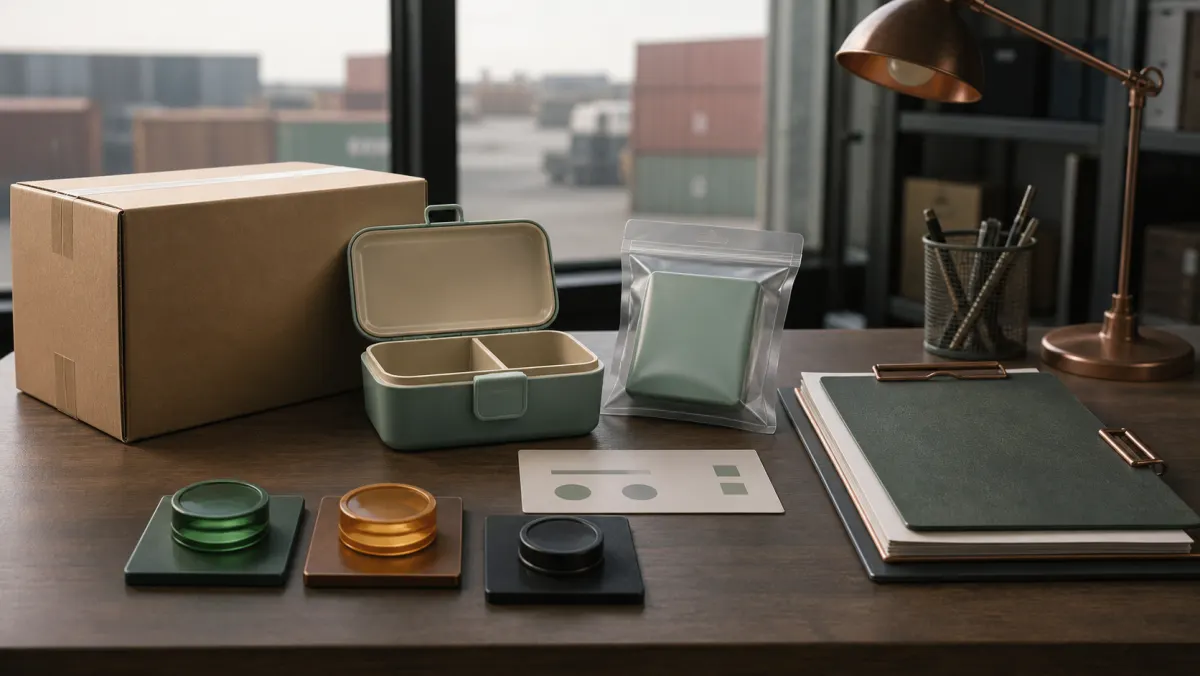 AI-generated editorial illustration. It shows a release-decision concept, not a real shipment, customs document, or importer record.
What changes in 2026?
The 2026 question is not “Which new rule makes this product safe?” It is “Which current dates and official signals should change the buyer's recheck before the next order?”
EU bisphenol rules require article-specific classification
Commission Regulation (EU) 2024/3190 addresses BPA and certain other hazardous bisphenols in food-contact materials. The Commission's guidance page notes a correction to the implementation note: for one answer, the applicable language is “after 20 July 2027 or 20 January 2029, whichever is applicable.” That is a warning against turning the regulation into one universal lunch-box deadline. The buyer should identify whether a relevant bisphenol is present, what article and use are involved, which transition provision applies, and what evidence must be updated. See the EU regulation and the Commission guidance page.
China's official standards list is a starting point, not a pass mark
The current Chinese standards index is dated through September 2025 and lists 1,725 food-safety national standards. The number is useful as a freshness signal, but it is not a product score. Ask the supplier to identify the exact standard basis for each material and use condition, then check the current text and any amendments before launch.
SAMR consumer guidance also directs attention to food-contact attributes, applicable standards, producer information, production date, conformity evidence, and use conditions such as microwave or boiling limits. Use the 2026 SAMR consumer guidance as a question list. It is not a remote audit of a supplier.
Official surveillance is a risk signal, not a supplier ranking
The 2025 national spot check reported in 2026 covered 1,133 batches across 18 food-related product categories and found 30 nonconforming batches. The total does not tell you the defect rate for lunch boxes, a particular material, a particular region, or a named factory. It does support a less glamorous conclusion: documentation, inspection, and release controls are not optional just because a product is small or inexpensive. Read the SAMR spot-check notice without converting the aggregate into a category-wide risk score.
The sampling reference has also moved forward
ISO 2859-1:2026 is the current third edition for lot-by-lot attribute sampling. If an inspection plan still cites an older edition, do not assume the older plan is wrong; ask which edition, sample-size logic, acceptance rule, and buyer-specific defect definitions the parties intend to use. The important change is not the label on the standard. It is that the buyer must make the sampling reference explicit.
Build the first RFQ as a three-page buyer file
You do not need a 40-page specification to start a serious conversation. A compact RFQ can expose weak files quickly.
Page 1: Product and use
Include the model name, controlled drawing or photos, dimensions, materials, components, colors, finish, accessories, packaging, food types, temperature, duration, repeated-use assumptions, cleaning, microwave or boiling claims, and destination market.
Page 2: Supplier and production
Request legal seller, legal manufacturer, production address, unified social credit code, production-license scope where applicable, factory role, outsourced components, mold ownership, material suppliers, minimum order, lead time, change-control method, sample-retention plan, and shipment entity.
Page 3: Evidence and release
Request authorization or declaration basis, component-level material information, report numbers and laboratory scope, conditions of use, current labels and instructions, GMP and traceability records, golden sample procedure, lot definition, inspection plan, corrective action, retained samples, importer handoff, and the documents required before balance payment.
Ask every supplier to return the same response matrix. A supplier that cannot answer a question may still be worth investigating. A supplier that answers different versions of the same question in different files is a larger problem.
For the supplier-search stage, keep the broader How China Manufactures: Inside the World's Factory (2026) context in view: proximity between molding, metalworking, packaging, component suppliers, and export services can create real speed. But manufacturing density does not remove the need to control the product file. It makes it more important because a product can pass through more hands than the marketplace listing suggests.
Ready, conditional, or hold?
Use a staged decision rather than a single supplier score.
Green: ready for the next commitment
- Destination market and intended use are written.
- Product architecture, components, claims, and revision are controlled.
- Seller, manufacturer, exporter, and production site are reconciled.
- Evidence covers the relevant product, component, method, condition, and market.
- Golden sample, lot definition, inspection, change control, and retained samples are agreed.
- Importer, label, traceability, customs, and release responsibilities are assigned.
Green does not mean “safe forever.” It means the next commitment has an evidence path.
Amber: proceed only with a named condition
Amber is appropriate when the unknown is specific and recoverable: a missing lab scope page, an unconfirmed gasket formulation, an incomplete supplier-role map, a pending destination-market declaration, or a pilot lot that needs a defined corrective action.
Write the condition as an owner, document, deadline, and stop consequence. “Supplier to provide more certificates” is weak. “Supplier to provide the current report scope and the report sample identity for the silicone gasket before tooling deposit; otherwise tooling remains on hold” is actionable.
Red: hold or reduce the commitment
Hold when the legal entity cannot be reconciled, the production site is unclear, a key component is omitted, a report covers a different model, a claimed use condition has no method, a material or process change is hidden, or the importer cannot assemble the destination-market file.
Red is not an accusation. It is a commercial boundary. You can keep the lead in discovery, ask for a narrower sample, or change the product promise. You should not let a low quote turn an unresolved evidence problem into a production payment.
Frequently asked questions
How do I find a food-contact lunch box manufacturer in China?
Start with a product-and-use brief, then build a shortlist from factories, trading companies, and sourcing channels. Qualify each candidate by matching the contracting seller, legal manufacturer, production address, product scope, component file, and destination-market evidence. A platform listing is a lead, not qualification.
Is a BPA-free or FDA certificate enough for a lunch box?
No. The relevant question is what substance, component, manufacturer, model, use condition, method, and revision the document covers. FDA's framework is component- and use-specific, and the EU file can also require declarations, supporting documentation, GMP, migration logic, and traceability.
Should I test the sample or the production lot?
Both can be necessary, but they answer different questions. Test the defined product and intended use, then control the production lot through a golden sample, change control, lot definition, inspection, retained samples, and any triggered retesting.
What should I ask a Chinese lunch-box supplier before paying a deposit?
Ask for the legal entity and production address, product and component map, use conditions, evidence basis, report identity and laboratory scope, current labels and instructions, change-control rules, golden sample procedure, lot-release plan, and importer documentation. Make unresolved items conditions of payment rather than informal promises.
Can a customs broker handle the compliance risk for me?
A broker can support customs entry, but customs identity is not the same as food-contact product compliance. The importer or responsible economic operator still needs the applicable product file, labels, declarations, traceability, and a clear release decision for the destination market.
Method and limitations
This article was rewritten on August 17, 2026 from current official FDA, European Commission, EUR-Lex, Chinese standards and market-supervision, enterprise-registry, ISO, and customs sources. It is desk research. It does not include a factory audit, sample purchase, laboratory submission, production inspection, supplier interview, legal opinion, customs ruling, or named-product conformity assessment.
U.S. and EU rules are concrete examples, not a substitute for checking the actual destination market. China’s standards index, official guidance, and surveillance notices are useful for building questions and freshness checks, but they do not approve a supplier or prove future lot performance. Recheck the destination-market rules, current standard text, supplier identity, formulation, use conditions, laboratory scope, labels, and importer obligations before every commercial commitment.