

By China Made & Tech Team. This is desk-researched procurement analysis, not legal, customs, broker, tax-credit, UFLPA, FEOC, or supplier advice.
A solar quote marked Cambodia, Malaysia, Thailand, or Vietnam is not an import decision. It is a starting hypothesis. The buyer still needs to know what the product is, whether it falls within the relevant order scope, which legal entity produced it, which entity exported it, which factory and cell route are involved, what documents will accompany the entry, and who is accountable when any of those facts change.
That is especially important because the United States issued antidumping and countervailing duty orders for crystalline silicon photovoltaic cells, whether or not assembled into modules, from those four countries in June 2025. Commerce's final determination tables provide valuable public context: rates vary materially by company, and some are based on facts available with adverse inferences. But a public table is not a current cash-deposit instruction, scope ruling, entry classification, landed-cost calculation, or promise that an individual shipment will clear.
The buyer question is therefore narrower and more useful: can this specific quote become a complete producer-and-entry evidence file before it influences award, financing, shipment, or release?
Quick Answer: Country Is a Clue, Not a Release Decision
The Department of Commerce announced final affirmative determinations on 21 April 2025. The USITC's final release states the Commission found material injury for Malaysia and Vietnam and threat of material injury for Cambodia and Thailand, allowing Commerce to issue orders. The Federal Register published the AD and CVD orders on 24 June 2025. Those documents establish the official case and order context; they do not answer a buyer's individual transaction question.
| Official record | What it can support | What it cannot decide |
|---|---|---|
| Commerce final rate tables | a supplier-screening prompt; named entity and rate-category differences | the current amount due for a particular entry |
| Federal Register AD/CVD orders | that orders exist and their published scope/order framework | that a particular product is in scope or has a final rate path |
| USITC final determination | the injury determination behind the orders | an importer’s compliance, origin, or project outcome |
| supplier country statement | an initial routing fact | producer/exporter identity, product scope, cell facts, or entry treatment |
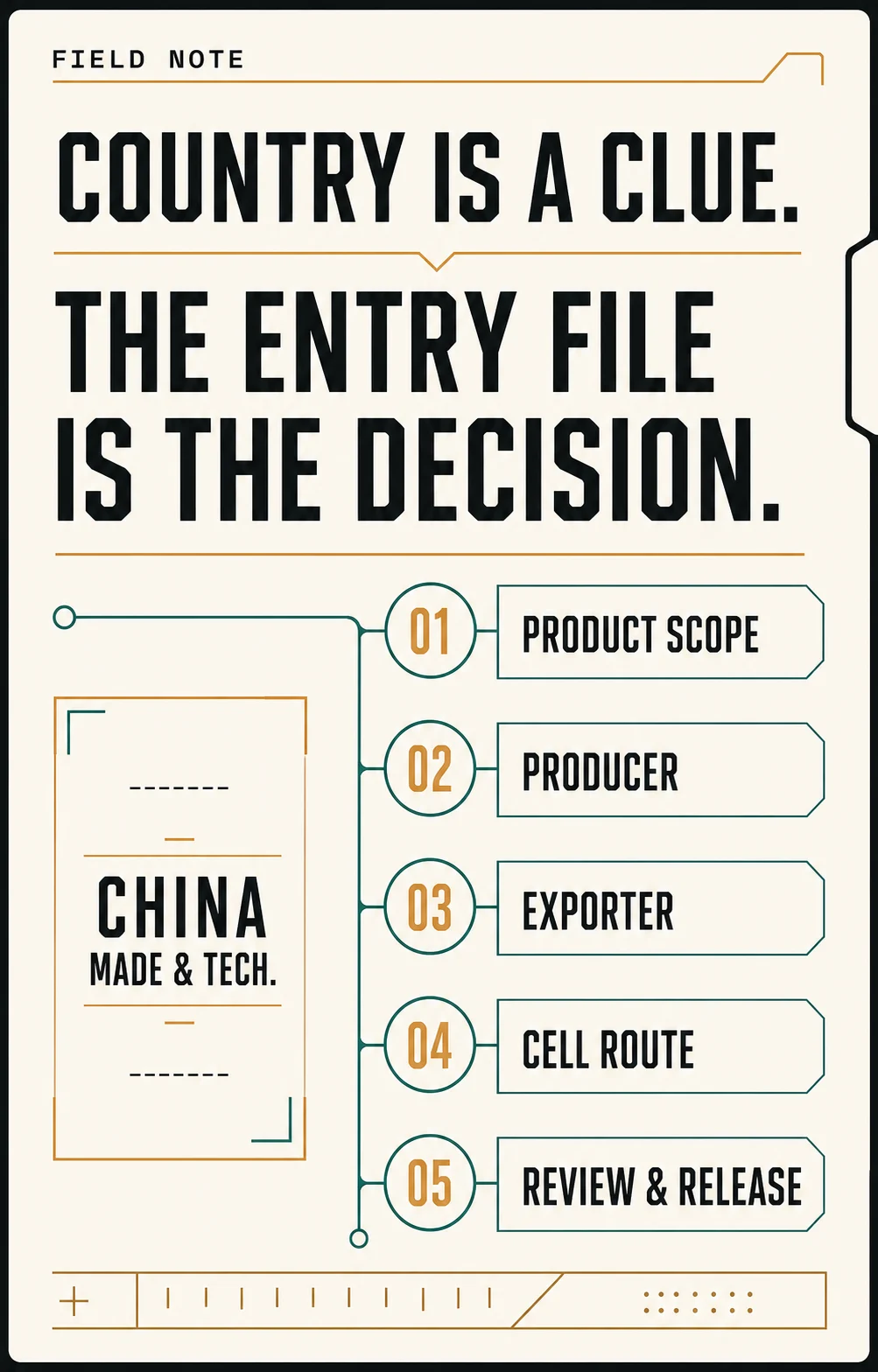 Field Note: a national label cannot replace a product-and-entity evidence file.
Separate the Four Files That Headlines Collapse
“Southeast Asia circumvention duties” is a reasonable search phrase but a dangerous working label. It can make distinct legal and commercial questions sound interchangeable. This guide addresses the 2025 AD/CVD orders on CSPV cells, whether or not assembled into modules, from Cambodia, Malaysia, Thailand, and Vietnam. It does not decide a separate anti-circumvention inquiry, China-origin Section 301 treatment, UFLPA traceability, FEOC/PFE or tax-credit treatment, HTS classification, country-of-origin analysis, or a contract allocation question.
| File | Core question | Decision owner |
|---|---|---|
| product and order scope | What exact good, configuration, and documentation are proposed? | importer with qualified customs/legal support |
| producer/exporter path | Which legal entities and factory are tied to the module/cell route? | supplier plus procurement; independently reviewed where needed |
| trade and entry review | What current rules, instructions, classifications, entries, and records apply? | qualified customs broker and legal/compliance owners |
| parallel commercial/traceability controls | What does the project require for contract, UFLPA, Section 301, tax-credit, financing, or origin? | the appropriate project, legal, compliance, and commercial owners |
What the 2025 Official Tables Actually Show
Commerce's final determinations show why country alone is a poor screen. Cambodia's final table includes adjusted AD cash-deposit rates of 117.18% for named entities and all others, while certain CVD rates reached 3,403.96% for listed companies using adverse inferences. Malaysia includes both a 0.00% AD rate for Hanwha Q Cells Malaysia and higher rates for other named entities; Thailand and Vietnam also include entity-specific outcomes, all-others categories, and adverse-inference results.
The useful procurement lesson is not to add the highest numbers and apply them to every quote. It is to ask which producer/exporter category, if any, the supplier claims; what evidence connects the quoted product to that category; and whether qualified current review supports that claim. A historic final-determination table can change the questions a buyer asks. It cannot replace current advice about the entry.
| Quote statement | What a buyer may record | What must still be requested |
|---|---|---|
| “Made in Cambodia” | a claimed manufacturing location | exact legal producer, exporter, factory, product facts, current trade review |
| “Malaysia has low duties” | a general commercial claim | named rate path, product/entity evidence, current instructions and exclusions/review where relevant |
| “Vietnam producer has its own rate” | possible entity-specific path | producer-exporter pairing, invoices, factory and cell facts, broker/legal review |
| “Thailand factory is from a familiar group” | brand/group context | legal names, production and export roles, scope, current route evidence |
Build the Quote Gate Before Commercial Scoring
Run a short route-file review before the procurement team compares $/W or delivery dates. The seller should provide the proposed module and cell configuration, exact producer and exporter legal names, factory address, commercial seller and invoicing entity, proposed shipment route, cell source facts to the extent relevant to the buyer's review, and any statement on applicable entity path. The importer should route this material to its qualified broker and legal/compliance process rather than asking a blog or a salesperson for a final duty conclusion.
| Gate | Minimum input | Hold condition |
|---|---|---|
| product identity | datasheet, part/model, bill/configuration boundary, intended entry description | product is described only as “a solar panel” |
| legal entities | producer, exporter, seller, invoice and factory names with addresses | brand or group name substitutes for legal identity |
| production and route facts | factory/production declaration and relevant cell/component facts | country label is the only production evidence |
| official context | applicable published case/order identified and dated | a static rate table is treated as current entry advice |
| specialist review | broker/legal/compliance owner, question, inputs and dated result | no one owns the scope/entry question |
| commercial control | change notice, document duty, allocation and remedy terms | source/entity changes can occur without buyer notice |
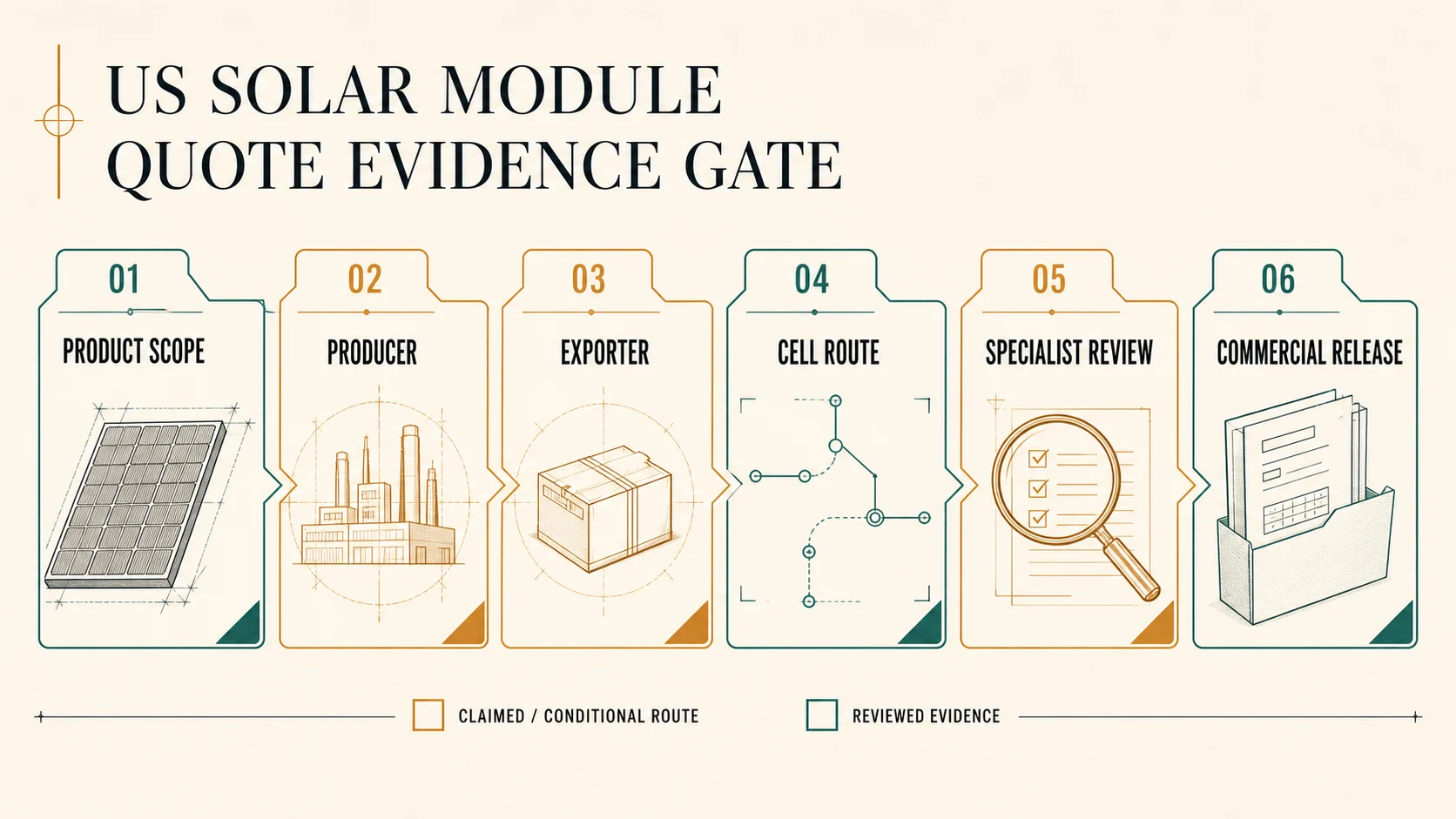 The gate assigns evidence and a decision owner; it does not classify or approve an entry.
A useful output is a single quote status. Context-only means a country or brand has been mentioned but the producer file is not started. Reviewable means the buyer has product and entity inputs sufficient for qualified review. Conditional means a reviewer has identified missing evidence or a pre-award condition. Held means the route cannot influence award or release until the named gap is closed or a risk owner records an exception. This status is more honest than a green/red country rating.
Make Producer and Exporter Identities Traceable
The entity problem is usually mundane. A brand may differ from the sales affiliate, invoice issuer, factory operator, producer, exporter of record, and cell supplier. A lower published rate or a named producer in a Commerce table does not automatically travel across those identities. The buyer needs consistent names and a traceable link to the actual product; whether the link is legally sufficient is for qualified counsel, broker, and compliance review.
Ask the supplier to identify each role in writing and to notify the buyer before it changes. Keep the response with the model, purchase order, invoice, packing list, bill of lading, factory declaration, and any broker correspondence. That does not make the buyer a trade investigator. It makes the record reviewable when a lender, customs specialist, internal audit, or receiving team asks why the route was approved.
| Record | Why it matters | Do not substitute |
|---|---|---|
| producer legal name and factory | anchors the manufacturing representation | a marketing brand or group chart |
| exporter and seller legal names | anchors the commercial/entry path | an email signature or web domain |
| product/configuration record | connects documents to the purchased good | a generic brochure |
| invoice and shipment documents | test consistency across the real order | a pre-award presentation |
| supplier change notification | prevents a silent entity or source substitution | a general force-majeure clause |
Use Official Rate Information Carefully
It is tempting to turn Commerce's final rate table into a quick landed-cost calculator. That approach fails when the buyer lacks a confirmed producer/exporter path, uses a stale instruction, ignores scope and exclusions, or combines unrelated duties as if every layer automatically applies. It also creates a false reassurance when a public number is low but the entity or product facts are unproven.
Use the official table as an escalation trigger. Preserve the publication date and source. Record the supplier's claimed path without accepting it as fact. Ask the broker/legal owner what current documents and facts they need. Then record the result, its scope, any conditions, and the person who can authorize commercial release. Re-run the review when the producer, exporter, product configuration, route, quantity, timing, or relevant rule changes.
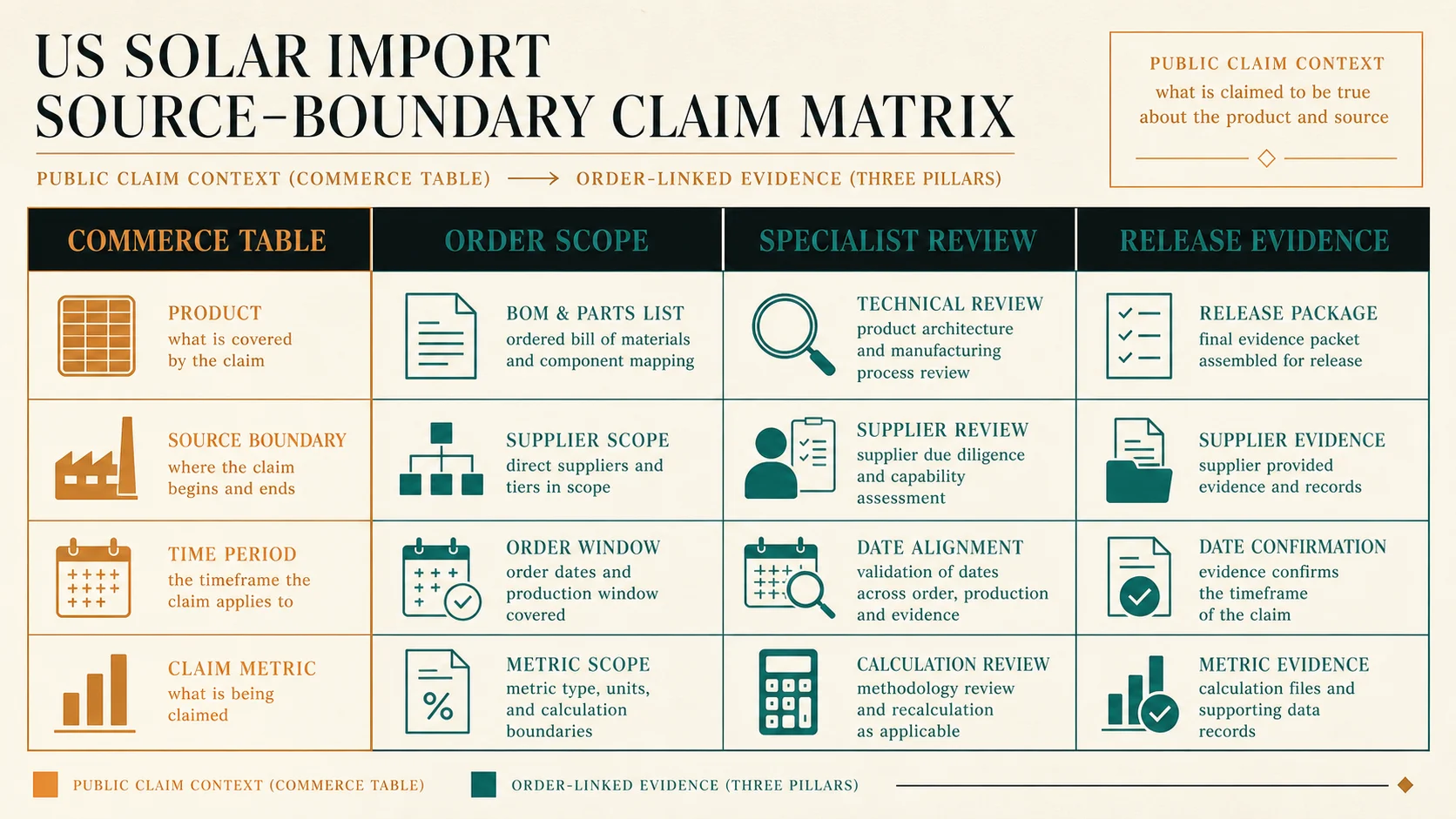 Official information is powerful when it stays attached to its source boundary and the order facts.
Put Route Changes Into the Contract
The trade file and contract file meet when the supplier proposes a change. A contract cannot make an uncertain route certain, but it can prevent a late surprise from becoming an unreviewed shipment. Define the approved product and information package; require prior written notice of material changes to producer, exporter, factory, cell route, product configuration, shipping route, or documentation; identify the buyer's review rights; and state who bears the consequence when a promised representation is incorrect or the agreed documentation is absent.
The clause must be tailored by counsel to the transaction. Commercially, the point is straightforward: a procurement team should not learn after manufacture that the entity path or product evidence no longer matches the path used in the quote review. Any exception should identify the missing fact, the decision it affects, the interim control, the accountable owner, the review date, and the consequence if it remains unresolved.
Give Every Gate an Owner and a Deadline
An import file becomes unreliable when several teams assume someone else checked the same point. Procurement can collect supplier facts and manage commercial leverage, but it should not silently make a customs determination. Engineering can confirm that the reviewed configuration matches the project need, but it cannot turn a product declaration into a legal conclusion. A qualified broker or legal/compliance team can assess the particular question presented, but needs a stable product and entity record to review. The receiving team needs the final documents and a clear instruction about what discrepancy stops acceptance.
Set a named owner for each fact and a decision deadline relative to the project schedule. The pre-award review should happen while the buyer can still change supplier or make conditions part of the deal. The pre-shipment check should happen while the producer, exporter and product can still be reconciled. A discovery at the port is not a control; it is a recovery event.
| Decision point | Accountable work | Evidence handoff |
|---|---|---|
| supplier shortlist | procurement identifies country, product and legal entities; asks for a bounded producer file | quote status and missing-data log go to trade/compliance owner |
| technical and commercial award | engineering confirms the reviewed configuration; procurement puts conditions and notice into the deal | approved configuration, entity list and exceptions go to project lead |
| pre-production or pre-shipment | supplier reconfirms identities, factory, model and document path; reviewer sees any changes | dated confirmation and variance log go to broker/legal owner |
| entry and receiving | broker/legal process the actual entry facts; operations compares final goods/documents with the approved file | entry/receiving record and discrepancy route go to asset and procurement owners |
Resolve Contradictions Before They Become a Port Problem
The most useful diligence often comes from small contradictions: a quotation shows one factory but the invoice names another entity; a datasheet revision changes but the producer declaration does not; a seller calls itself the exporter without identifying the producer; a shipment schedule changes after a specialist review; or a claim of low duty treatment is not tied to a dated source and input file. None of these facts proves wrongdoing. Each is a reason to pause the claim and ask the right owner for a reconciled record.
Use a simple exception register. State the affected order/line item, the inconsistent document or missing fact, the potential decision impact, the temporary restriction, the owner, the required record, and the expiry date. A buyer may decide that a gap is acceptable for an early screening exercise while holding award or shipment. What should not happen is an unresolved issue becoming “approved” simply because the sales timeline is moving.
| Exception state | Example | Appropriate next step |
|---|---|---|
| incomplete | seller gives a brand and country but no producer legal name | keep the quote context-only; request the missing entity file |
| inconsistent | factory/address differs across quote and declaration | ask supplier to reconcile, then route changed facts for review |
| conditional | reviewer needs a configuration or product-scope fact | make the fact a pre-award or pre-shipment condition |
| changed | producer, exporter, cell route or model changes after review | re-open the applicable review and contract-control path |
| unresolved | a needed conclusion cannot be reached in time | hold, escalate to the risk owner, or record a deliberately approved exception |
Keep Parallel Requirements Parallel
Solar imports can involve other requirements beyond these AD/CVD orders. China-origin inputs may raise distinct Section 301 issues. UFLPA traceability has its own evidentiary questions. Tax-credit and FEOC/PFE analyses use different statutory tests and project facts. Financing parties, offtakers, insurers, and EPC agreements may add representations or approval routes. A route file that is sufficient for one decision may be insufficient for another.
The cleanest practice is to retain a common product-and-entity core, then attach separate workstreams with their own sources, owners, boundaries and release conditions. The same factory declaration may be relevant to several reviews, but it should not be treated as a universal compliance certificate. This prevents the buyer from overstating what any one document establishes and makes later audits much easier: each conclusion can be traced to the decision, question and qualified owner that actually made it.
For a portfolio buyer, preserve the file at both order and project level. The order record answers what was bought and reviewed; the project record shows which modules were assigned where, what changed, and which unresolved conditions were accepted by whom. That separation becomes valuable if modules are reallocated between projects, if lender questions arrive after delivery, or if warranty and replacement discussions reopen the original route assumptions.
It also makes periodic re-review possible without recreating the entire diligence record from memory.
Sequence the Evidence With the Project
At prequalification, a buyer can use official orders and a country statement to decide whether to ask for the producer file. At bid clarification, obtain entity and product facts and send the question to qualified reviewers. At contract, make needed information, notice and remedies deliverables. Before shipment, check that the final entities, model/configuration, documents, and conditions match the reviewed route. At entry and receiving, preserve the actual records and escalate any discrepancy instead of treating the award-stage file as permanent proof.
This sequence does not tell an importer whether to proceed. It makes the decision state visible before irreversible commitments. It also avoids the opposite mistake: rejecting every Southeast Asian quote based only on a headline, when the relevant question is whether the specific quote can meet the project's evidence and risk requirements.
Method and Limits
This article uses Commerce's April 2025 final determination page, the Federal Register AD order notice, the associated CVD order notice, and the USITC's May 2025 final determination release. It is a source-bounded buyer framework, not a customs ruling, legal opinion, broker instruction, current duty calculation, product-scope determination, tax-credit/traceability decision, or supplier endorsement. The actual goods, documents, entities, route, current rules, entry facts, contract and qualified reviewers control the decision.