

On 28 May 2026, the European Commission fined Temu €200 million under the Digital Services Act. The decision matters to a China-based seller because it makes the product-safety environment around a marketplace more demanding and more visible. It does not make the marketplace a substitute for the seller’s product evidence. It does not clear a listing. It does not establish that a particular item is unsafe. And it does not turn a platform’s removal flow, contact point or action plan into a compliance certificate for a merchant.
The Commission’s stated finding was about Temu’s assessment of systemic risks from illegal products offered on its platform and the resulting harm to EU consumers. In explaining that finding, the Commission said Temu’s 2024 assessment relied on general e-commerce information rather than evidence specific to Temu’s service, and described its mystery-shopping evidence for selected chargers and baby toys. That is a serious platform record. It is still a platform record. A seller’s live offer is a different object: a particular product, a particular identity, a particular destination, a particular economic-operator arrangement and a particular set of information that a consumer can see.
For sellers, that distinction is the useful part of the story. A marketplace can run product-safety processes; the European Union’s General Product Safety Regulation (GPSR) also places information and process obligations on the economic operators that make products available. The seller who treats “the platform will handle it” as a complete operating model may discover that its own product identifier, responsible-person details, safety information, technical support file or correction path cannot be reconstructed once the listing is questioned.
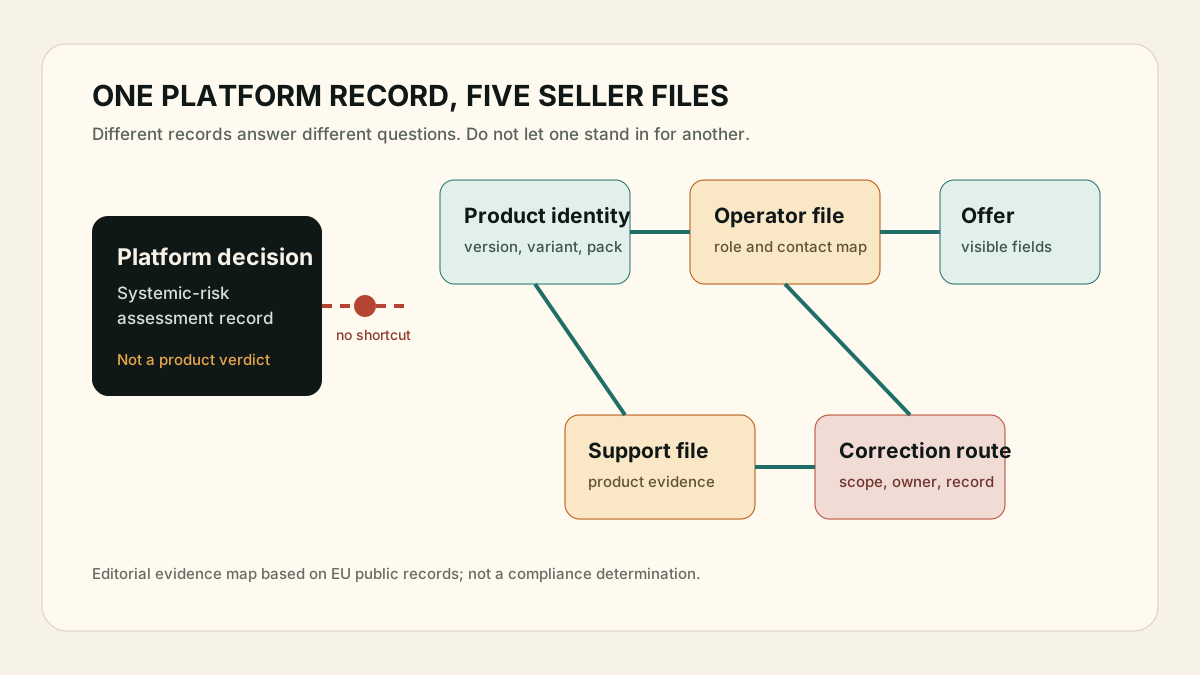
The practical conclusion is simple: treat the Temu decision as a signal to make each EU-facing offer readable without the platform headline. The evidence must connect the object, the responsible parties, the public product page, the supporting product record and the route for a correction or withdrawal. This article calls those five connected records the seller evidence file.
This is a desk-research guide, not legal advice, a product test, a marketplace audit or a compliance determination. It uses European Commission notices and official EUR-Lex legislation to explain document boundaries. It cannot decide which category-specific rules, languages, documents, tests, roles or authority processes apply to a reader’s exact product and target country.
The short answer: the Temu decision is not seller-side clearance
The most common wrong reading of a large marketplace action is that a platform action somehow settles product status downstream. It can produce opposite errors:
- “The Commission acted, so all sellers on the platform must be offering illegal goods.”
- “The platform is under supervision, so it will have solved compliance for my listing.”
- “The marketplace removed a product, so my product needs no independent file.”
- “My product page has a responsible-person field, so the product is compliant.”
None follows from the record in front of us. The Commission’s notice gives a specific finding about Temu’s risk assessment. The GPSR text gives specific information and process rules. The two are connected in the real world, but they are not the same evidence and do not answer the same question.
The first question is therefore not “Is Temu safe?” nor “Is this Chinese seller compliant?” It is: what is the subject of the record I am holding, and what further record would answer my actual product question?
| Record on the desk | What it can establish | What it cannot establish by itself |
|---|---|---|
| The Commission’s 2026 Temu DSA decision | The Commission’s platform-level finding, amount, date and stated remedy context | The legality, safety, quality or compliance of every product or seller |
| A marketplace product-safety contact point or listing interface | That a marketplace has a channel or interface designed for stated safety information and processes | The accuracy of the underlying product identity, warning, operator or technical documentation |
| A listing with manufacturer and responsible-person details | That specified information is displayed for that offer | That the product’s supporting file is complete, current, authentic or sufficient for every applicable regime |
| A certificate, test report or declaration | A bounded result for the identified document, product, standard, date and scope | A blanket answer for a variant, shipment, listing, destination or later product change |
| A removal, recall or withdrawal notice | A stated action for the identified item and record | A quality rate or conclusion for unrelated listings, sellers or platforms |
For background on how Temu connects merchants, assortment and logistics, see How Temu Works: Business Model and Tariff Risk. That model discussion is helpful context. It does not establish the compliance of an individual offer. More broadly, Chinese E-Commerce Global: The Platform Files (2026) explains why a platform, merchant, product, shipment and jurisdiction should be treated as separate files in global Chinese e-commerce.
What the Commission decided—and what it did not decide
The May decision is worth reading closely because it gives the article its correct starting boundary. The Commission said Temu failed to diligently identify, analyse and assess the systemic risks of illegal products offered on its platform and the harm that could result for EU consumers. The notice says the Commission’s evidence indicated that EU consumers were very likely to encounter illegal items on Temu. It then describes the Commission’s view that Temu’s 2024 risk assessment was not specific enough to Temu’s own service.
This is not a semantic distinction invented to soften the headline. The subject of the finding is the provider’s risk-assessment work under the DSA. The notice discusses systemic risk, the provider’s assessment and its mitigation context. That is why a seller should not turn the decision into a categorical statement about every product. The Commission did not publish a complete index of all listings, a product-by-product adjudication, a factory audit, a seller scorecard or a statement that a given merchant’s product is lawful in a particular Member State.
The €200 million amount can make the decision feel like a general quality judgment. It is not. A fine is a legal-enforcement amount in a defined case. It does not measure the number of unsafe products, the share of listings affected, the performance of a seller, the quality of a Chinese factory or the risk of a product in a buyer’s cart. The Commission’s description of selected chargers and baby toys is similarly bounded. It tells a reader what evidence was part of the Commission’s investigation; it should not be converted into a lab test conducted by this site or a statistic for the whole marketplace.
The action-plan route remains a provider remedy
The decision also had a practical afterlife. The Commission’s decision notice set 28 August 2026 as the date by which Temu was to submit an action plan. The underlying DSA Article 75 describes enhanced supervision of remedies after the specified Article 73 decision context: the provider must prepare and communicate an action plan, the Board and Commission review it, and the Commission monitors implementation. That is a route for the provider’s remedies.
This matters because a platform remedy can be important without becoming a merchant passport. A new seller workflow, more documents requested at listing time, a faster takedown path or a revised review system may alter a platform’s operating environment. Yet none of those changes demonstrates that a given seller has identified its product correctly, that its product page matches the product in the box, that warnings are appropriate for the destination or that it can execute a corrective action. A platform can make the market more legible. It cannot create facts that the seller has not maintained.
The seller-side response should therefore be organizational rather than rhetorical. Do not answer a marketplace request by collecting a folder of generic PDFs with no relationship to the offer. Do not assume an old product file automatically covers a new colourway, firmware, material, supplier, package, accessory, country or sales claim. Build a traceable chain from the offer back to its product record and forward to its correction route.
Why the distinction is commercially useful
It is tempting to hear “systemic risk” and think only about regulatory strategy. The operational effect is more mundane. When platform review, customer reporting, authority questions or a marketplace removal process become more likely, the cost of a vague file rises. A seller may need to answer simple but operationally difficult questions quickly:
- Which exact product version is on the page?
- Which legal entity is the manufacturer named for that version?
- Who is the relevant contact where the manufacturer is outside the Union?
- Which warning or safety information applies to the product and destination?
- Is the public page synchronized with the product, package and supporting documentation?
- Which sales channels, customers, batches or offers could be affected if information changes?
- Who can authorize a pause, a page correction, a withdrawal notice or a customer response?
The point is not that the answer is identical for every product. It is that a seller needs to know where the answer would come from before relying on the platform. The articles on the General Product Safety Regulation are useful precisely because they force a distinction between information shown online, the product and its accompanying information, economic operators, and marketplace processes.
The product page is an evidence surface, not just a sales surface
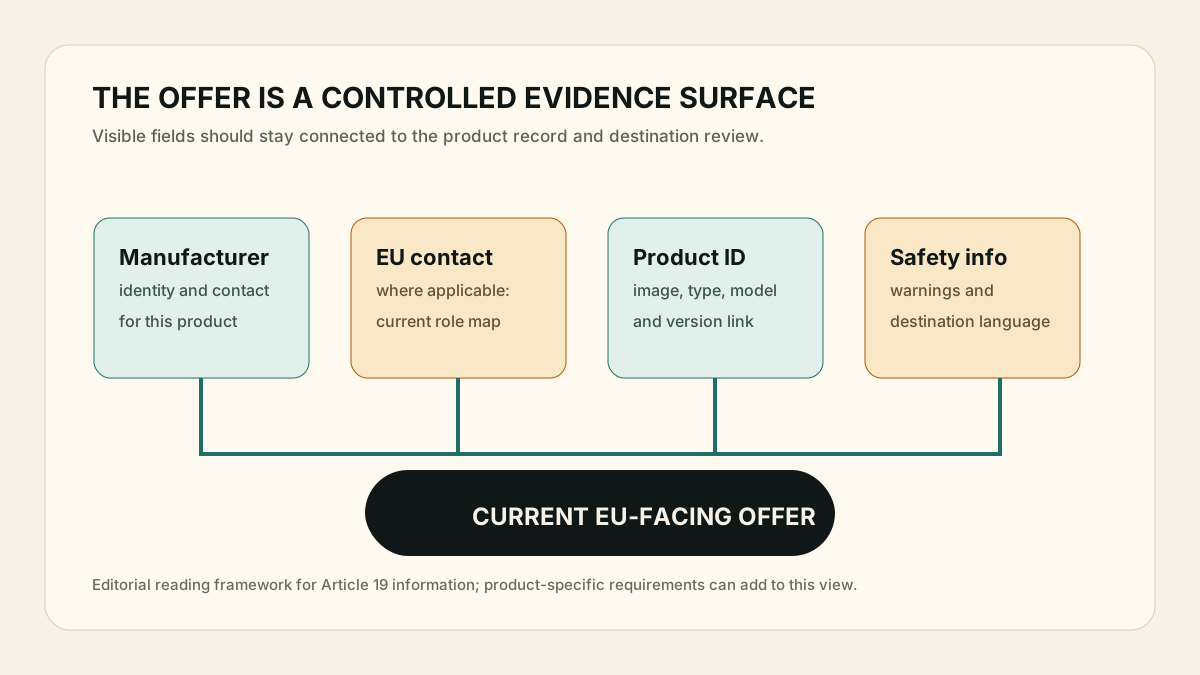
For a China-based marketplace seller, the online offer is easy to underestimate. Teams often treat it as the last layer: photography, title, keywords, conversion copy, price and customer-service messages. The GPSR makes it part of the product-information chain. Article 19 says that where economic operators make products available online or through other distance sales, the offer must clearly and visibly indicate specified information.
The text is deliberately concrete. The Article 19 list includes:
- The manufacturer’s name, registered trade name or registered trade mark, plus postal and electronic contact details.
- Where the manufacturer is not established in the Union, the name and postal and electronic address of the responsible person within the meaning of the Regulation or the referenced market-surveillance rule.
- Information that permits identification of the product, including its picture, type and any other product identifier.
- Warnings or safety information that must be affixed to the product or package, or included in accompanying material, in a language easily understood by consumers as determined by the Member State where the product is made available.
The list is powerful because it is neither a general branding prescription nor an invitation to paste everything from a factory file into a product description. It ties the offer to information that must remain connected to the actual item and the actual destination. A well-designed listing can make it easier for a buyer, marketplace or authority to identify the product and relevant contacts. A poorly controlled listing can turn a stable product record into a moving target.
Four fields, four different control problems
The four groups above are often placed together in a “GPSR information” tab and then treated as one completed task. In practice, each has a different failure mode.
Manufacturer identity and contact information are a name-and-entity problem. The commercial brand in the title, the factory that made the product, the entity in an invoice and the company placed in the manufacturer field may not be the same entity. That does not automatically mean anything is wrong; supply relationships can be legitimate and complex. It does mean that the seller should know why the named manufacturer is the correct one for the specific product. A mailbox from an unrelated entity or a default company name copied across unrelated product families does not make the chain clearer.
Responsible-person information where applicable is a role-and-contact problem. The words should not be treated as a decorative EU address. The role must be connected to the actual product, and the information should be maintained when a product changes. The site is not determining which party is the responsible person for a reader’s product. It is identifying why the public contact information needs an underlying relationship and a durable link to the offer.
Product identification is a version-control problem. “USB charger,” “toy set” or “portable fan” is not a product identity. A product family name may be commercially useful, but a record needs a way to distinguish version, model, variant, pack configuration, accessory and, where relevant, a software or hardware revision. Article 19 expressly mentions a picture, type and other identifier. The practical question is whether the image and public description can be linked back to the same internal identity used in the supporting record.
Warnings and safety information are a relevance-and-destination problem. The rule does not invite a seller to copy a generic warning list from an unrelated market. It points to information that must be affixed, packaged or accompanied under the Regulation or applicable Union harmonisation legislation and that must be understandable to consumers in the relevant Member State. The correct wording, language, placement and product scope are questions that can depend on the item and destination. That is why this article treats the public page as one file in an evidence chain, not as a finished legal answer.
| Listing element | The operational question | Useful underlying connection | Weak substitute |
|---|---|---|---|
| Manufacturer field | Which entity is accurately named for this product version? | Product identity, entity record and controlled listing data | The platform account name alone |
| Responsible-person field where applicable | Which role and contact are connected to this offer? | Product-to-role mapping, current contact record and update owner | An EU address copied into every listing |
| Product identifier and image | Can the product in the page be matched to the product record? | Model/variant/pack map, approved photos and change log | A broad category title or generic image |
| Warning and safety information | Does the current offer use the information appropriate to product and destination? | Controlled product information and destination review | A generic disclaimer or a certificate upload |
A page that looks complete can still be disconnected
The failure is often not a missing field. It is a broken connection. Consider a seller that sells a rechargeable household item. The title, image, price and feature list may be fully populated. A manufacturer name, responsible-person contact and warning may also be visible. The page can still be fragile if the image depicts a previous casing, the warning refers to an old package, the internal SKU covers a different power configuration, or the responsible-person mapping was never updated after a supplier change.
This is why listing governance belongs with product governance. A merchant should be able to trace a public statement to a controlled source, identify who approved it, and recognize what event invalidates it. Product changes are not always dramatic. A different plug, battery, adhesive, packaging insert, user age claim, set of accessories, instruction leaflet or translated phrase can affect what evidence belongs with the offer. The platform page is where those changes become public, so it needs a change path rather than a one-time upload.
The practical output is modest: a listing record that carries a product key, a version or change reference, current manufacturer and contact data, relevant safety-information source and a person or process that can stop the offer when the file no longer matches. This is a control system, not an exercise in filling a page with legal text.
A marketplace process and an economic-operator file are not the same thing
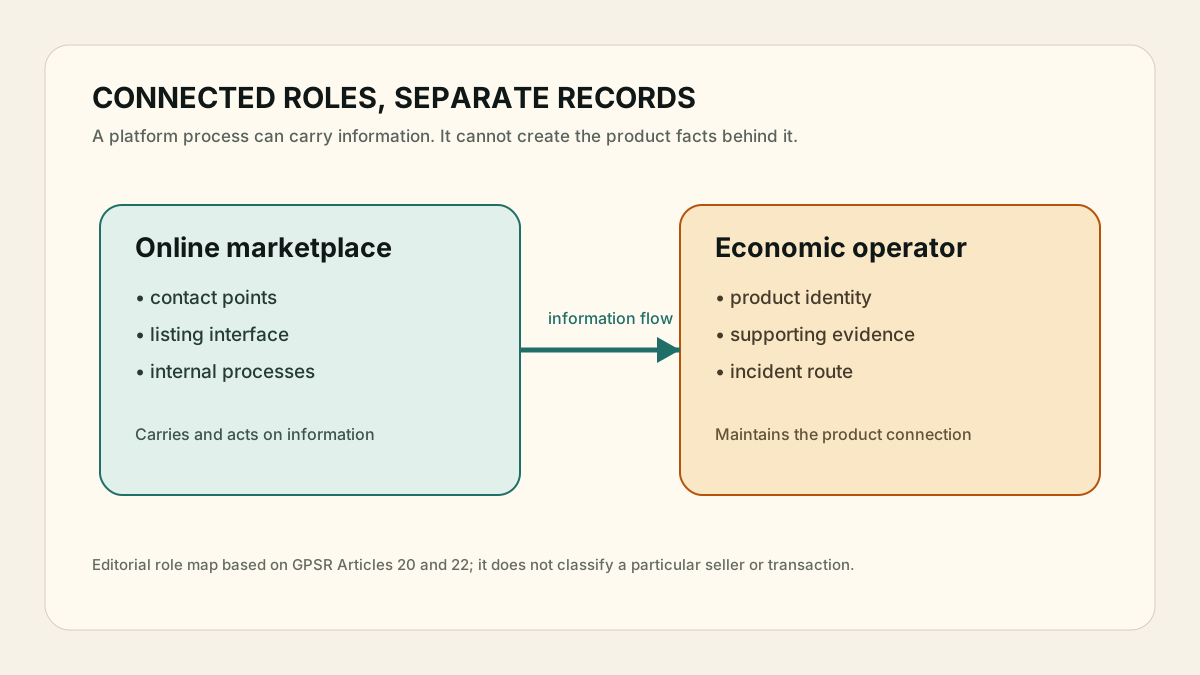
The GPSR gives both economic operators and online marketplaces product-safety roles. That is a reason to separate them, not a reason to decide that one role absorbs the other.
Article 20 is about accident notification in the stated circumstances. It says a manufacturer must ensure that an accident caused by a product it placed or made available is notified through the Safety Business Gateway without undue delay after it knows about the accident. It also sets out information flows for importers and distributors, and says that where the manufacturer is not established in the Union, the responsible person with knowledge of an accident must ensure that notification is made. Those are operational duties triggered by specific facts; this article does not assess whether any given report triggers them.
Article 22 addresses providers of online marketplaces. The marketplace provisions include product-safety contact points for authorities and consumers, internal product-safety processes, and powers for authorities to require removal, disabled access or a warning for specific dangerous-product content. The same article also says an online marketplace interface should enable traders to provide specified manufacturer, responsible-person, product-identification and warning information for each product, and make it displayed or otherwise easily accessible on the listing.
The line between these provisions is operationally important. A marketplace can provide an information field; the seller still needs accurate information to put in that field. A marketplace can give a consumer a contact channel; the seller still needs the traceable product and operator record that makes a response possible. A marketplace can act on a removal request; the seller still needs to know which product version, sales channel, customer set, package information and corrective-action owner are connected to the request.
The responsible person is not an address service in the evidence map
Public discussion often reduces the EU responsible person to a line of address data. That simplification is risky because it hides the relationship the contact needs to serve. The official GPSR text includes product-safety checks and accident-notification duties in the economic-operator framework. The right question for a seller is therefore not merely “what address do I put in the field?” It is “how does this role connect to the specific product, its information and the process for a safety issue?”
That question leads to records that are more useful than a copied contact line:
- A product-to-operator map for every current model and materially different variant.
- A contact record that says which company, address and electronic channel are approved for the public offer.
- A document owner for product information and technical-support materials relevant to the role.
- A change rule for supplier, product, package, contact, destination or safety-information updates.
- An escalation path for an incident, a marketplace query or a request to correct or remove an offer.
Those are not a legal checklist. They are the minimum organizational questions that prevent an EU contact from becoming a detached label. If the seller cannot explain the relationship between the product and the named role, the proper response is not to invent the explanation on the listing. It is to pause the offer long enough to reconstruct the chain.
The marketplace’s interface does not create the underlying fact
The same rule applies to forms. An interface can encourage better data, make it visible and create a channel for corrections. It cannot tell whether the manufacturer selected by the merchant is correct, whether the product image depicts the final version, whether a warning covers the right item or whether the correct action can be executed if a safety issue occurs. The marketplace may have its own review rules and its own evidence requests. Those rules can be consequential for a seller account. They are still not a substitute for a seller’s independent traceability system.
That separation also makes conversations with a platform more productive. Instead of replying to a document request with an indiscriminate bundle, a seller can answer in the structure the issue demands: product key, exact listing, named operator, relevant supporting document, public-copy correction if needed, sales-channel scope and action owner. The platform receives a clearer response; the seller avoids creating a permanent archive of poorly matched evidence.
The five-file seller architecture
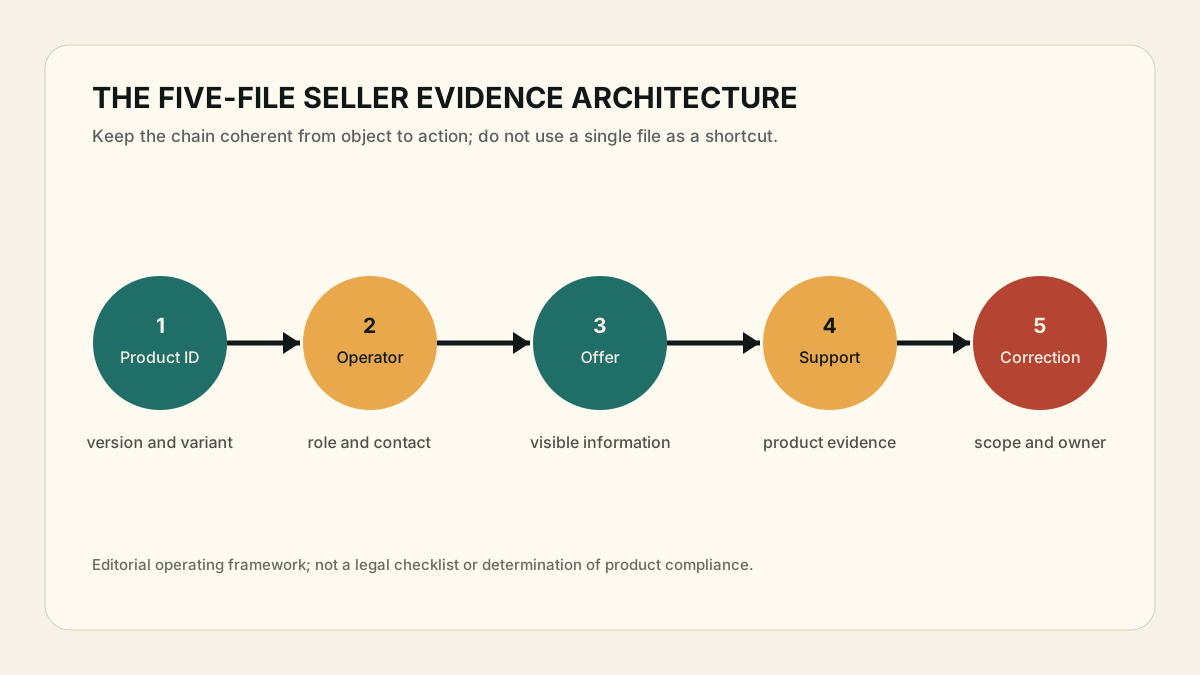
The EU rules contain more detail than any one article can summarize responsibly, and individual products can bring their own regulatory requirements. The following five files are therefore not “the GPSR checklist.” They are an editorial framework for keeping the documents and facts that answer different questions from being confused with one another.
The framework begins with the object. Every later file should point back to a stable product key. It then moves outward: who is connected to the product; what does the consumer actually see; what supports the product’s safety information; and how can a correction be made if the public record no longer matches reality.
| File | The question it answers | What should remain connected | What it must not be mistaken for |
|---|---|---|---|
| 1. Product identity | What exact object is offered? | Model, variant, pack, image, description, internal key and change history | A category name or a supplier’s broad catalogue page |
| 2. Economic operator | Who is named and reachable for this product in the relevant arrangement? | Manufacturer information, role mapping, contact details and update ownership | A copied address or a platform account profile |
| 3. Offer content | What can the EU consumer see before purchase? | Product identity, required visible information, warnings and destination language review | A marketing page detached from the physical product |
| 4. Technical-safety support | What evidence supports the product information and category-specific analysis? | Controlled product documents, scope, version and source of claims | A pile of generic certificates with no product link |
| 5. Corrective action | How can information, sales activity and customer communication be corrected if needed? | Product scope, channels, owner, dates, decisions and records of action | A last-minute customer-service script |
File one: product identity
Product identity is the anchor for the other four files. It should answer a plain question: if someone holds the item, sees the listing and opens the supporting record, can they tell whether these refer to the same product version? The answer should not depend entirely on someone remembering a product nickname.
An identity file normally starts with an internal product key and a clear mapping to commercial model names and variants. The appropriate level of detail depends on the product. A small mechanical household item may need a model and pack configuration. An electrical product, children’s product or connected device may require more granular control over hardware, battery, firmware, accessories, labels, instructions and packaging. The article cannot prescribe the right identifiers for a reader’s product. It can state the test: a meaningful change must not silently inherit the previous product’s evidence.
This is particularly important for marketplace operations because listing assets are easy to reuse. A seller can duplicate a high-performing page and change only the colour, plug, bundle, battery size or translation. The commercial system sees a variant. The evidence system must decide whether it is the same product for the relevant product information and safety record. When the answer is uncertain, the file should mark the uncertainty instead of assuming that a new SKU is covered by an old file.
Useful identity controls include a versioned product map, approved image set, bill-of-material or component-change flag where relevant, package/instruction reference, and a rule for who can authorize a listing change. The point is not to reproduce a factory’s entire engineering system in a seller folder. It is to have enough continuity that the seller can reconnect a buyer-facing offer to an actual product record.
File two: economic operator
The economic-operator file answers a different question: which entity and role are connected to the product in this selling arrangement, and how can that connection be verified and maintained? The public offer is where part of the answer appears; the underlying file is where the relationship is kept coherent.
For a manufacturer outside the Union, Article 19’s responsible-person information condition is an obvious trigger for review. But the deeper control is not merely contact display. A seller needs to know which product is linked to which party, what the party is expected to receive or retain, who owns the public contact data, and what happens when the product or role changes. A named role should not float free of the product family it supports.
The file should also distinguish facts that commercial teams often collapse: brand owner, manufacturer, seller of record, importer, authorised representative where relevant, responsible person where applicable, fulfilment entity and marketplace operator. A single company may perform more than one function; several companies may be involved. The article does not identify the right classification for a live transaction. It recommends not hiding the ambiguity behind one generic “company details” field.
An economic-operator map becomes especially useful when a product is sold through more than one channel. A direct web store, a marketplace page and a local distributor can expose different public information, reach different destinations and route incidents differently. The map lets the seller see which records and contacts travel with the product, instead of discovering during an escalation that an obsolete contact still appears in an older listing.
File three: offer content
The offer-content file is the controlled public expression of the first two files. It holds the approved product identity, the manufacturer and responsible-person data where applicable, applicable warnings and safety information, the language or destination decision behind those public strings, and the source/version from which each field was produced.
This file should be designed for change. A product page is not static just because it is published. Images can be swapped, titles can be rewritten for search, products can be bundled, safety copy can be translated, warehouse inventory can be mixed and customer feedback can prompt a new claim. If the seller has no workflow for reviewing those moves, Article 19 information can become inaccurate even when it was correct on the day it was uploaded.
The practical discipline is to create a release record for the offer: product key, destination set, public fields, source references, approver, publication date and change trigger. It is a small amount of operating structure with a high payoff. When someone asks why a warning changed, the seller can reconstruct the decision. When a listing is copied into a new market, the team sees that the language and destination assumptions need review. When a product is paused, the seller can find all public assets tied to the identity.
File four: technical-safety support
This is the file people most often want to call “the compliance folder.” That phrase is too broad to be useful. The purpose is narrower: maintain the product-level material that supports the product information and the category-specific assessment the seller relies on. Its content depends on the product and law. It may include technical documentation, risk information, instructions, testing or conformity materials where applicable, supplier documents, product specifications, change records, quality evidence and controlled translations.
The most important property is not the number of PDFs. It is relevance. A document should identify the object it covers, its version or sample boundary, the standard or requirement it addresses if relevant, its date, issuer and limitation. A certificate for one model is not automatically evidence for a related model. A lab report may be meaningful within its test scope and insufficient outside it. A declaration may establish what the named party declares and not answer every claim on a marketplace page.
The seller should be able to say, “this is the document that supports this item, this version and this public statement,” and also, “this is the condition that makes the document stale.” If that sentence cannot be completed, the record is not ready for a high-stakes offer. The honest move is to narrow the public claim, gather the missing evidence or keep the product off the relevant market until the product-specific review is complete.
File five: corrective action
The corrective-action file is where the system proves it can respond to bad information. It does not assume that an incident will occur; it accepts that a product, a page or a contact record can become wrong and that speed depends on knowing the scope. The file links the product identity to current and historic offers, destination/channel information, responsible internal owners, decision authority, customer-contact records where held lawfully, marketplace escalation routes and a log of what changed.
This does not mean every seller needs an elaborate crisis-control room. The design should match consequence and product complexity. A small catalogue can often use a disciplined register and clear owners. A large multi-country catalogue needs stronger data governance. In both cases, the essential question is the same: if a material safety, identity or contact problem is identified, can the seller find the affected offer, stop or correct it, preserve the decision record and coordinate with the parties who need to know?
The answer becomes much harder if the earlier files do not share a product key. A correction team cannot reliably act on “the blue one” or “the old product page.” It needs the identity, version, SKU/offer mapping, package/instruction context and sales-channel scope. Corrective action is not a separate compliance ritual. It is the moment when all the earlier records either join up or fail to.
Build the corrective-action route before an authority or platform asks
The Commission’s 2025 Safety Gate reporting gives the corrective-action discussion useful scale without providing a marketplace score. The Commission reported 4,671 Safety Gate alerts in 2025, a 13% increase, and described a 35% increase in reported follow-up actions. The accompanying Commission material reports 5,794 notified follow-up actions. The examples include withdrawal or recall, stopping products at the border and removing product listings from online marketplaces.
Those figures do not tell us how many Temu listings were involved, how many Chinese sellers were affected, whether a reader’s product is risky, or what action an authority would take in a specific case. They do show why a correction path is not an abstract regulatory concept. Product-safety activity can involve different actions at different stages. A public page may need correction before a physical item needs any action. A channel may need an offer removed while a stock investigation continues. A customer message can require a product identity and destination scope. A seller cannot decide responsibly if it has not maintained the file that connects those objects.
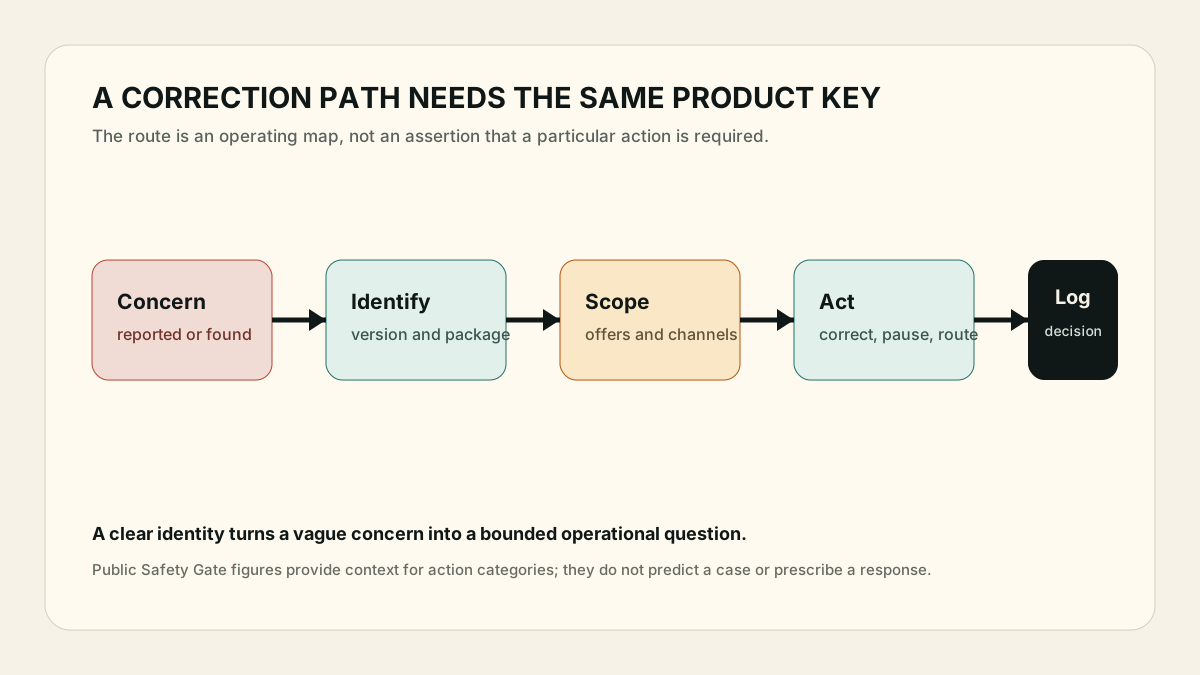
The correction file should answer five immediate questions
- What exact product and version is in scope? Start from the stable identity, then confirm package, instruction, image, variant and any material change.
- Where is it offered or present? List marketplaces, direct channels, destination markets, fulfilment locations or other routes that can be confirmed from the seller’s own records.
- What public information may be wrong or incomplete? Separate a title/image correction from a warning, instruction, contact or product issue. The action should fit the problem.
- Who can decide and act? Name the product, commercial, customer-service and external-contact owners; ensure the chain is not dependent on one unavailable account holder.
- What happened, when and why? Preserve the source of the concern, the decision, scope, public changes, actions taken and open questions. A good log prevents a second error from being added during the correction.
These are operating questions, not proof that a product must be recalled. The task is to make a response possible while the right facts are evaluated. This is also why a seller should not promise outcomes it cannot control. A platform’s internal process, an authority’s decision, a carrier, a downstream distributor and a responsible person can each have a role. The seller’s own record should make its part of the chain clear.
Withdrawal, removal and recall are not interchangeable labels
The Safety Gate page names several follow-up examples. They should not be casually collapsed into one word. A listing removal may concern content accessible online. A withdrawal can concern availability in a commercial chain. A recall can involve a product already with end users. Border action concerns a different stage. The correct term and obligation depend on the facts, product and applicable authority framework.
For a seller operating from China, the useful control is not to pre-select the label. It is to preserve the data needed to determine scope when a qualified person or authority requires it: product identity, document version, channel presence, dates, destination, relevant contacts and decision record. That discipline supports a narrow correction as well as a broader action. Without it, a seller may overreact, underreact or issue a message that does not reach the right product holders.
The distinction also protects customers. A vague public statement can create confusion about whether a buyer holds the affected product. A specific one needs product identification, affected scope and a verified communication route. The author of this article cannot draft such communications for a reader’s case. It can say that a generic marketplace response is no substitute for knowing which product the action concerns.
The publish-or-pause gate for a live offer
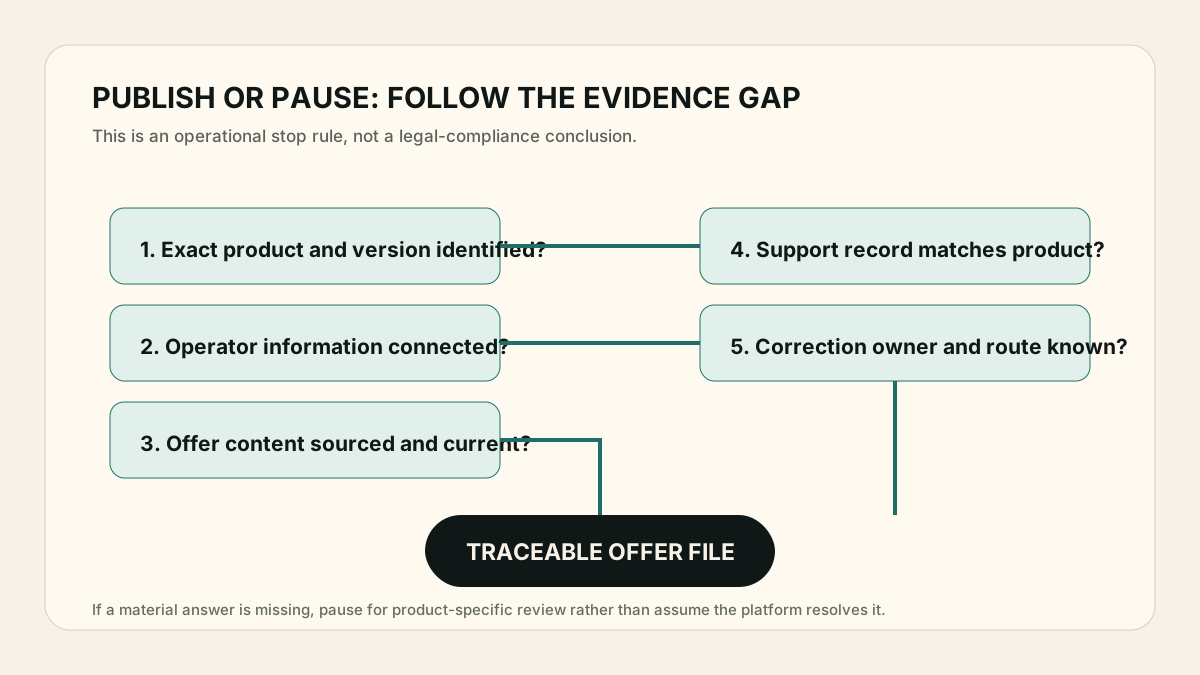
The seller evidence file should make a publication decision easier, not become a museum of documents. Before an EU-facing offer goes live—or when an existing offer changes—the team can use a simple gate. It is not a declaration of legal compliance. It is a way to identify when the seller lacks the evidence to make a clear, bounded public offer.
Publish only when the chain can be traced
An offer is in a stronger operating position when the team can trace the product from the page to a current identity file, identify the appropriate manufacturer and relevant operator information, explain the source of each safety-related public field, connect those fields to product documentation appropriate to the category, and identify the owner of a correction route.
That does not mean “publish” is an assurance. The category may still require a product-specific legal, testing, labelling, documentation or language review beyond anything described here. It means the seller has enough control to ask the next expert question with a real product file instead of a vague title and a platform screenshot.
Pause when one of the anchors breaks
The offer should be paused for review when the team cannot answer one of these questions from its own controlled records:
- Is this the exact product version represented by the image, model, bundle and safety information?
- Is the manufacturer identity correctly connected to that product?
- Where applicable, is the displayed EU responsible-person information connected to the current product and role arrangement?
- Is the relevant warning or safety information sourced, current and reviewed for the destination context?
- Can the supporting documentation be matched to the product, version and scope rather than a broadly similar item?
- Can the seller identify every public offer and the owner who can correct, pause or withdraw it if the record changes?
“Pause” does not mean “the product is illegal.” It means the seller is not going to use a marketplace page to conceal an evidence gap. The strongest commercial benefit of this discipline is speed with integrity: when the file is coherent, a marketplace request or internal review can be answered with relevant material. When the file is incoherent, the team sees that before a customer, platform or authority forces the issue.
Three common bad fixes
The first bad fix is the generic certificate upload. A certificate can be important within its scope. If it does not name the current product or does not support the particular public claim, uploading it may create more confidence than evidence. The corrective action is not to hide the document; it is to map it precisely or narrow the claim.
The second is the generic EU contact. Displaying a contact line without a current product-to-role map can create a broken path at the exact moment a customer, marketplace or authority needs an answer. The corrective action is to verify the relationship and update ownership—not to make the public line more decorative.
The third is the generic platform reliance statement. “Temu reviews products” may describe a platform process at a high level. It does not answer whether a seller’s specific listing, product information, operator file or corrective route is ready. The corrective action is to build the seller file so it can survive a platform process, not to use the process as a substitute for the file.
What this changes for a China-based seller
The phrase “China-based seller” can hide different commercial structures: a manufacturer selling directly, a brand owner using a contract manufacturer, a trading company, a marketplace merchant, a distributor or a service provider managing listings for another entity. The public documents reviewed here do not establish which structure applies to a reader. The useful conclusion applies across those structures: the commercial location does not remove the need to trace the product, relevant operator information and offer content for the destination market.
China’s manufacturing depth may make it easy to move from a sample to a new assortment. That advantage can become a governance problem if the record system does not keep up with changes. A supplier can alter a component; a sales team can add a bundle; an agency can rewrite a title; a platform can request different fields; a product can be offered to a new Member State. The physical product, public offer and supporting evidence can drift apart even when every team acts in good faith.
The seller evidence file is a way to preserve the benefit of speed without hiding its risk. It makes a product change an information event, not just a commercial event. It makes a new destination a review trigger, not just a new traffic campaign. It makes a customer report or platform query a question that can be routed to the correct product key rather than a frantic search across chat messages, supplier PDFs and old listing exports.
For manufacturing context beyond a marketplace page, How China Manufactures: Inside the World's Factory (2026) is a useful published introduction to the systems that sit behind Chinese products. It should not be used to identify the actual producer, seller or economic operator for an individual Temu listing. That evidence must remain product- and transaction-specific.
Frequently asked questions
Does the Temu €200 million fine prove that a seller’s product is non-compliant?
No. The Commission’s decision concerns Temu’s platform-level assessment of systemic risks from illegal products and resulting consumer harm. It is not a product-by-product ruling and does not determine the status of an individual merchant, factory, item or transaction. A seller still needs records for its own product, role, offer and destination.
Does an EU responsible-person field make a Temu listing compliant?
No. Article 19 identifies responsible-person information where the manufacturer is not established in the Union, but a field on a page is only one part of an offer’s information chain. The relationship, product scope, supporting documentation, applicable product rules and destination context still need to be assessed for the actual offer.
What information should be visible on an EU-directed product offer?
At a general GPSR level, Article 19 requires manufacturer contact information; responsible-person contact information where applicable; information that identifies the product, including an image, type and other identifier; and applicable warnings or safety information in a language consumers can understand as determined by the relevant Member State. The product category and destination can add requirements, so this is not a complete product-specific checklist.
Does marketplace removal replace a seller’s recall or corrective-action process?
No. A marketplace removal is a platform action on an offer or content. Depending on the facts, a seller may need to identify the precise product, affected channels, customer or distribution scope, underlying information problem and relevant contacts. The official Safety Gate reporting lists several different follow-up categories; the correct response depends on the product and applicable framework.
Should a seller stop offering products to the EU after the Temu decision?
This article does not make that decision. The useful operational test is whether the seller can trace a current offer back to a coherent product, operator and supporting record, and forward to a correction path. If the record is incomplete or the product-specific rules are uncertain, pausing that offer for qualified review is more honest than assuming a platform process resolves the gap.
Method and limitations
China Made & Tech prepared this article as a desk-research record using the European Commission’s May 2026 Temu DSA decision notice, official EUR-Lex text for the GPSR and DSA, and the Commission’s 2025 Safety Gate reporting. The article does not claim that the team bought from, sold through, listed on, inspected, tested, audited, sourced from, shipped through, returned to or interviewed Temu, a seller, a factory, a responsible person, a laboratory, a customer, a platform operator or a regulator.
The Commission decision is cited only for its stated platform-level finding and remedy context. The GPSR and DSA are cited only for the provisions discussed. Safety Gate figures are cited as EU/EEA system context for 2025, not as a Temu, Chinese-seller or product-safety rate. No source reviewed here establishes that a reader’s product is compliant, that a particular document set is sufficient, that a seller must take a particular legal step, or that a platform’s present system has reached a particular result.
Product category, product version, seller role, target Member State, language, later rule changes, marketplace implementation and factual incident details can all change the appropriate record. For a live high-stakes offer, readers should use the applicable official product-specific requirements and obtain qualified advice appropriate to the actual product and destination.
By China Made & Tech Team. An editorial research desk covering Chinese manufacturing systems, supplier clusters and technology hardware companies for a global audience.