
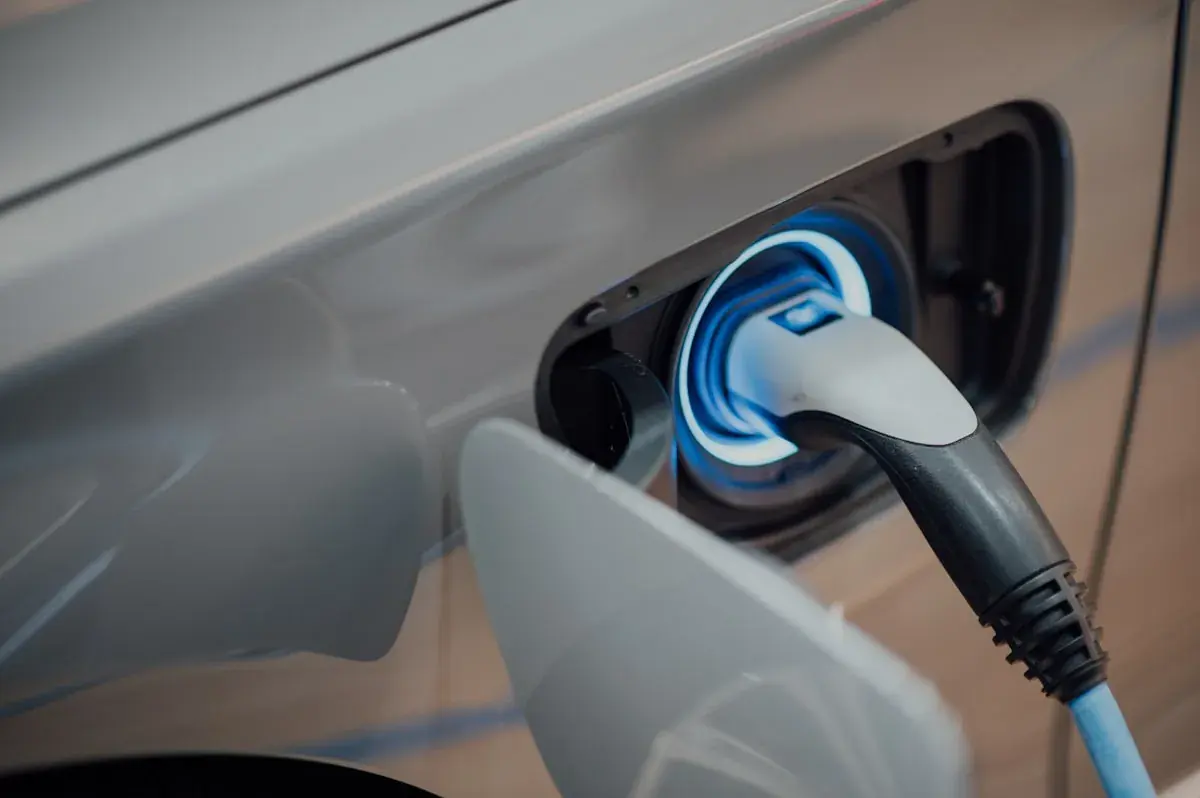
The BYD Song Ultra went on sale in spring 2026 with a reported starting price of 151,900 yuan, roughly $22,000. Launch-period reporting attributed to BYD promotional updates says it can charge from 10% to 70% in five minutes on the company's Flash Charging system. That is not a normal public-charger promise. It depends on the vehicle pack, the high-voltage platform, the charging gun, the station hardware, temperature, state of charge, and BYD's China network.
That is the useful story for global readers. Five-minute charging is not simply a battery spec. It is a manufacturing-system outcome: BYD designs the cell, pack, vehicle platform, charger hardware, and much of the station-side energy system. A buyer is not only buying a car. They are buying into a controlled energy and service layer.
The claim matters because BYD is pushing a premium charging experience into a mass-market SUV. The boundary matters because the full-speed experience is mostly China-network-specific. Export buyers should treat the Song Ultra as a signal of BYD's platform capability, not as proof that every BYD model in every market will charge in five minutes.
Source File
This article was reviewed on 2026-07-03 against three evidence layers. BYD's official Super e-Platform and megawatt flash-charging announcement verifies the 1000V architecture, 1000A current, 10C battery claim, 1000 kW charging power, and the initial Han L / Tang L deployment, but it does not by itself verify every Song Ultra-specific claim. Launch-period industry reporting covers the Song Ultra EV's first-week orders, 151,900 yuan starting price, 4,885 launch-period stations, and 10-70% charging claim. Later EV trade coverage gives the May 15 station count of 5,979 stations across 312 Chinese cities and first-month order count, followed by CarNewsChina's June 18 report of 6,682 flash chargers across 321 Chinese cities. The five-minute Song Ultra claim is treated as a controlled-condition, China-network claim, not a guaranteed real-world charging time. Internal links connect the story to BYD vs Tesla: EV Strategy and Technology (2026) and Auto China 2026: 5 Chinese EV Technology Shifts.
Quick Claim File
| Claim | Evidence status | Buyer interpretation |
|---|---|---|
| Song Ultra starts at 151,900 yuan | launch-period reporting attributed to BYD updates and dealer coverage | mass-market positioning is the point |
| 10-70% charging in five minutes | launch-period reporting on Song Ultra; BYD official material verifies the broader megawatt Flash Charging platform | verify station type, temperature, state of charge, and pack version |
| Flash Charging can reach megawatt-class power | BYD official platform material | the system depends on both vehicle and station hardware |
| BYD reported 6,682 Flash Charging stations across 321 cities by 2026-06-18 | CarNewsChina report from later BYD launch coverage | network rollout is part of the product, but buyers still need uptime, queueing, and route coverage |
| Export buyers get the same experience | not established | local connectors and charging networks control real-world speed |
The Technology: Super e-Platform and Blade Battery 2.0
BYD's Flash Charging story is built on three interlocking components: the Super e-Platform, the fast-charge battery pack, and a proprietary high-power charging network. None of these is individually sufficient. The combination, and the economics of delivering it at volume, is the point.
BYD's official Super e-Platform material verifies a 1,000-volt architecture, 1,000A current, 10C charging battery, and 1,000 kW charging power for mass-produced passenger vehicles, first announced with the Han L and Tang L. Song Ultra-specific reports then describe an 800V e-Platform 3.0 Evo vehicle using Flash Charging and supporting a 10-70% charge in five minutes under normal temperatures. The distinction matters: the platform capability is official; the Song Ultra application details are launch-period reporting.
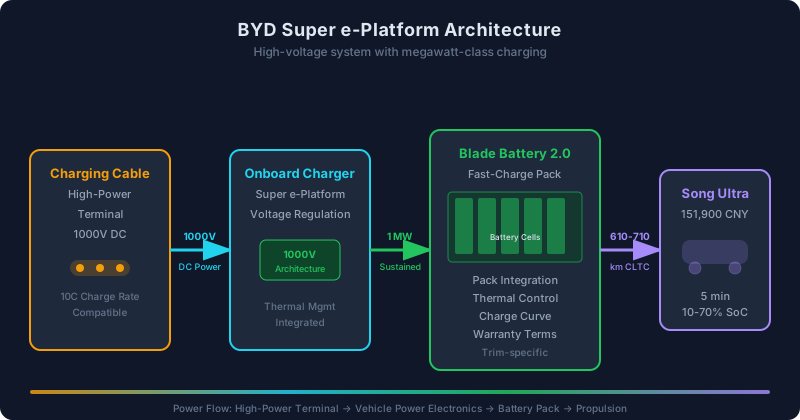
Launch-period coverage describes two second-generation Blade Battery pack sizes for the Song Ultra: 68.4 kWh and 82.7 kWh, with CLTC ranges around 605-710 km depending on trim. The important buyer point is not the chemistry label alone. It is whether the exact exported trim, pack, software limit, connector, and compatible station can reproduce the China-market charge curve.
BYD's broader battery advantage is still relevant. The company makes its own cells and packs, and its LFP/Blade battery history is central to the BYD vs Tesla comparison. But for this article, the safest conclusion is narrower: the Song Ultra is a China-market demonstration of fast-charge integration across vehicle, battery, charger, and network, not a promise that every BYD battery in every market has the same curve.
Why LFP Can Do This Now
For years, the received wisdom in the battery industry was that fast charging was the domain of high-nickel NMC chemistries. LFP was safer and cheaper, but its lower electrical conductivity meant slower charge rates. That consensus held through roughly 2023.
Two things broke it.
First, improved LFP-family chemistry and cell design. Adding manganese to LFP-type cathodes can raise operating voltage and energy density, while electrode, electrolyte, and thermal-management improvements can reduce internal resistance during fast charging. BYD is not alone in this direction, but it is showing how fast-charge capability can move from premium demo vehicles into a mainstream price band.
Second, cell-level engineering optimizations that have nothing to do with chemistry. Thinner current collectors, optimized electrode coatings, improved electrolyte formulations, and tighter manufacturing tolerances all contribute to reducing internal resistance. BYD's advantage here is that it manufactures its own cells, designs its own packs, builds its own vehicles, and operates its own charging network. When you control the entire stack, you can optimize across boundaries that other companies treat as supplier handoff points.
The result is not just a higher peak number. It is a lower-cost architecture trying to deliver a premium charging experience. That is the kind of outcome vertical integration at BYD's scale can produce.
The Charging Network Is The Product
The charging network side of this story receives less attention than the cars, but it may be more important.
Here is the problem with megawatt-class charging: the grid connection is often the constraint. A single megawatt-class charger can draw more power than a small apartment building. Install many of them at a highway service area and the site needs either a much stronger grid connection, station-side storage, load management, or all three.
BYD's official platform announcement verifies a megawatt Flash Charging terminal with maximum output capacity up to 1,360 kW and a plan, at that time, to build more than 4,000 Megawatt Flash Charging stations in China. Later Song Ultra coverage reported 4,885 Flash Charging stations across 291 Chinese cities at launch and 5,979 stations across 312 cities by 2026-05-15. By 2026-06-18, CarNewsChina reported 6,682 flash chargers across 321 Chinese cities. Those are rollout figures, not audited uptime data.
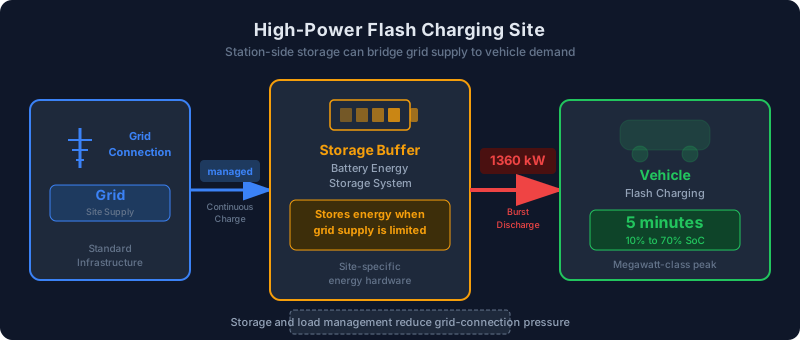
The infrastructure lesson is still clear even where the exact station design varies. Ultra-fast charging is easier to deploy when the automaker also controls batteries, chargers, software, and station procurement. BYD can use its battery manufacturing base to support station-side storage where needed, while also optimizing the vehicle and charger together. That vertical integration is the real advantage. The station count matters, but the route coverage, uptime, queueing, and local power connection matter more to drivers.
The strategic implication is significant. Western charging networks -- Electrify America, Ionity, Fastned -- usually negotiate grid connections site by site and buy hardware from specialist suppliers. BYD has more control over the vehicle, battery, charger, and station procurement stack in China. That does not make rollout easy, but it does reduce the number of supplier handoffs.
What A Buyer Should Verify
The five-minute number is useful only if the rest of the system is present. Before treating it as a real customer benefit, check the full chain:
| Verification item | Why it matters |
|---|---|
| Exact vehicle trim and battery pack | not every BYD model or pack chemistry supports the same charge curve |
| Charging connector and local standard | full-speed Flash Charging is not the same as CCS or NACS charging |
| Station power and storage buffer | the car cannot accept megawatt-class power if the station cannot supply it |
| Temperature and state-of-charge window | peak speed usually exists only in an optimal charging band |
| Repeated fast-charge degradation data | 10C charging is too new for long 8-10 year public data |
| Warranty language | capacity retention and exclusions matter more than launch claims |
| Network coverage along actual routes | peak speed at a demo site is less useful than reliable stations where drivers travel |
The Song Ultra as Strategic Wedge
Understanding the technology is necessary but insufficient. The Song Ultra's positioning tells you how BYD plans to use it.
The Song nameplate is one of BYD's highest-volume product lines in China, competing in the crowded compact-to-midsize SUV segment against dozens of domestic rivals. It is not aspirational. It is practical, family-oriented, and price-sensitive. Putting Flash Charging on the Song Ultra -- and pricing it from 151,900 yuan -- sends a clear signal: this technology is no longer a premium differentiator. It is table stakes.
Launch-period coverage describes CLTC ranges around 605-710 km depending on battery pack and trim. At these prices, BYD is not only competing on range or sticker price. It is trying to redefine the feature set that Chinese buyers at this price point can expect.
BYD and Chinese EV media have also signaled that fast-charging features will move down the lineup over time. That matters because the Atto 3 / Yuan Plus family is one of BYD's most visible export platforms. If BYD can replicate the charging network economics internationally -- a very large if -- the democratization of high-power charging becomes a global story, not a China-only one.
Honest Assessment: What the Skeptics Are Right About
This would not be a credible analysis if it only presented the upside. There are at least four genuine constraints that temper the narrative.
Proprietary network dependency. Launch-period reporting put BYD's Flash Charging network at 4,885 stations when the Song Ultra launched, 5,979 stations by 2026-05-15, and 6,682 stations across 321 cities by 2026-06-18. The full-speed claim depends on compatible BYD station hardware, not just any public charger. That makes the five-minute charge time a BYD ecosystem experience, not an open-standard promise. The Auto China 2026 EV takeaways story is huge, but this particular chapter is vendor-locked.
Connector limits outside China. Export vehicles use local charging standards, and most passenger-car public networks are not built around megawatt-class charging. The Megawatt Charging System standard is aimed mainly at commercial vehicles. This means BYD's full-speed charging is a China-network capability for the foreseeable future. Export vehicles will charge at whatever speed local infrastructure supports.
Battery longevity under very high-rate charging. Launch-period reporting mentions BYD warranty language and safety testing, but long-term public degradation data for repeated consumer use at these charge rates is necessarily limited. The honest answer is that the data is still accumulating. Safety tests are not the same as eight-year real-world longevity data.
Grid-level demands at scale. A few high-power sites are manageable. Thousands of high-power sites are a different proposition. Megawatt-class charging networks at national scale require grid upgrades, site storage, load management, and local permitting that go beyond what any single vehicle model can prove.
Competitive Landscape
BYD is not alone in pursuing ultra-fast charging, but the deployment question is not just peak power. It is how many compatible sites exist, how reliable they are, and whether the vehicle population can actually use them.
| Company | What to compare | Buyer reading |
|---|---|---|
| BYD | vehicle + proprietary Flash Charging network | strongest China-market integration story |
| Geely and other Chinese rivals | high peak-power demos and fast China-market charge claims | peak speed can beat BYD at a demo site, but network depth decides usefulness |
| Tesla | slower peak power but broad global Supercharger coverage | coverage can matter more than peak speed outside China |
| European and US OEMs | 800V/900V vehicles on CCS-style public networks | vehicle capability is constrained by public infrastructure |
| Nio | battery swap instead of ultra-fast plug-in charging | avoids some degradation and queueing questions, but needs a separate swap network |
What This Means for Global EV Adoption
The global EV industry has been stuck on a seesaw between two problems: range anxiety and charge time. Battery costs have fallen far enough that 500+ km range is achievable at mainstream prices. The remaining barrier is the charging experience -- finding a fast charger, waiting 30-40 minutes, and dealing with the gap between theoretical and actual charge speeds.
BYD's approach attacks this from both ends. The Song Ultra's reported 605-710 km CLTC range reduces daily range anxiety for many drivers. Flash Charging reduces the wait-time problem for long-distance trips, at least within BYD's compatible network. Together, they target the two most cited reasons consumers hesitate to switch from internal combustion engines.
The catch -- and it is a substantial one -- is that this solution is currently centered on China. The combination of proprietary charging hardware, dense station rollout, and a vehicle manufacturer that also produces its own batteries and charging hardware is a Chinese industrial ecosystem outcome. It cannot be replicated by importing BYD vehicles into Europe or North America and plugging them into existing public infrastructure.
What can be replicated is the concept. The signal that a roughly $22,000 China-market SUV can be marketed with a five-minute fast-charge claim will shift buyer expectations globally. European and American consumers who see Chinese EV reviews demonstrating gas-station-equivalent charge times will ask why their local charging experience is so much slower. That pressure may accelerate investment in higher-power hardware, storage-buffered sites, and better route coverage outside China.
BYD's real contribution may not be the Song Ultra itself, but the demonstration effect. Five-minute charging has moved from premium demo language into a mainstream China-market SUV claim. The question is no longer only whether it is technically possible, but how much infrastructure is required to make it reliable for ordinary drivers.
What It Means Outside China
For importers, dealers, fleet operators, and charging-network planners, the export-market implication is not "sell the same five-minute claim." It is more specific:
| Market question | Practical answer |
|---|---|
| Can an export BYD charge in five minutes on today's public network? | Usually no; local connector and charger limits dominate |
| Does BYD's China network advantage transfer abroad? | Only if BYD or partners build compatible high-power sites, storage where needed, and service coverage |
| Should competitors worry? | Yes, because buyer expectations can move faster than infrastructure |
| Is this mainly a battery story? | No. It is a battery, vehicle, charger, grid, station, and service-network story |
| What should fleets ask BYD or dealers? | local charge curve, warranty exclusions, compatible stations, and battery replacement terms |
Methodology
This analysis draws on BYD's official Super e-Platform announcement, launch-period Song Ultra reporting attributed to BYD promotional updates, and later EV trade coverage of station and order counts through June 18, 2026. BYD's official material verifies the broader megawatt Flash Charging platform; Song Ultra price, order, station, and 10-70% charging details are treated as reported figures. Real-world charge times vary with temperature, state of charge, pack version, station load, and local connector standard. Long-term public degradation data for repeated very high-rate charging remains limited.
Claim Confidence File
| Claim | Confidence | Evidence boundary |
|---|---|---|
| BYD's five-minute charging story is a real buyer signal but condition-dependent | Medium-high | Based on cited product/company claims and reporting; real-world results depend on charger power, vehicle configuration, temperature, SOC window, and local grid conditions. |
| Five-minute charging means all BYD EVs will charge like a fuel stop everywhere | Low | The article rejects universal interpretation and separates showcase capability from network availability. |
| Battery, charger, warranty, and infrastructure proof matter more than the headline speed | High | This is the article's procurement recommendation, especially for fleets and importers. |
| The article verifies long-term battery degradation under repeated maximum-rate charging | Low | The article does not claim independent lifecycle validation beyond the cited source boundary. |
FAQ
Can BYD's 5-minute charging work outside China?
Not at full speed on today's ordinary public networks. The China-market Flash Charging experience requires compatible BYD vehicle and station hardware. Export models use local connector standards and charge at whatever speed the local vehicle, pack, charger, and network allow.
How does BYD's Flash Charging compare to Tesla Superchargers?
BYD's China-market Flash Charging story is about higher peak power and deeper vehicle-station integration. Tesla's advantage remains global route coverage and reliability. The comparison is apples-to-oranges because the systems serve different markets with different connector standards and network densities.
Does 10C fast charging degrade the battery faster?
The honest answer is that long-term data is still accumulating. BYD warrants 77.5% capacity retention, which is comparable to industry standards. The 10C charge rate is used only in the 10-70% state-of-charge window, where cells are under less stress than at the extremes. Several battery engineers at competing automakers have expressed concern about longevity trade-offs, but definitive 8-10 year degradation data does not yet exist for this specific cell chemistry and charge rate.
What is LMFP battery chemistry?
LMFP (lithium manganese iron phosphate) is an evolution of standard LFP chemistry. Adding manganese to the cathode can raise voltage and energy density while retaining many LFP cost and safety advantages. For buyers, chemistry labels matter less than the exact pack, warranty, and compatible charging network.
How many Flash Charging stations does BYD operate?
Launch-period reporting put BYD's network at 4,885 Flash Charging stations across 291 Chinese cities when the Song Ultra launched. Later coverage said BYD had 5,979 stations across 312 cities by 2026-05-15, and CarNewsChina reported 6,682 flash chargers across 321 Chinese cities by 2026-06-18. Treat those as reported rollout figures; buyers should still verify route coverage, uptime, connector compatibility, and station power for their actual use case.
By China Made & Tech Team. Independent English field guide to China's niche hardware brands, hidden champions, founders, factory towns, and supplier clusters.
Related Entries
- BYD vs Tesla: EV Strategy and Technology (2026) -- the battery and manufacturing system behind BYD's EV cost structure
- Auto China 2026: 5 Chinese EV Technology Shifts -- broader Auto China context for fast charging, batteries, sensors, and manufacturing