
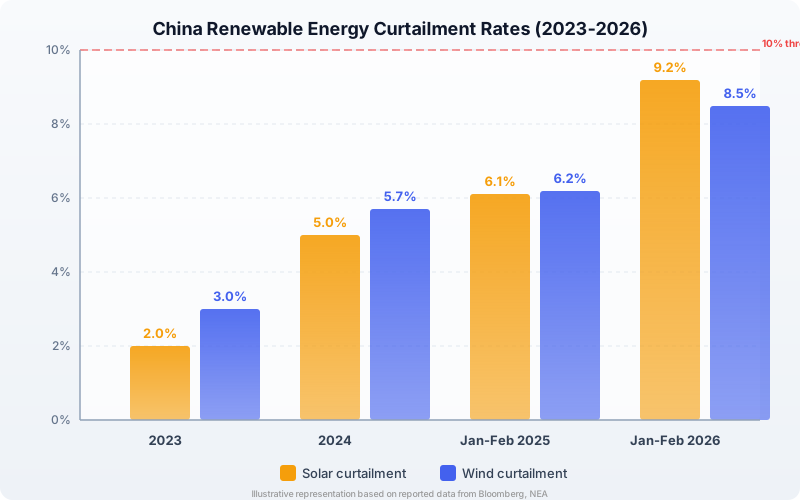
In the first two months of 2026, China wasted 9.2% of the solar energy its panels generated and 8.5% of its wind power (seasonally elevated by low winter demand and high wind output, but the trend is unambiguous). Not because the equipment failed or the sun stopped shining, but because the grid physically could not move that much electricity to where people actually use it. One year earlier, those numbers were 6.1% and 6.2% respectively, according to Bloomberg data. The curtailment rate for solar jumped more than 50% in twelve months.
This is the paradox at the heart of China's green energy transition. The country added roughly 315 GW of solar capacity in 2025 alone, more than the entire installed base of most nations. As documented in our analysis of China Solar Dominance: Supply Chain Power, Profit Crisis, China now controls over 80% of global solar manufacturing — and it builds renewable generation faster than any economy in history. But building panels is the easy part. Moving the electricity from western deserts to eastern factories, storing it for when the wind dies, and balancing a grid that swings wildly between surplus and shortage — that is the hard, expensive, multi-trillion-yuan problem.
Source File
This article was reviewed on 2026-06-30 against Reuters reporting on State Grid's CNY 4 trillion 2026-2030 investment plan, CGTN's report on Southern Power Grid's 2026 fixed-asset investment, ARC Advisory's summary of State Grid's 15th Five-Year Plan targets, Carbon Brief's analysis of China's 2025 coal buildout, the IEA's Electricity 2026 grids chapter, and credit references from Fitch Ratings and S&P Global. Curtailment rates use early-2026 reported data and should not be read as full-year averages.
Quick Answer
China's reported CNY 4 trillion State Grid plan matters because it is a catch-up response to renewable growth that has outpaced transmission, storage, and dispatch capacity. The buyer-relevant conclusion is not simply that China is spending more money on grids. It is that solar, wind, storage, UHV transmission, coal capacity payments, and grid-market reform now have to be read together.
For global readers, the practical signal is equipment and project risk. Chinese grid suppliers may see demand from UHV, automation, storage, and smart-dispatch investment, but renewable developers and storage buyers should not assume capex alone fixes curtailment. The evidence file should track where money is actually deployed, whether local markets reward flexibility, and whether grid constraints still affect project revenue.
China's answer is one of the largest power-infrastructure investment programs now visible in public reporting. State Grid Corporation, the world's largest utility, has committed 4 trillion yuan ($574 billion) over 2026-2030, a 40% increase from the previous five-year period. Add in Southern Power Grid's record 180 billion yuan ($25.8 billion) for 2026 alone, and the combined spending approaches 5 trillion yuan ($730 billion) across both grid operators, per CGTN reporting.
The headline number sounds visionary. The reality is more uncomfortable: this is a catch-up move, not a bold leadership announcement. China built the renewable generation capacity first and is now racing to build the infrastructure that should have come with it.
The Curtailment Crisis: Wasting Clean Energy at Record Rates
Curtailment is the polite industry term for throwing away electricity. When a solar farm in Xinjiang produces power that cannot reach a factory in Guangdong because the transmission lines are already at capacity, the energy is "curtailed" — dumped, wasted, gone.
The numbers are getting worse, not better. Wood Mackenzie analysis cited by Reuters shows that China's national curtailment limit was quietly raised from 5% to 10% in 2024 — effectively acknowledging that the problem was too large to solve within the old threshold. Rather than fix the bottleneck, Beijing moved the goalposts.
This matters for two reasons. First, it directly undermines the economic case for renewable investment. If a solar farm loses nearly one-tenth of its output to curtailment, project returns compress. Developers build anyway because policy mandates it, but the financial efficiency of the entire system degrades.
Second, it reveals the gap between China's generation capacity and its grid capacity. In Q1 2026, State Grid connected 65 GW of new power capacity, with roughly 70% coming from renewables, Yicai Global reports. The grid connection spending alone topped 10 billion yuan with a 50%+ year-over-year jump. The pace of new connections is impressive. The pace of curtailment growth is alarming.
 Data sources: Bloomberg NEF, China National Energy Administration, Reuters
Where the $574 Billion Actually Goes
The spending breaks down into three broad categories: ultra-high-voltage (UHV) transmission corridors, energy storage (primarily pumped hydro), and grid modernization including smart dispatching systems.
UHV transmission is the centerpiece. China's renewable-rich regions — the solar belts of Xinjiang, Qinghai, and Inner Mongolia, the wind corridors of Gansu and Heilongjiang — are thousands of kilometers from the demand centers of Shanghai, Guangzhou, and Beijing. UHV DC lines can move power across these distances with relatively low losses. The NDRC and NEA's December 2025 guidelines set a target of 420 GW of west-to-east transmission capacity by 2030, along with grid accommodation for 900 GW of distributed new energy. These targets align with the broader industrial agenda covered in China 15th Five Year Plan Tech.
Pumped hydro storage is the second pillar. State Grid has pledged 31 billion yuan ($4.5 billion) for pumped hydro in 2026, Bloomberg reports. Pumped hydro is the most mature grid-scale storage technology — essentially pumping water uphill when there is surplus power and releasing it through turbines when demand peaks. China has more pumped hydro capacity than any other country and is building more.
R&D and smart grid accounts for 240 billion yuan of the five-year plan, targeting power electronics, advanced storage systems, and AI-driven dispatching, according to ARC Advisory. The goal is to support roughly 200 GW of annual wind and solar additions while keeping the grid stable.
| Category | Key Target | Investment Scale |
|---|---|---|
| UHV Transmission | 420 GW west-to-east capacity by 2030 | ~2 trillion yuan (est.) |
| Energy Storage | Pumped hydro + battery at scale | 31B yuan pumped hydro in 2026 |
| Smart Grid & R&D | 900 GW distributed accommodation | 240B yuan over 5 years |
| Charging Infra | 40M+ charging points by 2030 | Part of broader spending |
The Coal Paradox: Building More of What You're Trying to Replace
Here is where the story gets complicated. While China pours hundreds of billions into grid infrastructure to accommodate renewables, it is simultaneously building coal plants at a pace not seen in nearly two decades.
Carbon Brief's analysis shows 161 GW of new coal plant proposals in 2025 alone — a record. Some 95 GW were actually added to the grid in 2025, also a record. Net new coal capacity reached 70 GW, the highest since 2007. China commissioned more coal plants in 2025 than India has built in the past decade, Forbes noted. China's operating coal fleet now stands at roughly 1,243 GW, with a total pipeline approaching 500 GW, per OilPrice.
Coal still generated 58% of China's electricity in 2024.
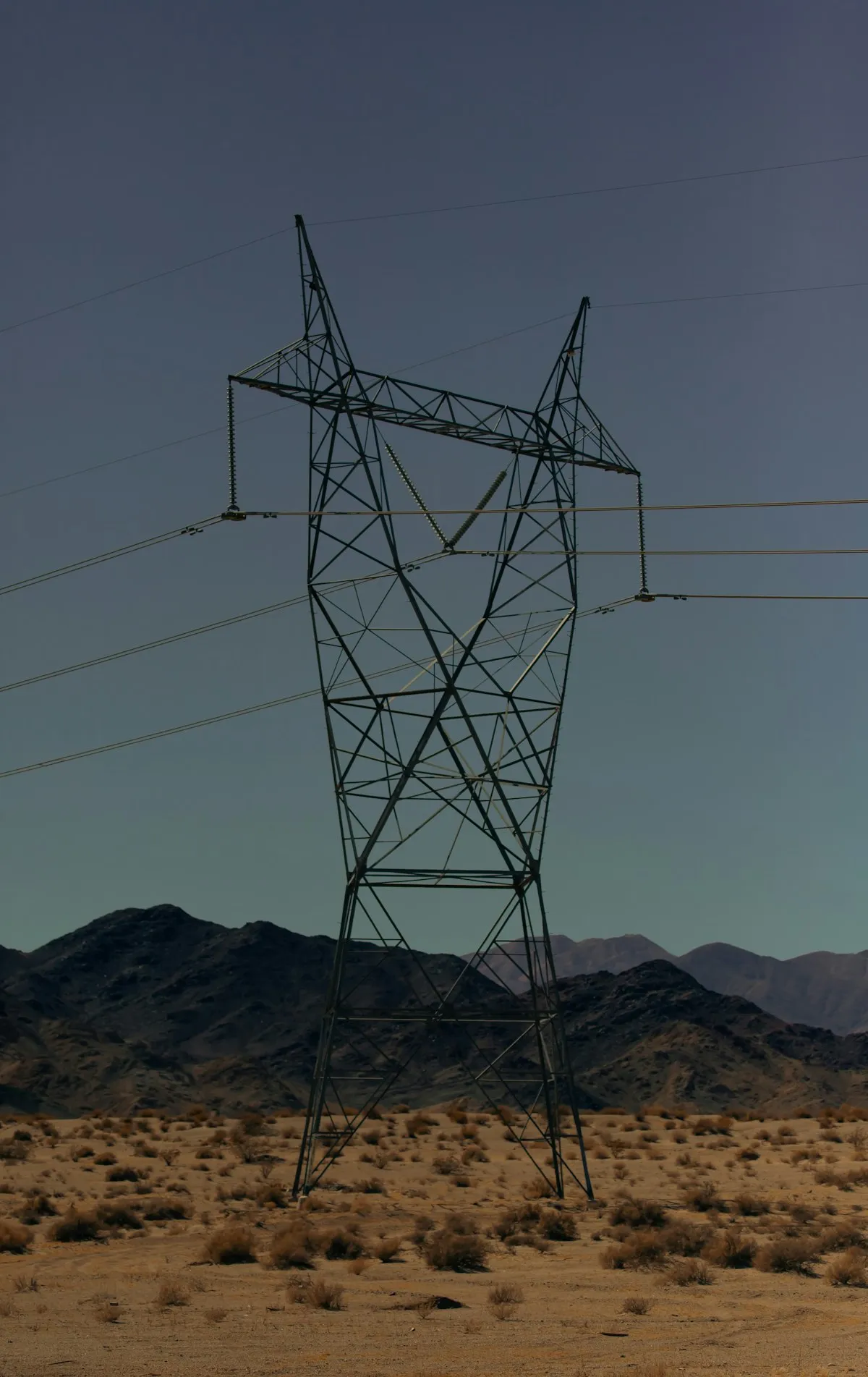
 Photo by Zoltan Tasi on Unsplash
The mechanism that makes this paradox possible is the capacity payment system — and it connects directly to the broader overcapacity crisis examined in China Solar Overcapacity: Export Surge Buyer File. China paid over 100 billion yuan to coal plants in 2024 alone for standing by as backup capacity, Carbon Brief reports. Coal plants are running at roughly 51% utilization — barely half their potential output — yet capacity payments make new construction financially attractive regardless of how often the plants actually run. The incentive structure rewards having coal capacity available, not using it.
This is the coal paradox in a sentence: China is building the world's largest clean energy system and the world's largest coal plant pipeline at the same time, and the market design makes both rational. The grid investment helps resolve the renewable curtailment problem. The coal capacity payments create a different problem — stranded asset risk if renewables plus storage eventually make thermal plants unnecessary.
How the World Compares
China's grid spending is not occurring in isolation. The IEA estimates global grid investment at roughly $400-480 billion per year, and says it needs to increase by 50% by 2030 to meet climate targets. More than 2,500 GW of renewable projects are stalled in grid connection queues worldwide. The planning and permitting process for new transmission takes 5-15 years in most developed economies, compared to 1-5 years for building renewable generation. The mismatch is a global problem.
China is simply throwing more money at it than anyone else.
| Region | Grid Investment Plan | Timeframe | Key Focus |
|---|---|---|---|
| China | ~$730B (State Grid + Southern Grid) | 2026-2030 | UHV, storage, smart grid |
| United States | $73B (IIJA) + $1.4T utility capex planned | 2022-2035 | Aging infrastructure, interregional |
| European Union | ~$630B needed | By 2030 | Cross-border, Grids Package |
| India | $109B | By 2032 | Transmission for 500 GW renewable |
The EU needs an estimated $630 billion in grid investment by 2030 and $1.3-1.7 trillion by 2040, Reuters reports. The European Commission's Grids Package aims to centralize planning and fast-track permits, but the fragmented nature of 27 national grids makes coordination difficult.
India is targeting $109 billion in transmission investment by 2032 to support its goal of 500 GW renewable capacity by 2030.
China's spending velocity is the differentiator. It moves from announcement to ground-breaking in months, not years. The Q1 2026 daily burn rate of 1.8 billion yuan is a physical manifestation of a system that can mobilize capital and labor faster than any market economy.
The Financial Machinery Behind the Build
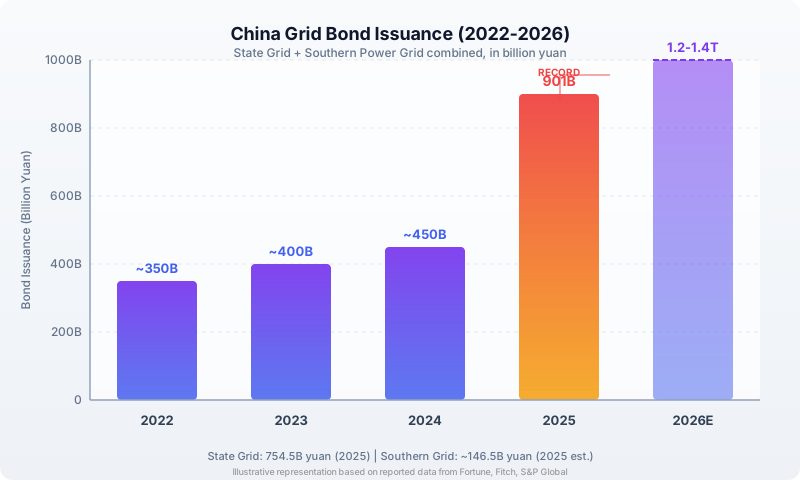
State Grid and Southern Power Grid issued a combined 901 billion yuan in bonds in 2025, Fortune reports. State Grid alone accounted for 754.5 billion yuan — nearly triple its prior year issuance. Average yields in 2026 dropped to around 1.7%, an all-time low, reflecting both the state-owned enterprise credit backing and the broader decline in Chinese interest rates.
The bond market is pricing State Grid risk at near-sovereign levels. Fitch rates it A with a stable outlook; S&P rates it A+, per Fitch and S&P Global. Interest coverage sits at 14x. The financial architecture is designed for scale: borrow cheap, build fast, and let the state guarantee absorb the credit risk. Projected annual bond issuance is expected to reach 1.2-1.4 trillion yuan going forward.
 Data sources: Fortune, Fitch Ratings, S&P Global
The supply chain is also mobilizing. Key beneficiaries include NARI Technology for grid automation, XD Electric for transformers, and Henan Pinggao for HV switchgear, plus CHINT Electrics and Hengtong Optic-Electric. J.P. Morgan estimates 720-780 billion yuan in grid capital expenditure for 2026 alone.
Chinese equipment makers are expanding globally as well. Hithium, a Xiamen-based battery storage company, signed a 400 million euro investment agreement for a gigafactory in Spain, targeting 700 direct jobs and production startup in 2027. The grid buildout at home feeds export capacity abroad — the same dynamic visible in solar, EVs, and batteries.
Will It Work?
The honest answer is that the grid investment will substantially improve China's ability to absorb renewable generation, but the system will remain under stress for the duration of this five-year plan and likely beyond.
The 420 GW west-to-east transmission target is aggressive but achievable given China's construction speed and the concentration of UHV expertise within State Grid. The storage buildout — both pumped hydro and the battery systems covered in China Battery Storage Boom: Grid-Scale BESS Explained — will help flatten the daily generation curves. The smart grid investments in AI dispatching should improve utilization rates.
But the structural problems run deeper than infrastructure. The capacity payment mechanism incentivizes coal construction regardless of grid needs. Renewable curtailment at 9.2% means the system is still leaking significant energy. And the financial model depends on perpetual state backing — bond issuance at 1.2-1.4 trillion yuan per year is not a temporary spike, it is the new baseline.
The Middle East conflict and Strait of Hormuz disruptions have added urgency. As energy analyst Lin Boqiang noted, these incidents highlight the importance of localizing energy sources — a point that strengthens the domestic political case for grid investment even when the economics are debatable.
The risks are real: underutilized transmission corridors in regions where renewable deployment slows, storage assets that sit idle if market reforms do not create proper price signals, and a debt load that grows faster than the revenue to service it. Grid market reform in China remains a work in progress, and without clear pricing mechanisms for storage and flexibility, the physical infrastructure may outpace the institutional framework needed to use it efficiently.
Claim Confidence File
| Claim | Confidence | Evidence boundary |
|---|---|---|
| State Grid's 2026-2030 plan is reported at CNY 4 trillion / about USD 574 billion | High | Reuters reporting anchors the figure. Currency conversion, plan timing, and final executed spending can change. |
| Southern Power Grid's 2026 fixed-asset investment adds a second grid-spending signal | Medium-high | CGTN reporting supports the 2026 figure. It is a single-year plan, not a full five-year combined audited total. |
| Early-2026 solar and wind curtailment show a worsening absorption problem | Medium-high | Bloomberg / market reporting supports the early-year data, but the article treats it as seasonal and directional rather than a full-year average. |
| Coal expansion proves China is abandoning renewables | Low | The article argues the opposite: China is building renewables, grid infrastructure, and coal capacity at the same time because grid reliability, capacity payments, and market design are pulling in different directions. |
| Grid spending alone guarantees renewable profitability | Low | Transmission and storage can reduce curtailment, but project returns still depend on dispatch rules, price signals, local interconnection, debt costs, and market reform. |
| Named equipment suppliers will definitely benefit | Medium | Supplier exposure is directional. Actual revenue depends on tender wins, margins, execution, and whether capex categories match each firm's product mix. |
Methodology Note
This analysis draws on financial data from State Grid bond filings and credit rating agency reports (Fitch, S&P), operational data from China's National Energy Administration reporting as cited by Bloomberg and Reuters, and policy documents from the NDRC/NEA December 2025 guidelines. Curtailment figures reflect January-February 2026 data, which is seasonally high due to lower winter demand and high wind output; annual averages will likely be lower. Equipment supply chain data is sourced from Yicai Global and SCMP market reporting.
FAQ
How much is China investing in its power grid?
China's State Grid is investing 4 trillion yuan ($574 billion) from 2026 to 2030. Combined with Southern Power Grid, total grid spending reaches approximately 5 trillion yuan ($730 billion). In Q1 2026 alone, State Grid spent 160 billion yuan ($24.5 billion), averaging 1.8 billion yuan per day.Why is China wasting renewable energy?
China's solar curtailment reached 9.2% in early 2026 because transmission infrastructure cannot keep pace with renewable capacity additions. The country added 315 GW of solar in 2025 alone. Without sufficient UHV transmission lines and storage to move and time-shift that power, surplus generation is discarded. The national curtailment threshold was raised from 5% to 10% in 2024.Is China still building coal power plants?
Yes. China added 95 GW of coal capacity in 2025, a record, and had 161 GW of new proposals. Coal generates 58% of China's electricity. Capacity payments exceeding 100 billion yuan in 2024 incentivize coal construction even as plants run at just 51% utilization. China built 85 of the 104 coal plants commissioned globally in 2025.What is UHV transmission and why does China need it?
Ultra-high-voltage transmission moves electricity at 800 kV to 1,100 kV DC, enabling power transport over 2,000+ kilometers with relatively low losses. China needs it because its best solar and wind resources are in western deserts and northern plains, while demand is concentrated in eastern coastal megacities. The 2030 target is 420 GW of west-to-east transmission capacity.Related Entries
- China Solar Dominance: Supply Chain Power, Profit Crisis — How China built global solar manufacturing dominance
- China Solar Overcapacity: Export Surge Buyer File — The solar industry crisis behind the export boom
- China 15th Five Year Plan Tech — Technology priorities in China's 15th Five-Year Plan
- China Battery Storage Boom: Grid-Scale BESS Explained — Grid-scale battery storage deployment in China