
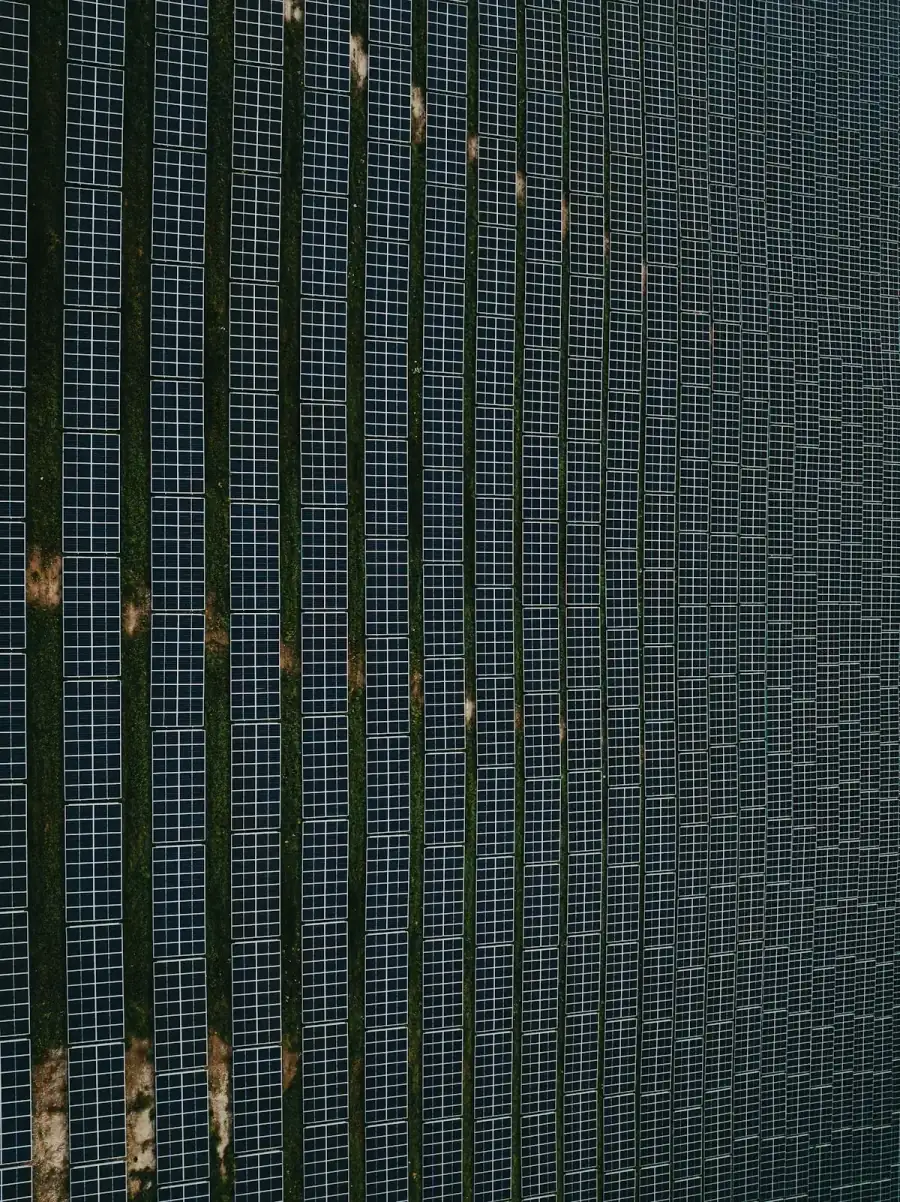
By China Made & Tech Team. This is desk-researched manufacturing analysis, not firsthand factory, product, procurement, engineering, financing, customs or warranty work.
China’s upstream and manufacturing-layer dominance in solar remains real. The mistake is to treat that national position as a verdict on a supplier.
In 2024, the International Energy Agency’s Energy Technology Perspectives put China at around 85% of global solar supply-chain manufacturing capacity and around 95% of PV wafer manufacturing capacity. The IEA’s capacity analysis describes the industrial system: where the nameplate ability to make solar components is concentrated.
IEA PVPS reported that China produced 84.6% of global PV modules in 2023, while the same report recorded 1,032 GW/year of global module manufacturing capacity. The IEA PVPS Trends report provides the output and capacity context behind the module layer.
For a buyer, the sequence is simple: first locate dependence by manufacturing layer and metric. Then assess the exact seller, factory and contract in front of you.
That sequence keeps both dependence and alternatives visible. The layer map identifies where substitution is likely to be difficult; the exact order determines which route the buyer is actually taking.
First, define what “China controls solar” means
Solar is not one product made in one factory. A conventional crystalline-silicon PV chain moves through several manufacturing layers:
- Polysilicon is the high-purity silicon feedstock.
- Wafers are sliced from silicon ingots and provide the substrate for the cell.
- Cells convert light into electricity through a semiconductor structure.
- Modules combine cells, glass, encapsulant, backsheets or glass, frames and junction components into the panel a buyer usually sees.
- Inverters, although not part of the silicon-to-module chain, are a relevant control layer because they convert DC output to usable AC power and increasingly carry monitoring and grid-interaction functions.
The chain matters because concentration at each layer creates a different industrial task. Polysilicon locates feedstock manufacturing. Wafers show where silicon is prepared for cell production. Cells locate the semiconductor conversion step. Modules locate the final panel-manufacturing stage. Inverters sit alongside that chain as a separate power-conversion and control layer.
The strongest current signal in this article is the roughly 95% Chinese share of global wafer manufacturing capacity in 2024. For a resilience planner, that points directly to the upstream step that needs the most attention when downstream module assembly expands elsewhere. Polysilicon, cell and module questions should be carried as their own layers so that an apparent gain at one step is not mistaken for a complete supply chain.
Capacity, production, shipments and exports answer different decisions
These terms are often placed next to one another as if they were interchangeable:
| Measure | Unit of analysis | Best used for | Next question |
|---|---|---|---|
| Manufacturing capacity | Nameplate ability during a stated period | Locating potential supply, investment concentration and theoretical substitution room | How much operated and produced? |
| Production | Output made during a stated period | Locating realised manufacturing activity | Which layer and geography supplied the period’s output? |
| Shipments | Units or watts dispatched by a company in a stated period | Comparing commercial throughput under one reporting definition | Which company perimeter and markets are included? |
| Exports | Goods crossing a border under a customs definition | Reading trade flow and destination exposure | Which route, product scope and period are being counted? |
Every useful solar number can be read as a complete sentence with six fields: who, which layer, which metric, what period, what geography and what reporting perimeter. “China—wafer—manufacturing capacity—2024—global—national aggregate” locates a structural bottleneck. “Company X—module—shipments—one reporting period—global—company perimeter” supports a commercial-throughput comparison.
The same discipline serves different readers. A resilience planner uses capacity to locate where replacement investment is needed. An industry analyst uses production to see where manufacturing activity occurred. A commercial team uses shipments to compare company throughput, and a trade team uses exports to understand cross-border flow. Each metric earns its place by answering one decision clearly.
 Explanatory editorial graphic. Sources: IEA ETP 2026 and IEA PVPS Trends 2024. Not a supplier or origin map.
Why the lead became durable: a flywheel, not one cause
China’s position grew through a reinforcing industrial system: investment met domestic demand; scale deepened the supplier base; and manufacturing experience accelerated process improvement. No single subsidy, labour-cost advantage or company explains the result.
The IEA’s global supply-chain analysis reported more than USD 50 billion invested in Chinese PV supply capacity since 2011 and more than 300,000 manufacturing jobs. The IEA’s solar supply-chain analysis connects policy and domestic demand with scale, learning and innovation. That accumulated system is why a rival can build a module line faster than it can reproduce the ecosystem around it.
The OECD adds the policy side: solar production was the most subsidised industrial sector in its 2005–2024 comparison, and Chinese support contributed to continued capacity investment and manufacturing concentration. The OECD analysis helps explain why capital kept entering a strategic industry even as commercial returns became uneven.
The flywheel works through several connections.
Demand gives factories a learning surface
Large domestic deployment gives manufacturers somewhere to sell, test and iterate. It creates a broad operating environment in which process changes, equipment improvements and product transitions can be attempted at scale.
Scale then lowers the cost of each learning cycle. More wafers, cells or modules moving through lines generate more process data. Suppliers can specialise, and equipment makers receive repeat orders. A change that would be expensive to test in a small market can be absorbed across a larger manufacturing base, giving factories more chances to stabilise a process and carry what they learn into the next production run.
That learning surface matters at every layer, but in different ways. Polysilicon and wafer operations build knowledge around consistent upstream material and processing. Cell lines turn process control into conversion performance and manufacturability. Module plants learn how product design, materials, assembly and testing behave at volume. The output of one layer becomes the input condition for the next, so repeated production can improve coordination across the chain as well as inside a single factory.
For a competitor, demand therefore does more than absorb finished panels. It supports the operating repetitions through which new capacity becomes dependable supply. A plant can be financed and installed before it has accumulated that operating history. Closing the gap requires orders that keep the plant running, feedback that reaches equipment and material suppliers, and enough continuity for improvements to carry from one cycle into the next.
Supplier density compresses time as well as cost
The advantage is not simply that one panel factory pays less for labour. It is that many upstream and adjacent inputs can be coordinated within an industrial geography: silicon processing, wafering, cell equipment, glass, frames, chemicals, silver paste, junction components, automation, testing and logistics.
That density can reduce lead times, make engineering changes easier and allow a manufacturer to compare multiple suppliers. When a cell or module design changes, the commercial advantage is not confined to a lower input price: nearby equipment, material and testing capabilities can shorten the route from a problem on the line to an adjusted process. Supplier depth therefore compresses coordination time as well as unit cost.
It also sets a different threshold for replication. Building a module line is a plant project. Reproducing the surrounding advantage requires usable inputs, compatible equipment, technical support and logistics to arrive together often enough for the plant and its partners to improve. Downstream capacity can grow while the most concentrated upstream dependency remains in place.
The buyer consequence is equally specific. A large supplier list can improve negotiating leverage and create options for a change inside the ecosystem. It can also contain several sellers that converge on the same wafer, feedstock or other upstream source. Supplier count measures commercial choice; upstream independence measures whether a disruption can be routed around at the layer where it occurs.
Policy and capital extend the investment horizon
Solar manufacturing has repeatedly passed through periods when prices and margins were uncomfortable. A policy-supported ecosystem can keep factories, infrastructure and research programmes alive long enough for a new technology or demand cycle to arrive. Consolidation can remove individual firms while the industrial base retains equipment, engineers and process capability.
The longer investment horizon changes what companies and local industrial systems can attempt. Capacity, supplier capability and process development can be funded before one project provides an immediate return. That helps explain persistence through a downturn, but the same mechanism can also add capacity faster than realised demand absorbs it. The flywheel can strengthen manufacturing capability while increasing pressure on utilisation, prices and individual company returns.
Innovation is a consequence of scale and competition
The manufacturing lead also creates a large arena for competing process routes and cell architectures. A dense ecosystem can move a technology from pilot line to mass production quickly when demand, capital, equipment and suppliers align. Competitors then face a moving operating target: the relevant comparison is the process and supply base available when their factory ramps, not only the equipment specification approved when investment began.
The four mechanisms reinforce one another in operation. Demand supports repeated runs; those runs generate learning and specialised supplier work; supplier depth makes the next adjustment faster; policy and capital lengthen the period over which those capabilities can develop. Labour remains one input inside this system, while the durable advantage comes from coordinating layers and repeating improvement at scale. The flywheel belongs to the industry, so individual firms can enter, exit, merge or lose money while manufacturing knowledge and supporting capability remain in the wider base.
For the broader factory-system context behind this coordination advantage, see How China Manufactures: Inside the World's Factory (2026).
 Conceptual editorial graphic. Sources: IEA, OECD, CSIS and LONGi’s Q1 2026 disclosure. Not a forecast or company scorecard.
The paradox: dominance can coexist with painful economics
Industrial power and corporate health can move in opposite directions. From 2024 through 2026, the sector faced a severe supply-demand mismatch, falling prices and profitability, job losses, and exits or consolidation.
The OECD describes falling prices in 2024 alongside falling revenue and profitability and significant job losses among Chinese manufacturers. CSIS describes a price war, capacity exceeding installations, and more than 40 smaller firms exiting, being acquired or going bankrupt, while concluding that the Chinese core remained largely intact. The CSIS account of the upheaval is useful precisely because it keeps industry distress and structural control in the same frame.
That changes how a buyer reads a low quote. Oversupply can create attractive prices while weakening the economics of a factory, distributor or subcontractor expected to deliver and support the order. Price becomes both an opportunity and a prompt to examine continuity.
The mechanism runs in the opposite direction from the flywheel. Capacity built for growth can outrun installations and realised demand. Lower utilisation then spreads the cost of a manufacturing line across less output, while competition for orders pushes commercial terms in the other direction. The result can be a strong industrial base producing weak returns for many participants.
Pressure travels through the layers in different commercial forms. Upstream capacity influences the cost and availability of the material entering the next step. Wafer and cell producers have to match output and process routes with the demand reaching their lines. Module manufacturers have to turn lower component and manufacturing costs into orders while still funding production, delivery and product support. Exporters and distributors then carry their own inventory, payment and customer obligations. The position of each party in that sequence tells a buyer where to look for the effect of the downturn.
This is the central boundary of the paradox: national manufacturing concentration and the health of an individual company can diverge. A difficult period can force exits and consolidation while equipment, engineers, supplier relationships and process knowledge remain inside the wider industrial system. Performance of a particular contract still depends on the seller’s operating and financial ability through the order period.
A buyer should therefore separate three price questions. First, is the quote low because the industrial system is highly efficient and competitive? Second, is it low because the seller or factory is carrying excess capacity and needs utilisation? Third, has risk been shifted out of the unit price and into payment terms, substitutions, delivery, inspection or warranty responsibility? The country-share figure locates the competitive system; the transaction file separates those commercial explanations.
The useful response is to preserve the price opportunity while changing the structure around it. The buyer can stage payments against defined evidence, lock the offered product and planned site, require approval for substitutions, tie shipment release to inspection or document milestones, and identify the warranty route before exposure becomes difficult to reverse. A low price then enters the decision as one commercial advantage alongside delivery, change and support obligations.
Time also matters. A quote accepted today creates exposure at several later moments: deposit, production allocation, manufacturing, shipment, arrival and warranty performance. Industry pressure can affect a different party at each moment. The evidence file should therefore assign responsibility and a release condition to each stage rather than relying on the market position of the country or the visibility of the brand.
From the national map to company, plant, origin and transaction
Country-level shares finish their job when they have located the concentrated layer. The next decision moves through four narrower units: the company, the plant, the shipment origin and the transaction. Each unit answers a different practical question.
| Unit | What it locates | Decision it supports |
|---|---|---|
| National capacity or production | Concentration at a manufacturing layer in a stated period | Where structural dependence deserves attention |
| Company disclosure | Results or activity inside one reporting perimeter | Which entity and period a commercial or financial signal covers |
| Plant and process record | The facility and manufacturing step planned for the offered product | Which site must be qualified and controlled through production |
| Origin record | The product route under the applicable customs framework | Which documents and processing history support import treatment |
| Transaction file | Seller, product, payment, delivery, change and warranty obligations | Whether the exact order is supportable |
The same separation makes overseas manufacturing easier to interpret. Corporate ownership identifies who controls an entity. The plant record identifies where a stated process is planned to occur. Upstream records identify the cell, wafer or feedstock path relevant to that product. Origin documentation applies the destination market’s rules to the shipment and processing history. These fields can describe one coherent route while still carrying different names and locations.
An overseas module factory is therefore useful evidence about final assembly when the offered product and manufacturing window are tied to that site. Its resilience value depends on the layer the buyer is trying to diversify. If the objective is assembly diversification, the plant may satisfy the requirement. If the objective is wafer diversification, the same decision also needs the wafer path. The country map tells the buyer which upstream question is most consequential; the plant file shows whether the order reaches that objective.
Company metrics need the same precision. Shipments can help compare commercial throughput when companies use a common period, product scope and reporting perimeter. Revenue can help follow the reported business over that period. Operating or nameplate capacity can help locate the scale and readiness of company assets when the definition is clear. A useful comparison keeps the metric, period and perimeter aligned from one company to the next.
A like-for-like company comparison aligns the metric, period and reporting perimeter before names are ordered. Readers evaluating manufacturers can use Chinese Solar Brands: LONGi vs Jinko vs Trina (2026) for brand context, then return to the offered product and plant. The practical question is which entity is responsible at each stage and which document connects its role to the order.
LONGi’s Q1 2026 release shows how a company disclosure fits inside this structure. LONGi’s own disclosure reports its revenue and discusses low prices, utilisation and input costs for its stated period. A buyer can use that disclosure as one company-level pressure signal, then connect the relevant contracting entity, production plan, payment schedule and warranty route in the transaction file.
Three linked ledgers make that connection manageable:
- The corporate ledger records ownership, legal entities and the entity reporting each company result.
- The manufacturing ledger records the planned site, process step, model, manufacturing window and approved upstream path for the offered product.
- The commercial ledger records the seller, exporter, payment beneficiary, delivery obligation, change authority and warranty counterparty.
The ledgers create visible handoffs. The corporate ledger identifies the entities that should appear in the order. The manufacturing ledger connects a model and period to the plant that is expected to make it. The commercial ledger turns that production plan into payment releases, shipment obligations and remedies. If one entity performs several roles, the record becomes simpler; if several entities divide the roles, the handoffs become explicit.
This approach also sharpens quality analysis. Brand reputation is a useful starting signal, while lot identity, product specification, test record, planned site, shipment check and warranty route carry the decision for the exact order. Chinese Solar Panel Quality: What a Test and a Product File Actually Prove follows those product-and-project questions in more detail.
Can other regions rebuild the stack?
Diversification is possible, but it progresses layer by layer. A non-China module line creates downstream assembly capacity. A non-China polysilicon-to-module route requires the upstream steps to connect with that line in the quantities, technologies and periods that demand requires.
The IEA’s 2026 Energy Technology Perspectives uses an N-1 scenario to test what non-China capacity could theoretically cover if China were excluded from the relevant supply-chain step. Its result leaves room for non-China downstream capacity to meet most non-Chinese demand in 2024, while several steps remain insufficient and at least one covers less than one-quarter of demand. The IEA scenario therefore reveals both downstream room and upstream limits.
The model removes China from one step, applies an 85% assumption to the remaining nameplate capacity and compares the result with non-Chinese demand. It is a theoretical capacity stress test at each layer. Converting that space into a substitute supply route requires three further achievements: an operating conversion, a chain conversion and a transaction conversion.
Operating conversion: turn a line into relevant output
The operating question asks which part of the remaining nameplate base is producing in the period that matters. A plant must be running, configured for the relevant product or input, supplied with compatible materials and able to sustain the output needed by the next layer. Production history and current operating evidence therefore turn theoretical room into a supply option that a planner can use.
This conversion has a timing dimension. Capacity ready after the buyer’s production window contributes to future resilience; present-order coverage comes from capacity available in the required period. Capacity running today may still be committed to another customer, product or market. For policy planners, the gap identifies where ramp-up support and demand are needed. For buyers, it defines which site and manufacturing window must appear in the order file.
The distinction also changes how factory announcements are valued. A new line expands the possible future base. Operating output shows that people, equipment, inputs and process control have come together in practice. The two observations belong on a timeline: announced, installed, qualified, operating and available for the required period. Each stage supports a different decision about when substitution becomes usable.
Chain conversion: connect the layers around the bottleneck
The chain question starts with the weakest required step. Ample module assembly offers limited protection from a wafer shortage when the same route still relies on the concentrated wafer base. The effective substitute is constrained by the smallest usable layer after compatible feedstock, wafers, cells and modules are connected.
Compatibility matters because each downstream factory needs an upstream input that fits its process and product. The route also needs enough output to arrive in sequence. A large module denominator and a small upstream denominator therefore describe a chain with downstream room but a narrow entry point. Investment decisions should follow that narrow point if the resilience objective extends beyond final assembly.
This gives “local manufacturing” a precise use. Local module assembly can support regional output, jobs and delivery options at the module step. A broader upstream objective requires the cell, wafer and feedstock path to be mapped separately. The value of the plant depends on the dependency the decision is intended to change.
Transaction conversion: make the route accessible to this buyer
The transaction question asks whether the operating chain can support the specified product in the destination market and delivery window. The buyer needs a seller with access to the relevant plants, a product that can be made through the route, agreed evidence for each controlled layer, a workable delivered price and contractual responsibility for changes and failure.
This conversion can produce a narrower answer than a national scenario. A country may have sufficient modelled capacity at a layer while a particular buyer lacks access during its project window. Another buyer may already have a qualified product, plant allocation and delivery route through the same capacity. The difference lies in product fit, availability and commercial control rather than the national denominator.
The three conversions produce different forms of progress:
| Conversion | Evidence that advances the decision | Result for the user |
|---|---|---|
| Nameplate to operating | Plant, process, product and period align with realised output | The capacity can enter near-term supply planning |
| Operating step to chain | Required upstream and downstream layers connect in compatible sequence | The route can carry the intended dependency change |
| Chain to transaction | Seller access, allocation, qualification, delivery and change rules align | The buyer can place and govern the exact order |
A buyer can translate the scenario into a backward map. Start with the offered module and record the planned assembly site, cell site, wafer path and feedstock path. For each step, record its operating status for the required period, its connection to the next step and the commercial document that keeps it in the order. Then classify the step as controlled, substitutable with prior approval or unresolved.
That map makes two superficially similar sourcing plans distinguishable. One may add a second seller and a second module plant while preserving the same upstream wafer exposure. It improves seller or assembly redundancy. Another may use the same seller but qualify a genuinely different wafer route. It changes upstream concentration while creating new operating, qualification or cost questions. The better plan is the one that matches the buyer’s stated failure scenario.
The resulting boundary should name the layer at which substitution becomes real. “Assembly diversified; cells and wafers unchanged” is a decision-ready description because it identifies both the gain and the remaining exposure. “Wafer route diversified subject to plant qualification and allocation” identifies a deeper change and the work needed before it can support an order. A binary country label loses both distinctions.
 Model explanation based on IEA ETP 2026, not an operating-capacity audit.
The buyer translation: share is only the first file
If you are evaluating a Chinese solar offer, use the country map to locate structural dependence and the transaction file to decide whether the exact offer is supportable. Five joins matter.
1. Seller, payment and responsibility
Identify the legal seller on the quote and contract, the payment beneficiary, the exporter and the entity responsible for performance. A familiar brand name can sit beside a trading company or distributor. Explicit roles let the buyer decide which documents and commitments must be in place before a deposit is released.
Put those names in one row and reconcile them. If the contracting entity, bank beneficiary and exporter differ, record why, which entity receives notices and which one must cure a delivery or product problem. Responsibility should remain continuous from quotation through payment, shipment and claim even when several companies perform the roles.
Build the file so it survives a staff change. Put the entity relationship in the contract and supporting documents, then make the release of funds follow the recorded beneficiary and responsibility chain. The decision can then be reconstructed without relying on one salesperson’s memory.
2. Product and production site
Match the model suffix, revision, data sheet, production site and planned manufacturing window. A defined product and a documented path back to the producer create the baseline for inspection, acceptance and later warranty identification.
The production-site record should line up with the product record. The factory address locates the facility; the model and manufacturing window tie that facility to the order. The buyer needs the join because a multi-plant manufacturer may be able to move production without changing the brand name.
Define how a site, cell, wafer or other material substitution will be proposed and approved. Change control turns traceability from a one-time document request into a rule that continues through production. It also gives the buyer a decision point if the low-price environment pushes the supplier to reallocate orders or inputs.
3. Origin and traceability
Keep ownership, assembly location, cell source, wafer source, exporter and customs origin as separate fields. Record which document supports each statement and which rule the destination jurisdiction applies.
Traceability should work backward from the specific lot or serial record through records with compatible product identifiers and dates. The resulting trail connects the delivered product to the declared sites and upstream path. The national share locates likely concentration; the transaction trail locates this product’s route.
Treat uncertainty as a field rather than smoothing it away. If the assembly site is documented but the wafer source is not, record that exact boundary. A partially known chain is more actionable than a broad origin label that hides which step remains unresolved.
4. Continuity, delivery and warranty
Review current financial information relevant to the contracting entity, then connect it to payment terms, production commitments and a credible route if that entity restructures. Define the delivery window, inspection rights, approved substitutions, packaging and serial-number records. Identify the warranty issuer, the local claim route and the fallback if the seller, exporter or manufacturer changes.
Use financial signals to structure the buyer’s exposure: how much is paid before production, what evidence releases each payment, who holds the goods, what happens after a missed milestone and whether an approved alternative can be used without resetting every other requirement. This turns a company-level signal into transaction-level controls.
Warranty belongs in the same continuity discussion but remains its own obligation. Record who issued it, where a claim is submitted, what product identity must be preserved and which party remains responsible if the sales channel changes. A globally familiar manufacturer and a locally enforceable warranty route are different facts.
5. Compliance exposure
Separate technical qualification, customs treatment, traceability and other destination-market requirements. These are different files with different responsible parties. For the US import-duty landscape, use Importing Solar Panels From China to the US 2026; its product, origin, producer and entry-date approach is more useful than applying one country rate to every quote. For the narrower supplier-verification sequence, see How to Verify a Chinese Solar Panel Supplier Before Paying a Deposit. For a low quote during the current price cycle, see China Solar Price War Crackdown 2026: Buyer File.
The compliance file should identify the decision owner and timing for each requirement. A product qualification may be checked by one technical team, origin and import treatment by another, and project eligibility or financing conditions by still another. Combining them under “compliant” makes it difficult to see which evidence is missing and who can resolve it.
Make the unresolved item visible before it becomes a shipment problem. A technically acceptable product with an incomplete origin path calls for an origin condition and a responsible compliance owner. A product with an incomplete technical record calls for technical qualification or a product change. The country map helps prioritise the field; the status of that field determines the next action.
The April 2026 rebate change shows why each file needs a defined job. A January 8, 2026 notice from China’s Ministry of Finance and State Taxation Administration cancels VAT export rebates for photovoltaic and related products from April 1, 2026, with the export declaration date used to determine the applicable treatment. The official notice changes export economics from a stated date. Seller, origin, product and support questions remain with the transaction documents above.
Use the notice to trigger a dated commercial review. Ask whether the quoted price, validity period, export timing and change terms still align after April 1, then capture the answer in a revised quote or contract record. Product origin remains in the origin file, while company continuity remains in the corporate and commercial files.
Turn the five files into one decision trail
The strength of the buyer evidence file lies in the joins between records. The seller named in the contract should connect to the payment beneficiary and exporter. The product should connect to the production site and manufacturing window. The product identifiers should connect to origin and traceability records. Delivery and change-control terms should connect to the continuity and warranty route.
Use four statuses—confirmed, conditionally accepted, unresolved and changed—and give each one a commercial consequence:
| Status | Decision consequence | Required action |
|---|---|---|
| Confirmed | The relevant payment, production or shipment gate can proceed | Preserve the record and check that identifiers remain aligned |
| Conditionally accepted | The order can proceed within a stated limit | Put the condition, owner, deadline and remedy in writing |
| Unresolved | The affected gate remains on hold | Obtain the missing record, revise the route or change the commercial exposure |
| Changed | The earlier decision is reopened | Compare the change with the approved baseline and accept, reject or reprice it |
The final stop/go judgment is transaction-specific. A national capacity share leads the team toward the concentrated wafer or feedstock layer. Industry price pressure leads it toward staged payment and continuity protections. An overseas plant leads it toward the cell and wafer route. The file converts each signal into an owner, a condition and a release decision for the exact order.
 Editorial diligence framework based on the buyer sequence and the official VAT notice; not legal or procurement advice.
What to watch next
The most informative future signals will be denominator-labelled rather than headline-sized:
- whether upstream capacity is actually retired or merely announced for consolidation, and whether utilisation recovers;
- whether non-China wafer, cell and polysilicon output expands alongside module assembly;
- whether overseas plants disclose enough input and production detail to make their role in the chain clear;
- whether financial, warranty, trade and tax records keep pace with the entity and destination in each contract.
The order of those signals matters. Announced upstream retirement enters the capacity outlook; changes in available capacity or production alter the observed concentration map. New non-China module lines change downstream options first, while operating cells, wafers and feedstock expand broader resilience. Company disclosures continue to inform their stated company perimeter alongside the national layer measures.
The enduring judgment is narrower and more useful than a country slogan: China’s upstream manufacturing position remains formidable, while a purchase decision still rises or falls on the exact order. Read the layer first; decide from the transaction.
Method and limitations
This article is desk research by the China Made & Tech Team. It compares dated IEA, IEA PVPS, OECD, company, policy and official tax records at the denominator each source actually reports. Capacity, production, shipments, exports, company results and transaction evidence are kept separate because none can substitute for the others.
We did not inspect factories, products, contracts, shipments or warranty claims, and we did not verify any supplier’s operating capacity, solvency, continuity, origin route or bankability. The buyer framework is an editorial diligence aid, not engineering, customs, legal, financing or procurement advice. Readers should recheck current records and obtain the responsible professional review for a specific transaction.
Related entries
- Buying Chinese Solar Panels: Build a File for the Exact Module
- Chinese Solar Brands: LONGi vs Jinko vs Trina (2026)
- Chinese Solar Panel Quality: What a Test and a Product File Actually Prove
- How to Verify a Chinese Solar Panel Supplier Before Paying a Deposit
- Importing Solar Panels From China to the US 2026
- China Solar Price War Crackdown 2026: Buyer File
- Southeast Asia Solar Duties: Build the Producer File Before You Buy